
Publications
In Brief:
This page gathers a selected constellation of publications, poetic fragments, collaborative research outputs, interviews, and earlier writing projects that trace the evolution of my interdisciplinary practice.
Across these works, writing becomes an extension of my artistic methodology: a way of working with breath, maternal memory, correspondence, silence, archive, relation, and embodied knowledge. The publications move between poetry, theory, practice-based research, collective writing, visual culture, and socially engaged inquiry.
Rather than treating publication as a fixed outcome, I understand writing as part of a wider living archive. Texts emerge from workshops, circular readings, performances, research collectives, conversations, and fragments that continue to move between bodies, pages, voices, and shared spaces.
These publications document my ongoing interest in how difficult histories can be approached through breath, relation, and collective attention — not to resolve them, but to stay with what remains partial, spectral, and still unfolding.


Apparitions
tent.press | 2025
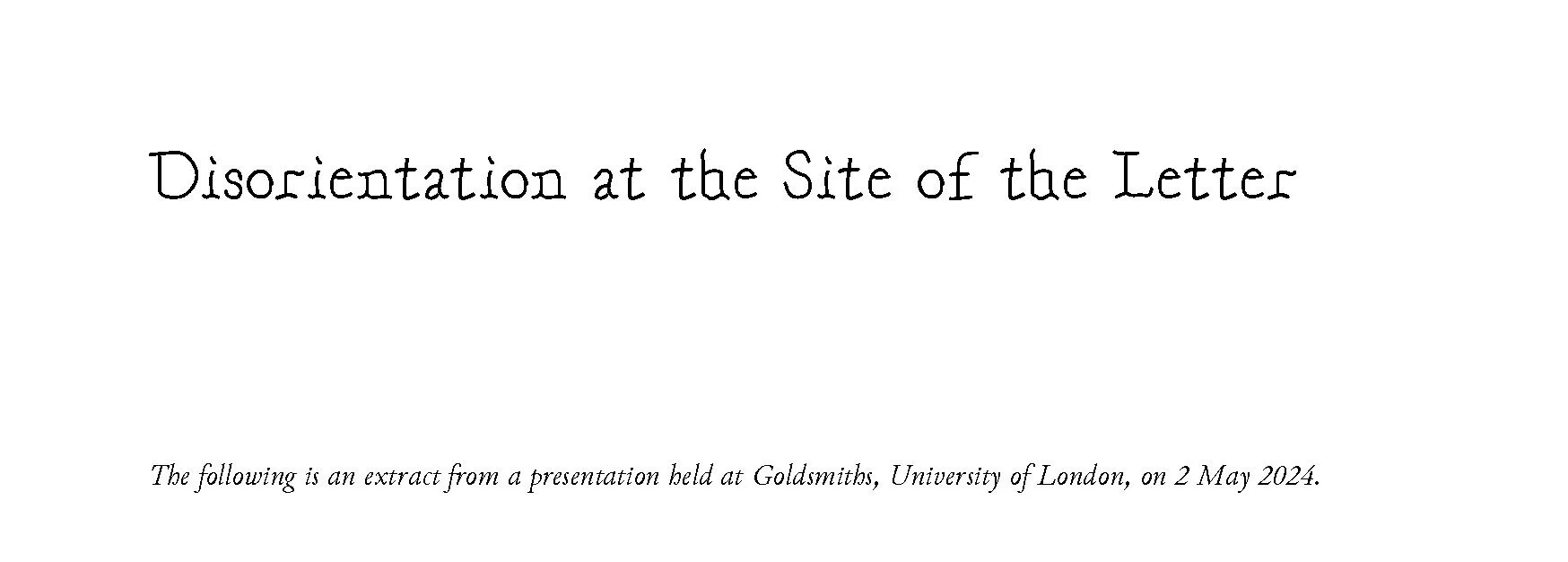
I am honoured that my poetic fragment “Disorientation at the Site of the Letter” is published in Apparitions, a collection from tent.press bringing together poetry, essays, images, and acts that respond to the spectral, the remembered, and the resistant.
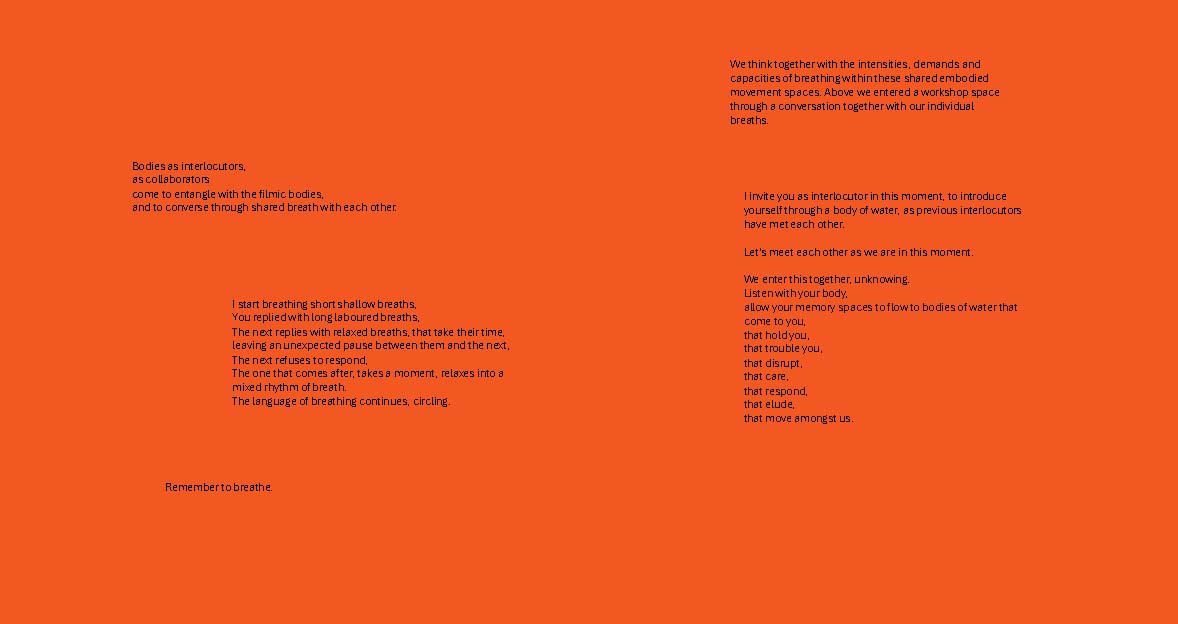
The text emerged through my embodied workshop practice, specifically from a circular reading script interlaced with bodily breath, filmic breath, relational listening, and maternal traces. At its centre is the rediscovery of a letter.
The piece unfolds at the threshold of embodied memory and voice, where Irish Catholic maternal shame, breath, correspondence, and transnational feminist philosophy converge. It was first presented at Goldsmiths in 2024 as part of a shared space for collective listening, breathwork, and embodied reading.
In “Disorientation at the Site of the Letter,” I invite readers to move with shared air: to sit with vulnerability, repetition, rupture, and the ritual of maternal relation. The letter is approached not simply as document or evidence, but as a living fragment — something that continues to breathe, unsettle, and return.
The piece asks:
What haunts the archive of the maternal?
How might we breathe with it, together?
With gratitude to the editors and co-contributors for holding space for ghosts, grief, and gentle revolutions.
Photography by Michèle Saint-Michel.
“The letter is always, already being written. The ultimate proclamation of the mamafesta is anticipated but never finally delivered.”
Counterfield II (2024)
“Imagine bathing in words impressed with the colour of burnt orange.’ ”
Counterfield II is the second publication from Counterfield, a PhD research and practice collective associated with the Visual Cultures department at Goldsmiths, University of London.
Launched in March 2024, the publication gathers theoretical, poetic, artistic, and experimental work by postgraduate researchers working across and against conventional academic forms. It reflects a shared desire to think not only within the university, but also beside it, outside it, and counter to some of its disciplinary expectations.
My contribution sits within this wider collective practice: a space where writing, image, performance, research, and embodied methodologies meet. Counterfield has been an important context for developing my work with breath, shared writing, feminist research, and collective forms of study.
The publication reflects a mode of research that is relational, unfinished, and attentive to process — where thought emerges through conversation, collaboration, and shared practice.




Market Tales: A Geopolyphony
Visual Cultures, Goldsmiths, University of London | 2009 / 2011
Market Tales: A Geopolyphony was a collective publication developed by students from the Visual Cultures department at Goldsmiths, University of London, emerging from research into informal markets in London.
The project formed part of the GEO CULTURES Workshop, which explored the relationship between art, cultural practice, and globalisation. Rather than understanding art as simply representing global processes, the workshop asked how cultural practices actively produce new relations, insights, and forms of knowledge within the circuits of globalisation.
The publication brought together stories, essays, research fragments, and visual material generated through collective study. It was launched as part of a public workshop at Goldsmiths, alongside presentations and discussion on informal markets, migration, urban life, and the cultural economies of everyday space.
This early project remains important to my practice because it introduced questions that continue to shape my work now: how knowledge is formed collectively, how place carries memory, how informal networks produce culture, and how writing can emerge from shared research rather than individual authorship alone.

Writing as Living Archive
Across these publications, writing is not separate from practice. It emerges from performance, workshop, film, sound, correspondence, and collective study.
A script becomes a publication.
A circular reading becomes a poetic fragment.
A research collective becomes a printed object.
A letter becomes an archive.
A page becomes another site of shared air.
Publication, in this sense, is not the end point of a project. It is another way a work continues to travel: through readers, voices, citations, conversations, and future gatherings.
Publications and Selected Writing
“Disorientation at the Site of the Letter”
Published in Apparitions, tent.press | 2025
Counterfield II
Counterfield research and practice collective | 2024
London Artists Interviews, Episode 1
Interview | 2021
Market Tales: A Geopolyphony
Visual Cultures, Goldsmiths, University of London | 2009 / 2011
I want to create a mapping on the first three listening and reading sessions for the radical friendship group - taking inspiration from this collective without copying. Meeting three - Thoughts for Session Two References that might be of interest: Gaston Bachelard - The Poetics of Space (domestic space/homes) Maggie Nelson - Jane: A Murder (the idea of exposure of a family member who was murdered) Kirsty Bell - The Artist’s House (making within the domestic space) Margrit Shildrick - Leaky bodies and boundaries: feminism, deconstruction and bioethics (PhD Thesis) Róisín Ryan-Flood & Rosalind Clair Gill - Secrecy and Silence in the Research Process: Feminist Reflections (notions of exposure and protection within research) Mapping the session Start Marie Theresa opened up the session with the following question: “Can an artwork be a radical friend?” First Stop: The touching contract Thinking about the hug at the end of the performance - Amy said: “The State may make you feel both things: cared for, and threatened by it.” From the video: “It is risky to make yourself available to touch” Second stop: Annie highlighted the complexities of discomfort, and how it might be a productive site. What is it producing? Third stop: “What does giving consent mean when one does not fully understanding what's in the document? Legal language seems to be think written like that on purpose (for the subject to not understand)”. “When thinking about spectacle, is it a possibility to withdraw consent? Maybe the subject was comfortable with exposing oneself at the beginning but that might change with time”. Fourth stop: O’Donnells Novel Mara: “We embody our homes. We are walking houses.” Marie Theresa: “The body always knows.” Final Stop: Closing remarks Patricia invited us to “read care-fully” Annie shared a metaphor of archaeologists uncovering a site, and how the more the site is farther away in time shapes how the object is taken care for. Who do we perform care for? Exposure/spectacle “It is risky to make yourself available to touch” “Feeling both things: protected and cared for by the State, and threatened by it at the same time” State withholding Consent: “What does giving consent without fully understanding what's in the document mean? I also think that legal language is written like that on purpose (for the subject to not understand)?” “Is it a possibility to withdraw consent when it comes to the spectacle?” Withdrawing consent - is it a possibility? Complexities of discomfort, discomfort as productive - discomfort is needed to understand difficult histories Ethical witnessing “We feel more comfortable to take about something when there is distance between us - temporally and geographically” “To read care-fully” “We embody our homes. We are walking houses.” and texts attached - the touching contract and quotes I pulled from the novel nesting by irish auther -
Hearing Zong.pdf
That the Past May Yet Have Another Future.pdf
Demian-By-Hermann-Hesse.pdf
The Touching Contract - Listening and Reading Group.pdf
enright-kinsella-2021-legal-aesthetics-in-the-touching-contract-memory-exposure-and-transformation (1).pdf
I want to create a visual - I will send all sessions - first gathering: Marie Theresa: I wanted to begin by saying why I set this up. Over the past few years, I’ve met some really wonderful people — through conferences, workshops, collaborations, conversations that felt unfinished but alive. Those encounters have left impressions. They’ve created new lines and textures in how I think, how I work, how I breathe in relation to others. Reading Ahmed on how bodies and spaces leave impressions on one another — how the social has its own skin — I began thinking about friendship in those terms. What accumulates between us? What lines are being formed? What textures are emerging? This group feels like a way of not letting those lines dissipate. Radical friendship, for me, is not about sameness or agreement. It’s about staying in relation across difference — and doing so carefully. It’s about asking how we practise care without collapsing complexity, and how we remain responsive in a world marked by violence, polarisation, and uneven histories. I imagined a monthly gathering where one of us might facilitate — sharing a text, a fragment, or some prompts in advance — and where we think together without pressure to resolve. A space where listening matters as much as speaking. Where withholding is allowed. Where unfinished thought is welcome. This first session is really about feeling into how we want this to be. What rhythms? What responsibilities? What kind of friendship are we practising here? Words/thoughts from the first session (please add): Time Migration How do we make friends when we feel isolated? What does radical mean for us? Time of rupture Departure from rupture What would we be radically departing from Affect What does holding mean? Hostile academic atmospheres First session hosted by Mara: Start: You are here What might be considered radical about the relationship between Demian and Emile? First stop A radical friend pushes us to be critical, altering our ways of seeing the world and seeing tradition. Friendship might deterritorialize us - what does this mean? how does this look like? Second stop Why a childhood scene? Does our concept of friendship changes as we grow older? Third stop What type of power dynamics shape friendship? How does trust figure within them? Caín senses the secret and uncomfortability that Emile carries “You can rely on me, Sinclair. You can tell me your secret other time.” The friend allows you to disclose when the time is right. Fourth stop In a friendship “you don’t owe me anything.” after revealing your secret (45). In the sharing of a secret, “I was no longer alone” And now for the first tiem I saw how terribly alone I had been with my secret all those weeks.”. What does this mean? Final stop Radical friendship alters our lives, it sets a before and after for us. Do we share sameness or difference with our friends? What sustains the friendship sameness or difference? Concept of trust within the chapter power dynamics interesting Discomfort - potential friendship - alters his morality Shame as embodied umcomfortability Quotes that stayed with me – Marie Theresa CAIN "'Yes. I believe, then," he continued, "'that this story of Cain can be interpreted differently. Most of the stories we are taught are valid. and authentic but it is possible to see them from another angle than that of the teachers' and it gives them much more sense. Pp.32 A strange spirit had come over me; I no longer fitted into our community with which I had previously been so closely bound up and I was often overcome with a wild hankering for it as for some kind of lost paradise. Pp.38 The grown-up who has learnt to translate a part of his feelings into thoughts, misses these thoughts in the child and therefore finally denies even the experiences themselves. But I have rarely felt and suffered more deeply than at that time. Pp.39 a kind of friendship that doesn’t just comfort you, but fundamentally alters how you see yourself, morality, and the world. living in fear, in lies, and totally alone with a secret he can’t confess to his parents Once liberated, Sinclair flees back into his parents’ safe religious world and drops Demian, later recognizing this as both ungrateful and motivated by fear—because Demian would have demanded real independence from him Refuses to leave them comfortably inside social or moral conventions when those conventions are crushing them. Is willing to disturb, scandalize, or even frighten them in order to call their authentic self forth. Involves solidarity and action, not just sympathy—especially against forces that oppress or diminish them. He sees Sinclair’s hidden self and calls it forth he’s offering him a different moral universe in which being “marked” might be a vocation, not a shame. Irish novel “Nesting” lack of curiosity or lack of wanting to violate the secret, things that linger the unsaid, what we disclose and opacity Re translation of the story within the children session two hosted by Marie Theresa - Thoughts for Session Two References that might be of interest: Gaston Bachelard - The Poetics of Space (domestic space/homes) Maggie Nelson - Jane: A Murder (the idea of exposure of a family member who was murdered) Kirsty Bell - The Artist’s House (making within the domestic space) Margrit Shildrick - Leaky bodies and boundaries: feminism, deconstruction and bioethics (PhD Thesis) Róisín Ryan-Flood & Rosalind Clair Gill - Secrecy and Silence in the Research Process: Feminist Reflections (notions of exposure and protection within research) Mapping the session Start Marie Theresa opened up the session with the following question: “Can an artwork be a radical friend?” First Stop: The touching contract Thinking about the hug at the end of the performance - Amy said: “The State may make you feel both things: cared for, and threatened by it.” From the video: “It is risky to make yourself available to touch” Second stop: Annie highlighted the complexities of discomfort, and how it might be a productive site. What is it producing? Third stop: “What does giving consent mean when one does not fully understanding what's in the document? Legal language seems to be think written like that on purpose (for the subject to not understand)”. “When thinking about spectacle, is it a possibility to withdraw consent? Maybe the subject was comfortable with exposing oneself at the beginning but that might change with time”. Fourth stop: O’Donnells Novel Mara: “We embody our homes. We are walking houses.” Marie Theresa: “The body always knows.” Final Stop: Closing remarks Patricia invited us to “read care-fully” Annie shared a metaphor of archaeologists uncovering a site, and how the more the site is farther away in time shapes how the object is taken care for. Who do we perform care for? Exposure/spectacle “It is risky to make yourself available to touch” “Feeling both things: protected and cared for by the State, and threatened by it at the same time” State withholding Consent: “What does giving consent without fully understanding what's in the document mean? I also think that legal language is written like that on purpose (for the subject to not understand)?” “Is it a possibility to withdraw consent when it comes to the spectacle?” Withdrawing consent - is it a possibility? Complexities of discomfort, discomfort as productive - discomfort is needed to understand difficult histories Ethical witnessing “We feel more comfortable to take about something when there is distance between us - temporally and geographically” “To read care-fully” “We embody our homes. We are walking houses.” Texts: Session One: Demian by Hermann Hesse, Session Two texts = Enright and Kinsella Legal aesthetics... and The Touching Contract performance and the novel Nesting - texts shared in relation to this session Hearing Zong and That the Past May Yet Have another future. All texts attached. Remember I want to make a visual simialr to the the screenshots I sent earlier
Your material is already beginning to behave like the kind of living cartography in those reference images — not because of aesthetics alone, but because of the density of relation between concepts, voices, texts, feelings, and historical tensions.
What makes the examples you shared powerful is not the circles or arrows themselves — it’s that:
theory sits beside anecdote
political history sits beside intimate speech
quotation sits beside affect
the map thinks relationally rather than chronologically
contradictions are allowed to coexist
concepts migrate across the surface
Your sessions already contain that structure.
Proposed Overall Visual Architecture
Instead of organising the map by “Session 1” and “Session 2” in neat sections, I strongly recommend building it as a constellation ecology where sessions bleed into one another.
The visual should feel like:
an intellectual weather system
an emotional archive
a social skin
a porous research ecology
a friendship infrastructure
The map can be divided into large conceptual zones rather than linear chronology.
CENTRAL SPINE
I think the visual should have one central phrase near the middle:
RADICAL FRIENDSHIP
Then branching outward into recurring conceptual territories.
Not clean branches.
More like:
migratory routes
nervous systems
river systems
entangled lines
CORE CONSTELLATIONS
CONSTELLATION ONE:
TOUCH / TRUST / DISCLOSURE
This becomes one major yellow-circled node.
Inside or around it:
“It is risky to make yourself available to touch”
disclosure
secrecy
“You can tell me your secret another time”
trust
withholding
opacity
“The friend allows you to disclose when the time is right”
touch as risk
exposure
surveillance
vulnerability
Then connect outward to:
THE STATE
with darker heavier lines.
Because your sessions repeatedly return to:
institutional power
legal opacity
consent
exposure
withholding
surveillance
care as violence
This is a major thread.
CONSTELLATION TWO:
THE HOUSE / BODY / MEMORY
This should be one of the largest visual zones.
You already have extraordinarily rich material here.
Central phrases:
“We embody our homes. We are walking houses.”
“The body always knows.”
“Do we carry echoes of the homes we grew up in?”
“Will they ever fully unpack?”
This constellation should visually resemble:
rooms
floorplans
body outlines
unstable architecture
domestic interiors
Possible node structure:
HOUSE
↕
BODY
↕
MEMORY
↕
TRAUMA
↕
CARE
↕
SHELTER
Then place fragments from Nesting around the edges:
“Her own internal monologue, erased”
“The body is the last thing to grant forgiveness”
“part of her body is listening”
“love strengthens”
“etched in their bones”
This constellation could visually “leak” into:
migration
rupture
displacement
secrecy
motherhood
state violence
CONSTELLATION THREE:
DISCOMFORT / ALTERATION / TRANSFORMATION
This is where Demian becomes incredibly important.
Demian is not merely about friendship.
It’s about:
moral destabilisation
transformation
rupture from inherited worlds
shame
becoming
double worlds
secrecy
fear
independence
This constellation could begin with:
TWO WORLDS
taken directly from the novel structure.
Then split visually into:
LIGHT WORLD
OTHER WORLD
Using broken lines between them.
Key phrases:
“A strange spirit had come over me”
“I no longer fitted into our community”
“lost paradise”
“I was no longer alone”
“a before and after”
“the friend alters morality”
“friendship deterritorializes”
“living in fear”
“the hidden self”
“difference”
“departure”
You should absolutely include the “Two Worlds” structure from Demian because it mirrors the architecture of your sessions:
comfort/discomfort
care/threat
exposure/protection
home/world
institution/intimacy
CONSTELLATION FOUR:
GESTURE / RESPONSE / ETHICAL WITNESSING
This constellation should feel more airy and spatial.
Rebecca Schneider becomes important here.
Key phrases:
gesture migrates
greeting establishes relation
response-ability
intervals
ricochet
repetition
“the past may yet have another future”
This connects beautifully to your group itself.
Because the group is:
a response
a continuation
an afterlife of encounters
an attempt not to let impressions disappear
You could visually represent this with:
repeated hand gestures
echoes
mirrored arrows
looping lines
phrases repeated faintly across the page
CONSTELLATION FIVE:
SOUND / SILENCE / THE ARCHIVE
This should connect:
Zong!
secrecy
withholding
submerged histories
“histories that hurt”
the unsaid
opacity
listening
Key phrases:
“Silence does not always mean an absence of sound”
“resurfacing of the drowned”
“sound never ceasing underwater”
“rumblings from the future”
This could become one of the most visually poetic parts of the map.
I imagine:
wave forms
submerged text
partially erased quotations
faded archival fragments
words disappearing underwater
IMPORTANT RECURRING THREADS
(these should cross the ENTIRE map)
THREAD:
CARE ↔ VIOLENCE
Appears in:
the State
consent
home
friendship
legal systems
exposure
touching
witnessing
THREAD:
WITHHOLDING ↔ DISCLOSURE
Appears in:
secrets
Demian
Nesting
consent
legal language
opacity
trust
disclosure
THREAD:
BODY ↔ ARCHIVE
Appears in:
trauma
domestic memory
touch
legal history
Zong!
embodied knowledge
“the body always knows”
THREAD:
DISTANCE ↔ PROXIMITY
Appears in:
ethical witnessing
difficult histories
friendship
performance
archival care
temporality
VISUAL LANGUAGE SUGGESTIONS
To avoid directly reproducing the Otolith aesthetic:
Instead of:
perfect circles + diagrammatic clarity
Try:
uneven hand-drawn circles
layered tracing paper
translucent overlays
stitched lines
graphite smudges
pinned fragments
photocopies
handwriting mixed with typed text
partially obscured phrases
faded annotations
Your map should feel:
touched
handled
accumulated over time
not designed in one sitting.
MOST IMPORTANT THING
Do not try to make the map explain everything.
The reference works function because:
they produce relation
not resolution
Your map should allow:
contradiction
uncertainty
unfinished thought
opacity
pauses
silence
It should feel like:
a collective intellectual-emotional landscape.
And honestly, you already have enough material for something incredibly powerful.
Edit
Edit
ines stasa book.pdf
I am applying to this https://www.artexplora.org/en/residences-dartistes-tirana can you help me refine my proposal and also put together pdf pages for my propfolio with descriptions (small) which support my application proposal? Can we start with the proposal? then the public engagement section then the portfolio page by page - I can send the images and information. For the proposal I contacted a scholar in tirana - for reference - Dr. Ines Stasa 1st degree connection · 1st Political Scientist & Consultant | Transitional Justice, Europeanisation & Governance | Author | Advisory & Leadership Roles Apr 19 Marie Theresa Crick sent the following message at 1:27 PM View Marie Theresa’s profileMarie Theresa Crick, #OPEN_TO_WORK Marie Theresa Crick (She/Her) 1:27 PM Dear Dr. Stasa, I hope this message finds you well. I came across your work on transitional justice in Albania and the Western Balkans, including your writing on justice, truth, and post-communist memory, which strongly resonates with my current research. I am an artist-researcher and PhD candidate working across socially engaged practice, exploring how philosophy, politics, public and personal archives, and artistic practice might contribute to forms of justice beyond juridical frameworks—particularly in relation to memory, diaspora, and histories of containment and trauma. My work is rooted in Irish diasporic maternal histories while engaging in dialogue with other transnational contexts. I have recently presented at the Mnemonics Network for Memory Studies conference at Ghent University, and this has led to an invitation to present on a panel at the Memory Studies Association conference in Buenos Aires- Memory and Democracy in July. I am currently preparing an application for the Vila 31 residency in Tirana, and your work has been important in shaping how I am thinking about a transnational feminist ethics of justice in this context. I would be very interested to remain in dialogue as this develops. Best, Marie Theresa Crick Dr. Ines Stasa sent the following message at 5:19 PM View Dr. Ines’ profileDr. Ines Stasa Dr. Ines Stasa 5:19 PM Dear Marie Theresa, Thank you so much for your thoughtful email. It is truly pleasant to hear that my work on transitional justice and post-communist memory has resonated with your own research. Your project sounds incredibly compelling, particularly the way you are bridging Irish diasporic histories with broader transnational contexts through an artistic and philosophical lens. Congratulations on your recent presentation in Ghent and the upcoming panel at the Memory Studies Association conference in Buenos Aires—that sounds like a wonderful opportunity to further these conversations on a global stage. I will include a podcast link here where I was invited to discuss memory laws in Albania, published and organized by the Memory Studies Association. Regarding your application for the Vila 31 residency in Tirana: it is an excellent space for this kind of inquiry. The layers of memory and the city's physical landscape offer a unique environment for exploring the themes you’ve described, especially through a feminist ethics of justice. I'm interested in staying in dialogue as your work and the residency application progress. Please do keep me updated on your journey to Tirana. Please find attached my PDF version of the book. Best regards, Ines. https://www.youtube.com/watch?v=mXyAPsWkPos ines stasa book.pdf 19 MB Download Apr 20 Marie Theresa Crick sent the following messages at 9:44 AM View Marie Theresa’s profileMarie Theresa Crick, #OPEN_TO_WORK Marie Theresa Crick (She/Her) 9:44 AM 👏 👍 😊 Dear Ines, Thank you so much for your generous response and for sharing your book and the podcast—I’m very grateful. I’m looking forward to spending time with both. It’s encouraging to hear your reflections on Tirana as a site for this work. I visited Tirana a few years ago and it has stayed with me. I’m particularly interested in how the layers of memory might be engaged through practices of artistic-critical dialogue, alongside the frameworks you describe. I will keep you updated as the application develops, and I very much appreciate the openness to remain in dialogue. Best, Marie Theresa - the video she sent me - https://www.youtube.com/watch?v=mXyAPsWkPosOkay. Hello everyone. We already have people gathered to this uh podcast uh series uh hosted by memory studies 0:2929 secondsassociation. Uh welcome everyone uh on board the team who will be talking today 0:3636 secondsof course uh and of course all the participants of this uh of this event. 0:4242 secondsSo my name is Dilla Sagatiana. I will be let's say will lead this conversation today. Uh I am from Nicolas Ramirez 0:5151 secondsUniversity in Lithuania and um we will uh today talk about the memory um issues 0:5858 secondsvarious uh memory issues from different perspectives between the Baltic and Mediterranean seas. So um before 1:061 minute, 6 secondsstarting I would like to emphasize for the audience several technical points and this is regular um instructions for 1:151 minute, 15 secondsall the participants of this uh postcard series. So um to avoid disruption during the speaker presentations um audience u 1:241 minute, 24 secondsmicrophones and cameras will remain disabled until the Q&A session. So as I can see that is done. your cameras and 1:331 minute, 33 secondsyour uh uh uh sounds are disabled or uh at at that time the audience will be 1:391 minute, 39 secondsallowed to unmute and uh activate the cameras. Uh the chat features will be disabled but both the audience and the 1:471 minute, 47 secondsspeakers can submit questions and comments via the Q&A uh chat chat. So you can all uh take a look at the 1:551 minute, 55 secondsinterface uh which you see on your computer or on your phone. I don't know the device you are connecting with and 2:022 minutes, 2 secondstry to find the Q&A chat icon and then you can submit your questions in advance. A tech person is actually also attending the session behind the scenes. 2:112 minutes, 11 secondsYou cannot see it and that person will be monitoring uh the coin uh chat in a real time approving comments to ensure 2:202 minutes, 20 secondsthat they are visible to all the participants and this helps of course to prevent chat bombing in case um if it 2:272 minutes, 27 secondshappens. And most importantly the session will be uh recorded and audience um audience me audience members provided 2:352 minutes, 35 secondsthe consent to be recorded upon the uh registration. So welcome everyone on board and um let me just give a brief 2:442 minutes, 44 secondsintroduction uh what we will be talking about today. So as I mentioned we will be the topic uh of our conversation or 2:532 minutes, 53 secondsdialogue is um uh regional uh memory between uh Baltic and Mediterranean and 2:592 minutes, 59 secondsuh this conversation will be from very different perspectives from very different uh disciplines uh because um 3:083 minutes, 8 secondsthis session is organized um on behalf of Arowa Alliance of several 3:153 minutes, 15 secondsuniversities. Uh so um I let me just uh list briefly the uh the alliance uh uh 3:233 minutes, 23 secondsparticipations participants. So these are the universities from um France, Greece, Bulgaria, Poland, Lithuania, 3:313 minutes, 31 secondsSpain, Italy and uh Germany. And this um alliance is called Arua or Arua. I don't 3:383 minutes, 38 secondsknow how to really um uh be on top of the of the pronunciation but never because I heard both versions of it. uh 3:473 minutes, 47 secondsbut uh this AeroA alliance allowed us to uh connect this team which you have uh 3:543 minutes, 54 secondsyou which you see right now in front of you on the screens because we created a research cluster uh which is called 4:014 minutes, 1 secondhistorical legacies law memory and reconcil reconciliation in shaping national histories and European identity 4:094 minutes, 9 secondsso it's very long title of the cluster nevertheless the main thing you need to know that uh all team members um 4:184 minutes, 18 secondsare researchers in memory field but from different uh disciplines and different um fields. So let me just briefly 4:274 minutes, 27 secondsintroduce uh the team members who will be talking today uh with you. So um myself I already uh presented myself I 4:364 minutes, 36 secondsam from Nicolas Ramirez University and I am trained as a lawyer. My PhD is in legal history. Then we will have uh 4:434 minutes, 43 secondsprofessor Josephina Laroka from um Italy from the uh University of Macharata and 4:494 minutes, 49 secondsshe works actually on national on 19th and 20th century Russian literature and Russian immigration literature. So the 4:574 minutes, 57 secondsfield is literature basically. Yes. Then of course uh there will be uh other 5:035 minutes, 3 secondsspeakers. Um so uh Philip Tunic from um SWPS University in uh Poland. He came 5:115 minutes, 11 secondsfrom he's coming from the field of sociology and history of law. Uh then we will have also um professor Sylvia uh 5:215 minutes, 21 secondsPierosara and she is also from the University of Macharata and her work is based mainly on narrative ethics uh 5:295 minutes, 29 secondsnarrative and memories and on the topic of nostalgia which is very interesting topic to connect all the issues we will 5:385 minutes, 38 secondsbe talking today. And uh last but not least uh there is a professor in Estasa from Albania from University of Tana and 5:475 minutes, 47 secondsshe is specializing in transitional justice governance and her most recent book actually I want to tite the title 5:555 minutes, 55 secondsbecause that's you know book is always very big event for a scholar and that book is also printed with stringer even 6:026 minutes, 2 secondsbigger uh achievement. So the the title is transitional justice in Albania, Kosovo and North Macedonia uh 6:106 minutes, 10 secondscomparative uh framework analysis. So really um the audience might already see 6:186 minutes, 18 secondsuh the different fields we we are from and um uh we um gathered met today uh to 6:266 minutes, 26 secondshave a conversation about the creation of authentic commemoration practices in different geographical uh 6:356 minutes, 35 secondsareas in different um let's say um fields or country wise And of course to talk about 6:436 minutes, 43 secondsthe possibility uh can be a European identity created created based on memories since we are 6:526 minutes, 52 secondsso uh different from the Baltic to uh the Mediterranean in terms of memory or maybe not different we will see during 6:596 minutes, 59 secondsthis conversation maybe we have more in common than we think. So this conversation is also interdisciplinary 7:077 minutes, 7 secondsdialogue and uh probably the main goal for us today is to find out uh what is 7:147 minutes, 14 secondscommon uh between uh all all those two do two regions like Baltic and Mediterranean and what is not that 7:237 minutes, 23 secondscommon and um what are the implications of that. So without any more delay uh uh 7:317 minutes, 31 secondslet me just uh give you the final technical detail. Um the plan is to have a conversation between the team uh for 7:387 minutes, 38 secondsaround 1 hour because we are here for an hour and 30 minutes and then to have a 7:447 minutes, 44 seconds30 minutes uh Q&A session. So uh let me just uh uh start now with um uh 7:527 minutes, 52 secondsprofessor uh Joseina Laroka from University of Macharata and 7:597 minutes, 59 secondsdo I hear something some sound? No not yet because I try to catch any sound um 8:068 minutes, 6 secondsI can. So um my question starting question for you is um uh how does 8:138 minutes, 13 secondsliterature operate as medium of memory in context where official narratives are 8:198 minutes, 19 secondscontested or silenced? Can you see the role of literature in memory studies and how you can see it? That would be like very broad starting question for you. 8:308 minutes, 30 secondsThank you. 8:318 minutes, 31 secondsYeah, thank you very much D. And just let me say just a couple of words of thanking to the memory studies association for hosting us and of course 8:388 minutes, 38 secondsto you to for organizing and leading this very fruitful I would say and I'm I'm really sure about it uh seminar and 8:488 minutes, 48 secondslecture and conversation on our topics and also a very welcome to our team members um because I think that this 8:568 minutes, 56 secondsteam allows us just to share lots of as you said um topics on the same theme but from different perspectives. So it would 9:049 minutes, 4 secondsbe very nice to also to to listen to the other colleagues contributions about this very wide topic. Um as far as 9:129 minutes, 12 secondsconcerned your question I would say that first of all literature um has always been recording uh the uh noises of time 9:229 minutes, 22 secondsof its time. So as the Russian writer Osipes observed, so the shumi in Russian um 9:319 minutes, 31 secondsbecause literature u has been consistently fixing historical events and also human transformations uh on the 9:409 minutes, 40 secondspage on the history page uh recording both official uh narratives and also 9:479 minutes, 47 secondsdecent one. uh so memory particularly uh in the uh immigrate literature constitutes a recurring element at topos 9:569 minutes, 56 secondsI would say that repeatly emerged to connect the individual uh to their past and to the their national history. So of 10:0410 minutes, 4 secondscourse when you talk about memory within the literary studies you have to take into account also the um national 10:1110 minutes, 11 secondshistory the relationship of each human being especially those ones who immigrated towards their identity and so towards the uh their national history. 10:2310 minutes, 23 secondsAnd literature is a tool of memory by uh preserving uh reconstructing and 10:3210 minutes, 32 secondsalso transmitting experiences. Uh there are excluded from dominant historic historical accounts. And this this is 10:4010 minutes, 40 secondsparticularly true when you talk about the uh Soviet Union and also the Russian immigration especially during the first part of the 20th century although we can 10:4910 minutes, 49 secondsalso take into account the second part of the 20th century. Oh, and also the current immigration after the 24th February 2022. 10:5810 minutes, 58 secondsUm and when state sanctioned histories uh suppress certain events especially in 11:0511 minutes, 5 secondsthe literary uh context uh voices or perspectives, literary texts provide uh an alternative 11:1411 minutes, 14 secondsI would say archive uh through which marginalized memories uh can be articulated and sustained 11:2211 minutes, 22 secondsum and through forms such as novels, poetry, testimonial writing writings, also echo documents where of course 11:3011 minutes, 30 secondshistory and literature again cross each other uh and also memoirs. Um literature 11:3711 minutes, 37 secondsrecords subjective and also collective experiences that may not be knowledge in the official context and also in the official documents. 11:4811 minutes, 48 secondsAnd by uh and also literature does not merely reproduce uh memory but also 11:5611 minutes, 56 secondsactively shapes memory uh by employing narrative strategies such as as fragmentation 12:0412 minutes, 4 secondsuh nonlinear temporality uh metaphor and also multiple perspectives. Literary 12:1112 minutes, 11 secondsworks can reflect the instability and sometimes also the trauma associated with silenced histories. And these 12:2112 minutes, 21 secondsaesthetic choices allow literature to grasp to capture the effective and also the ethical dimensions 12:3012 minutes, 30 secondsuh of memory. So fear, loss, resistance, cultural resistance uh and survival they 12:3812 minutes, 38 secondsare often absent from institutional records. And um I would say that in this 12:4512 minutes, 45 secondssense literature functions as a site of countermemory challenging edgemonic narratives and 12:5512 minutes, 55 secondsopening spaces for dialogue and reinterpretation. 12:5912 minutes, 59 secondsUm it enables communities to remember collectively because also the relationship between the individual and 13:0813 minutes, 8 secondsalso the collective dimension is very crucial within the um this kind of literature. uh even in the absence of uh 13:1713 minutes, 17 secondsformal recognition and to transmit this memories across generations because of course when you talk about uh for 13:2613 minutes, 26 secondsexample the immigration not only the Russian one but like the immigration and also um immigration literature towards 13:3313 minutes, 33 secondsthe words we have to take into account that we can also talk about different generations in the framework of the 13:4013 minutes, 40 secondsimmigration. So a different um sensitiveness towards the memory and also towards uh national history and 13:4913 minutes, 49 secondsalso towards each generation who is which is of course protagonist in the historical process. 13:5713 minutes, 57 secondsAnd so as such, literature plays a crucial role in resisting erasure, 14:0314 minutes, 3 secondscontesting official histories and also contributing to uh to broader processes 14:1014 minutes, 10 secondsof cultural memory and historical uh reoing. So of course there's a very 14:1714 minutes, 17 secondscrucial medium of memory and again which of course um keeps memory but also 14:2414 minutes, 24 secondsshapes memory. So it's a constant dialogue between these two different dimensions and of course among uh different generations. 14:3414 minutes, 34 secondsUm thank you professor. Uh I really liked uh the key words which I heard 14:4014 minutes, 40 secondsduring your speech alternative archives like you know something that is outside 14:4714 minutes, 47 secondsthe scope of regulation of state regulation. Yes. Because states are always you know wanting something you 14:5514 minutes, 55 secondsknow to amend to edit to remember or not to remember and suddenly we have literature 15:0315 minutes, 3 secondswhich escapes that and that's um that's uh uh that's a good thing to to know for the memory studies where to look for 15:1215 minutes, 12 secondsextra alternative data because more or less for instance if you come from 15:1915 minutes, 19 secondspolitical science from legal science you also look mainly on the regulation by a state. What state does yes initiatives 15:2715 minutes, 27 secondsby the state and suddenly you have initiative uh not from the state but somewhere else from the how to say uh 15:3615 minutes, 36 secondsfrom the creativity of you of of a person. 15:4015 minutes, 40 secondsSo I want to ask a follow-up question on that. uh uh I wonder in your practice 15:4715 minutes, 47 secondsbecause you are already for some time in this uh field and you know uh very well um this field uh from your practice what 15:5715 minutes, 57 secondsum main narratives you were able to to see in for instance in Russian immigr literature and when we talk about 16:0516 minutes, 5 secondsRussian immigr literature we probably talk about the immigr literature in 20th century yes or abroader what is the scope of the research? 16:1616 minutes, 16 secondsU so when we talk about Russian immigration literature in the 20th century because basically the phenomenon 16:2316 minutes, 23 secondsuh is concern the uh 20th century. If we if we think about immigration um as a a 16:3016 minutes, 30 secondsvery wide phenomenon which involves um of course the uh intelligencia and also 16:3816 minutes, 38 secondsin terms of like relationships between intellectuals and also the identity. So the national 16:4716 minutes, 47 secondsidentity because of course in the 19th century and also in the 18th century we we had some kind of not immigration but 16:5316 minutes, 53 secondsanyway some kind of processes which of course the historaphy called not immigration but for example. So when 17:0117 minutes, 1 secondnoble families came to Europe and also towards Europe anyway just to be educated to attended to attend also 17:0917 minutes, 9 secondsuniversities and also the different Kurds. a very vivid cultural uh panorama but that is another phenomena which we 17:1717 minutes, 17 secondscannot also from the point of view of the historioggraphy um call uh immigration but basically 17:2317 minutes, 23 secondsgranto so it's something very different if we talk about immigration with a particular focus on Russian one in the 17:3017 minutes, 30 seconds20th centur century we have to take into account that we have different waves because of course just a little bit 17:3717 minutes, 37 secondsbefore the uh October revolution in 1917 and also after the 19 the 1917 17:4417 minutes, 44 secondsum and then we have the the first wave so the very crucial one uh within which 17:5117 minutes, 51 secondswe can also uh divide and also uh outline two different generations then we have the second wave uh which can be 18:0118 minutes, 1 secondconsidered from the uh let's say uh well until for 1945 so until the second world war 18:1018 minutes, 10 secondsthen we had the third wave from the sec from the end of the second war were until the 80s. The fourth wave from the 18:1818 minutes, 18 secondsfrom the eight from the 80s uh until the uh let's say the very beginning of the 21st century and then we have also a 18:2718 minutes, 27 secondsfifth wave which can be considered the wave from Russia towards Europe and also states after the Russian invasion in 18:3618 minutes, 36 secondsUkraine. So after the 24th February we have basically five different waves which of course have common mutual 18:4318 minutes, 43 secondselements. Um if we talk about the very first wave so the the first part the first half of the 20th century we have 18:5118 minutes, 51 secondsthese two different generations which of course have a different relationship towards their own past which means like 19:0019 minutesthe 19th century but also the Russian revolution. So in this first wave intellectuals is to say writers, artists 19:0819 minutes, 8 secondsgenerally speaking they also had the the hope to come back to to Soviet Union. So they they thought and they were pretty sure that all the the Soviet Union were 19:1719 minutes, 17 secondsjust a very uh close or anyway very short experience which they could overcome which history could overcome. 19:2619 minutes, 26 secondsuh and so they had this hope to come back to Soviet Union but actually they didn't or basically most of them remained in Europe or to the states or 19:3519 minutes, 35 secondsanyway move to the states um and so this first generation has a kind of somehow 19:4319 minutes, 43 secondsanger towards their own national history because of the bulsheist. 19:5019 minutes, 50 secondsUm but on the other hand they had the hope to come back to their great Russia which was the uh the idea of identity 19:5919 minutes, 59 secondsand so how to shape identity in a different context which we intelligent so writers artists uh hope to be uh like 20:0820 minutes, 8 secondsa different dimension a different word from the bushik one uh and the second generation on the 20:1620 minutes, 16 secondsother hand um had had anyway different perspectives because like if we think 20:2320 minutes, 23 secondsabout perhaps one of the main famous popular authors in Europe and the states 20:3020 minutes, 30 secondsum Vladimir Nabokov uh we can see and we can also read if we think about Lolita which actually is not a his a story 20:3920 minutes, 39 secondsabout immigration but so it's something completely different uh of course Nabokov was like a privilege has the 20:4720 minutes, 47 secondsprivilege to uh to be let's say um uh to belong to to a to a very rich family. So 20:5420 minutes, 54 secondshe has has always moved in Europe. So he studied in Great Britain into the states then he went to Berlin before in 21:0221 minutes, 2 secondsGermany. So anyway, it was that like he has he had a cosmopolitan let's say culture um and his relationship towards 21:1221 minutes, 12 secondsuh Soviet Union or any way uh the Soviet history and the Soviet past was completely different from those authors 21:2121 minutes, 21 secondswho belong to the first generation. So if you also read for example the gift his last uh novel written in Russian um 21:3021 minutes, 30 secondsthe gift in in Russian is d Because d has the ver the two words 21:3721 minutes, 37 secondssorry the two letters da which means yes. So yes to life. So the immigration 21:4421 minutes, 44 secondsis an opportunity. You don't have to close yourself in the past but you have the opportunity to build another future 21:5221 minutes, 52 secondsup and it's up to you. So this is a very positive uh role of memory. when memory 21:5921 minutes, 59 secondsdoes not close the immigrant in a in like in a capsule. So, and also Broki, for example, another very important 22:0722 minutes, 7 secondsexample of Russian immigration literature talked about the language as a capsule. So, as a like a very close 22:1422 minutes, 14 secondsplace where the immigrant uh somehow uh closes himself not to have any kind of 22:2122 minutes, 21 secondscontacts with the uh uh with the word outside. 22:2722 minutes, 27 secondsYeah, thank you so much for for this detailed answer and again I heard the words which are very much connect uh our 22:3522 minutes, 35 secondsconversation with next speaker um professor Philip Tunik uh because you mentioned very interesting words um uh 22:4322 minutes, 43 secondsgreat Russia uh the narrative of great Russia which was really 22:4922 minutes, 49 secondsembedded probably in all more or less in all immigrant literature during the 22:5622 minutes, 56 secondsdecades. probably I this is my um guess more or less yes some sometimes more 23:0323 minutes, 3 secondssometimes less but nevertheless those people who left uh Imperial Russia those 23:1023 minutes, 10 secondspeople who left then Soviet Union yes they escaped Soviet Union they were forced some of them forced to escape 23:1623 minutes, 16 secondsthey for for a very long time for for for them at least for the endurance of the Soviet Union they lived like in a 23:2423 minutes, 24 secondsshadow of Russia of Russian Empire of Russia of Soviet Russia and there is of 23:3123 minutes, 31 secondscourse another statehood another country which uh is situated across the Baltic 23:3823 minutes, 38 secondsSea and I'm talking now already about Poland which had com not completely different memories about Soviet um union 23:4823 minutes, 48 secondsbut these memories are again um contradicting some narratives which are expressed for instance in Russia immigr 23:5623 minutes, 56 secondsliterature about probably the great Russia and that's why I want to now to give the floor for professor Tunik and 24:0524 minutes, 5 secondsto ask him uh probably the question would be like this what is the memory politics of uh Poland 24:1424 minutes, 14 secondslooking from your perspective from the perspective of law or of legal legal sociology 24:2024 minutes, 20 secondsto that great Russia narrative or to the narrative of superpower of of Soviet Union because Soviet Union after World 24:2824 minutes, 28 secondsWar II a little bit amended the narrative of great Russia and Great Russia became great Soviet Union in some 24:3724 minutes, 37 secondssense. So I would like to just you know u professor to break it how it looks um 24:4524 minutes, 45 secondsin different uh um field uh some of those narratives. The floor is yours now. 24:5124 minutes, 51 secondsUh okay good evening uh welcome everyone. I also at the beginning I would like also thank you for the memory studies association to host us with that 25:0125 minutes, 1 seconddiscussion and I would like just to add that well my perspective is not only Polish because at the moment I'm sending you very warm greetings from the very 25:0925 minutes, 9 secondsfreezing RIA so I'm even more on the north in Baltics. Uh however well the 25:1625 minutes, 16 secondsquestion is about the great Russia great Soviet Union and actually the merge that cont uh concept under Putin because we 25:2425 minutes, 24 secondscan speak about the merge and we can speak about the routinization of uh or Russianizing the Soviet Union together 25:3325 minutes, 33 secondswith Stalin 30s 40s great mother so-called great motherland war and and the other events but it's a more 25:4025 minutes, 40 secondsquestion about the narrative and the current memory politics and some measures implemented 25:4625 minutes, 46 secondswhen uh after Russian aggression more about the let's say ad hoc measures than 25:5525 minutes, 55 secondsthe current legal policies because the direct there is no direct legislation which is openly negative to Russia 26:0426 minutes, 4 secondsmoreover even in country where I am so Latia which uh suffers like much to much 26:1126 minutes, 11 secondshigher and much more complicated risk relations with not only Russia as a state but with so-called Ruski so the representative of the Russian 26:2026 minutes, 20 secondsword who are there who are sometimes stereotypically treated as very influential group but never never in the 26:2926 minutes, 29 secondsuh legal but when we implement legal measures shaping collecting memory collective memory we cannot we according 26:3826 minutes, 38 secondsto my experience it's really hard to say that we can directly identify by some concrete means oriented against concrete 26:4826 minutes, 48 secondsstate or concrete group. We can identify the means uh used against concrete 26:5426 minutes, 54 secondsideology and it's quite visible uh in Polish constitution. It's article 13 of 27:0127 minutes, 1 secondPolish constitution. So the ban of associations for which refer directly to the nasian communist regimes. We can see 27:1027 minutes, 10 secondsthat in preamble but always in case of law uh at least at the constitutional or 27:1727 minutes, 17 secondsdeclaration level those narratives are not directly oriented against. 27:2427 minutes, 24 secondsEven if they are against we need to decodify that from internal knowledge and from the internal context and it's 27:3227 minutes, 32 secondslike a first answer how the law shapes collective memory because the problem is very complicated and the answer is very legal. It depends. 27:4227 minutes, 42 secondsSo it's classic legal answer it depends. 27:4527 minutes, 45 secondsIt depends of mainly the context and the paradigm we are located in. So should we take a look at law and its relation to 27:5427 minutes, 54 secondscollective memory in the classical terms. So the nationhood that use the law as the most as professor Ronoska 28:0228 minutes, 2 secondsfrom university posn defined the instrumentalization of law. Why the law was instrumentalized because it's the only mean that government possess and at 28:1128 minutes, 11 secondsthe same time it's a mean highly affecting society according to its instrumental character. 28:1828 minutes, 18 secondsAnd of course I don't want to go deeply into these studies on instrumentalization or law. Nonetheless, it's the answer about about what kind of 28:2628 minutes, 26 secondsprocesses we are talking about. Is it a paradigm of the classic nationhood? Or maybe we speak about the now day 28:3528 minutes, 35 secondscontemporary constitutional liberal democracy that next to some old communitarian narratives also represents mainly deep 28:4528 minutes, 45 secondsdevotion and is declaring in the same preamble where they declare memorization. 28:5028 minutes, 50 secondsUh they also declare deep devotion to individual rights, human rights, rule of law, uni western universalism etc. And 28:5728 minutes, 57 secondsyou can find it in any preamble in maybe not in the first wave. Now I'll be following Chris Hill the British social 29:0529 minutes, 5 secondslegal scholar. So maybe not directly in the first wave of constitution. So German western German and Italian but from the other side. Look at the German 29:1329 minutes, 13 secondspreamble to the German now federal constitution. They want to be equal peaceful member of the international community. Of course the preamble 29:2229 minutes, 22 secondsdrafted and changed. But then we have a second wave. Same in Spain. We have a me 29:2929 minutes, 29 secondswe don't have memory narratives but we have reference to the rule of law and this universal values. But in Portuguese constitution we have direct reference to 29:3629 minutes, 36 secondsthe political moment and the revolution changing the political regime in Portugal. And we can go through Europe like that all over. And now the third 29:4629 minutes, 46 secondswave of constitution even those constitutions which had no preamble or had no memory narratives together with the amendment process they get it. 29:5629 minutes, 56 secondsLatian is the youngest one but in 2003 very significant change has happened in Romania. So Romania is not only rule of 30:0530 minutes, 5 secondslaw state and regard also this it's a rule of law state uh following the 30:1230 minutes, 12 secondsprinciples of social solidarity but in the spirit of democratic traditions of Romanian revolution 1989 30:2030 minutes, 20 secondswhatever it means and now okay if it's if if it is unofficial talk but still I don't want to suggest what does it what 30:2830 minutes, 28 secondswhat kind of implications it may create for the future dictators so Uh well so 30:3530 minutes, 35 secondsthe the question is very open for sure law plays even in liberal in even in 30:4130 minutes, 41 secondsliberal democracy law sometimes play secondary role to the politics and some political decision. So because in 30:4930 minutes, 49 secondsclassic terms law was a mean hobs bomb conerton it is well described Anderson it is not well described it's not a time 30:5730 minutes, 57 secondsto do that how the states been shaping collective memories by laws same what Josephina said and how the states been 31:0631 minutes, 6 secondskeeping or trying to preserve the expected narratives by using the law 31:1331 minutes, 13 secondspublic ceremonies public schools commemoration in the public sphere here Connor tone and his beautiful explanation in the book how the 31:2231 minutes, 22 secondssocieties uh uh how if I'm not wrong how the societies remembers so uh the this 31:2931 minutes, 29 secondsyear of the third dry yes memorizing celebrating very very uh still secular 31:3731 minutes, 37 secondsbut very very religious in its character repetition of memorizing but the situation has changed yes the situation 31:4431 minutes, 44 secondshas changed together with triumph of or hopefully constitutional liberal democracy and now individual rights from 31:5331 minutes, 53 secondsone side from the other still especially in central Europe the attempt still to shape the community and to create some 32:0232 minutes, 2 secondssymbolic framework of coexisting symbolic framework of co- remembermbering so 32:1032 minutes, 10 secondsgoing into this direction of course constitution is the first level but the memory loss concrete memory loss are also they might be the consequence 32:1932 minutes, 19 secondsand sometimes they are presented as a logical consequence of this declaration of memorizing following chiban following 32:2632 minutes, 26 secondslumen all those metical foundations of concrete political community located in constitutional preamble then they are 32:3532 minutes, 35 secondsoperationalized they might be institutionalized and we have that yes we have extremely overbuilt the institute for the national remembrance 32:4332 minutes, 43 secondsin Poland After 22 in Lithuania, you had very profound amendment of law on the 32:5132 minutes, 51 secondsmemory center actually center for the resistance and genocide of the Lithuanian citizens. I told you that 32:5932 minutes, 59 secondswhen I read that amendment, it's in big parts in copy paste from the Polish Institute of the National Remembrance. 33:0733 minutes, 7 secondsThey're copying institutional arm arrangements. 33:1133 minutes, 11 secondsSo the states are doing that. But very significant is the direction. If Josephina said that all these processes 33:1933 minutes, 19 secondsof Russian migration shaping Russian migration collective memories were bottom up, the states always always 33:2733 minutes, 27 secondsoperate top down. If even if not at the beginning 33:3433 minutes, 34 secondsalways reacts top down. Why? Even if some narrative occurs bottom up, even if 33:4233 minutes, 42 secondssome idea of memorizing concrete group like in case of Poland the doomed soldiers the condemned soldiers yes I 33:4933 minutes, 49 secondsmean post-war anti-communist underground they were not present in the agenda memory agenda in '90s they appeared in 33:5833 minutes, 58 secondsthe second decade of 21st century they replaced warso uprising 34:0434 minutes, 4 secondsme soldiers so it is like changing and balancing that memorizing concrete groups. This is the memory politics and 34:1134 minutes, 11 secondsit is juridified. But at the end the state shapes the way of memoriz memorizing and shapes the way how they 34:2034 minutes, 20 secondsuse this narrative and also organize the whole legal infrastructure to uh to preserve that. Yes. So to keep and 34:2934 minutes, 29 secondsto maintain to preserve and to reproduce. 34:3234 minutes, 32 secondsSo that was actually uh actually you almost answered my second question to you. follow-up question for you because you were mentioning uh many times 34:4134 minutes, 41 secondsdirection. What is the direction of uh uh of memory regulation uh not only from 34:4834 minutes, 48 secondsPoland but in general uh in our region because you mentioned in your in the 34:5534 minutes, 55 secondsbeginning of your presentation that um it is not against Russia. It is not against any 35:0335 minutes, 3 secondsit is no it is against Russia but but however it's not directly 35:0935 minutes, 9 secondsarticulated in law and has never been any attempt to directly regulate any 35:1635 minutes, 16 secondsmemory nar jurify directly were ending up only by one thing by me by by memory conflict with the concrete state. It 35:2535 minutes, 25 secondshappened with Ukraine in 2016 after amendment of law on uh national institute for the national remembrance 35:3235 minutes, 32 secondswhen they open where the where was openly written the crimes committed by Ukrainian nationalists in eastern Galatia and it was actually it was taken 35:4135 minutes, 41 secondsout by Polish constitutional court. So in this ruling constit constitutional court found this term 35:4935 minutes, 49 secondsan adequate to the principles rule of law principles. So okay uh it's not directly against the concrete states but 35:5735 minutes, 57 secondsindirectly if we know the context what I said at the beginning if we know what is written behind the will of ignorance 36:0636 minutes, 6 secondswe know what the state want to the state want to tell us it's like in the declaration of independence of the state of Israel which is play quite opening 36:1336 minutes, 13 secondsrole in the uh in the catalog of Israeli constitutional acts they're not saying we the zeionist we are condemning 36:2136 minutes, 21 secondsholocaust And we say that Holocaust would not happen if you listen us and go with us to Palestine. 36:2836 minutes, 28 secondsBut it's written that the trag they are saying about the tragedy of millions of Jews in Europe which clearly shown that 36:3636 minutes, 36 secondsit's a time to build the state of Israel. 36:3936 minutes, 39 secondsYes, of course it's you know the the art of wording and the art of uh of uh of expressing 36:4636 minutes, 46 secondsin many ways and also in constitution by the um uh uh by the uh provider of laws 36:5436 minutes, 54 secondsbut that can we just you know wrap up a little bit your presentation. Can we claim? Can we claim and to what level 37:0237 minutes, 2 secondscan we claim that the direction is to preserve and to protect national identities 37:1237 minutes, 12 secondswhich are in a shadow of bigger countries. 37:1637 minutes, 16 secondsIt's not necessarily about Russia because we straight uh we straight away started from Russia because this is um 37:2337 minutes, 23 secondsour expertise within the field but nevertheless it can be you know in any part of the world not only in even in 37:3037 minutes, 30 secondsEurope. Can we say that all memory laws, all memory regulation is more um 37:3837 minutes, 38 secondsdesigned uh to the direction to protect national identities than to you know uh 37:4637 minutes, 46 secondsto attack any other you know uh great uh bigger country uh next to those uh smaller countries. What do you think? 37:5637 minutes, 56 secondsWell, again it depends. So in case of the nations that were in the physical threat of they face the physical threat 38:0338 minutes, 3 secondsof existence the smaller they were the more they face the physical threat of their real existence and I don't speak only about I don't know mass 38:1238 minutes, 12 secondsdeportations genocides and the things like that but I speak about the for example being like Baltics being under the occupation where the on their 38:2038 minutes, 20 secondsterritories some policies been implemented even in favor of the people living there I speak about the brev for 38:2938 minutes, 29 secondsexample brv era promotion of so-called national federal language yes federal language meant Russian because they said 38:3738 minutes, 37 secondsthat the they did the research and there was a claim that so citizens of the Soviet Union who are not Russian speakers they don't know state language 38:4538 minutes, 45 secondsso they have a problem with execution of their equal rights yes wording matters in case of the bigger nations it's and and it's quite complicated because for 38:5438 minutes, 54 secondsexamp it's it's the easiest answer there are also The other answer that we have like bigger communities but maybe they 39:0139 minutes, 1 secondare not afraid of their physical existence or the existence of their language, their culture uh and the 39:0839 minutes, 8 secondsthings like that but still they are afraid of the other kind of processes. 39:1339 minutes, 13 secondsIf they are so self-confidence that they are not in the physical threat they are easy target for globalization. 39:2239 minutes, 22 secondsSo for example it might be also preserving the essence of national community. I don't want to say national identity because I don't like that term 39:3039 minutes, 30 secondsas a closed and and narrowing but some form of togetherness based on the same code from also the threats coming from the other directions like globalization. 39:4139 minutes, 41 secondsSo it really depends and you know if you ask me as a Polish scholar I would say no in Poland it was rather created to 39:5039 minutes, 50 secondsprotect the essence from the globalizing processes but if you ask me as a part-time Latian scholar I would say yes you are right. 39:5839 minutes, 58 secondsOkay, thank you so much uh Philip for your input and um let us move now to our second uh uh speak uh third not second 40:0740 minutes, 7 secondsthird speaker professor in Estasa from Albania and of course I want you to brag about your book a little bit and then I 40:1540 minutes, 15 secondswant you um to ask uh the question um on how do post authoritarian societies in 40:2240 minutes, 22 secondsSoutheast Europe confront unresolved past injustices through memory because you are really the representative 40:3140 minutes, 31 secondsrepresentative of that part of um of Europe and uh I'm afraid uh that uh as 40:3840 minutes, 38 secondsas you know Baltic scholars are very much concentrated to their own uh field that would be very interesting for you 40:4740 minutes, 47 secondsuh to hear from you uh what you have to say from another region from Mediterranean region the floor is yours 40:5440 minutes, 54 secondsthank you very much Deville and thank you to the memory studies association ation for having me today. It is my honor to uh be part of this amazing and 41:0241 minutes, 2 secondswonderful panel of scholars. First of all, thank you Deville for launching my new book. Um well, this is this is my 41:1141 minutes, 11 secondsthis is my my book. Um uh it was part of my uh PhD dissertation transitional justice in Albania, Kosovo and North 41:2041 minutes, 20 secondsMacedonia in a comparative framework analysis. This book is um based on uh 44 41:2641 minutes, 26 secondsuh elite uh in-depth interviews uh in Kosovo, Albania and North Macedonia based on different layers such as politicians, representatives from uh 41:3641 minutes, 36 secondspolitics, academia, civil society um and um um um media. Um well I will um attach 41:4641 minutes, 46 secondssome of the findings of the main findings of the book uh as well as one of the recent um public surveys that I 41:5341 minutes, 53 secondshave conducted last year um supported by the international um commission of missing persons um here in Albania. Uh 42:0142 minutes, 1 secondlet's say that is one of the largest public surveys ever conducted uh here in Albania with 1,200 42:0842 minutes, 8 secondsrespondents um um based on public perceptions um that um Albanians have on 42:1642 minutes, 16 secondsum communist past and on missing persons. And in within this public survey, I have designed a very particular section on historic uh 42:2542 minutes, 25 secondseducation and memory. since memory in Albania as you well might know um it is a very underressearched area. So it it 42:3342 minutes, 33 secondsas as a transitional justice scholar um and keen on the on the field I was very interested to open this Pandora box and 42:4242 minutes, 42 secondssee um and look um through and um del through the uh public perceptions of Albania. So, first of all, um I uh would 42:5242 minutes, 52 secondslike to say that uh well, February as as a month marks two defining uh moments in Albanian's uh 20th century memory since 43:0043 minuteson uh 20 February 1991. Um it was the fall of Enver that became a powerful public signal um 43:0943 minutes, 9 secondsof the collapse of communist authority and the beginning of Albanian's democratic transition. And just days later um uh in the calendar but four 43:1743 minutes, 17 secondsdecades earlier uh in history uh in 26th February 1951 um we recall the execution 43:2643 minutes, 26 secondswithout trial of 22 Albanian intellectuals which define a stark symbol of state terror and political 43:3343 minutes, 33 secondsrepression at the hate of the dictatorship. Even though memory in Albania is always um let's say um a 43:4143 minutes, 41 secondsfield or a space of polarizing the society and these two symbolic days and very important days um which will be uh 43:5143 minutes, 51 secondsvery good at defining our our memory they are not national um uh official um 43:5843 minutes, 58 secondsum remembered uh um uh within the society. So based on my comparative research in the three uh countries as I 44:0744 minutes, 7 secondsmentioned uh before and to my recent empirical work my core uh argument to this will be that memory and transitional justice and today I will be 44:1644 minutes, 16 secondsspeaking mostly on transitional justice as a as a tool um tool and um let's say 44:2344 minutes, 23 secondsmemory as a mechanism mechanism for uh as a guarantee of nonrecurrence of uh of 44:3044 minutes, 30 secondsrepression and dictatorship. So memory and transitional justice are not only about the past but they also are deeply political processes that shape 44:3944 minutes, 39 secondsdemocratic legitimacy, social trust and European integration uh today since um we as Albanians and mostly um the 44:4844 minutes, 48 secondswestern balcon countries are really keen uh and committed to to the European integration process lately. So post 44:5644 minutes, 56 secondsauthoritarian societies in Southeast Europe do not confront um a single and clearly bounded uh past rather they face 45:0545 minutes, 5 secondsa very different layered overlapping and unfish unfinished um transitions um let's say in which different forms of 45:1445 minutes, 14 secondsinjustice coexist and remain only partially addressed. So this condition fundamentally shapes how memory and 45:2245 minutes, 22 secondstransitional justice unfold across the region. In Albinia for instance, the transition which is part of my book also 45:2945 minutes, 29 secondsis defined primarily by the legacy of communist repression. Um political imprisonments, executions, forced labor, 45:3745 minutes, 37 secondsextensive surveillance, and the systematic uh denial of civil and political rights. Meanwhile, at the contrary, in Kosovo and North Macedonia, 45:4645 minutes, 46 secondsby contrast, um they confront a double transition. So, alongside postcommunist transformation, they must also address 45:5445 minutes, 54 secondspostconlict justice, including wartime atrocities, displacement, missing persons, and unresolved um interethnic 46:0346 minutes, 3 secondsuh divisions. So these distinct historical trajectories generate um in my book what I conceptualize as 46:1246 minutes, 12 secondsoverlapping transitional justice agendas. So within this framework core components of transitional justice such 46:2046 minutes, 20 secondsas mechanisms of truth seeeking criminal accountability reparations institutional reform and guarantees of nonrecurrence 46:2846 minutes, 28 secondsrarely unfold sequentially or in a mutually reforcing manner. which means um they frequently move out of sync 46:3746 minutes, 37 secondscompeting for political attention, institutional capacity and symbolic legitimacy. So there is a misalignment 46:4646 minutes, 46 secondsum of not merely technical but it reflects a broader political economy of post authoritarian governance in which 46:5446 minutes, 54 secondsthe past is rapidly u mobilized in um uh contemporary power struggles and it is 47:0247 minutes, 2 secondsalways a motivation for uh political parties um to confront each other in terms of uh being communists or anti-communists. 47:1247 minutes, 12 secondsSo a central um comparative finding of my research is that across um southeast 47:1847 minutes, 18 secondsEurope mechanisms are present. So we have uh laws of restoration in Albania, laws ofration in North Macedonia. We 47:2647 minutes, 26 secondshave a special court in a special court in in Kosovo and um well Kosovo let's 47:3347 minutes, 33 secondssay that is a more let's say um has been more developed uh and more committed on transitional justice uh processes and 47:4147 minutes, 41 secondsmechanisms uh compared to Albania and North Macedonia but still strategies are absent in in uh all the countries. So 47:5047 minutes, 50 secondsarchives have been opened to varying degrees because we do not still have um 47:5747 minutes, 57 secondsaccess on um public uh dossier of former um communist or uh sigurime 48:0548 minutes, 5 secondscollaborators. Illustration and vetting laws have been adopted. Uh persecutions have occurred and memorialization 48:1348 minutes, 13 secondspractices have emerged. But yet these measures are seldom embedded within a coherent single and long-term state 48:2048 minutes, 20 secondspolicy on dealing with the past. So they tend to fragmentize more the society to politicize model society and selectively 48:3048 minutes, 30 secondsbe implemented. So often activated during moments of political competition rather than sustained as institutional 48:3748 minutes, 37 secondscommitments grounded in democratic norms. 48:4148 minutes, 41 secondsSo this structural diagnosis is strongly reinforced by um the empirical research um that I talked about on public 48:4848 minutes, 48 secondsperception. Survey data reveal a pronounced gap between societal expectations and institutional performance. So when asked whether 48:5748 minutes, 57 secondsAlbania has sufficiently addressed the crimes of the communist uh regime, only 27% of respondents responded affirmatively. 49:0649 minutes, 6 secondsSo this low level of approval s um signals a widespread perception that 49:1349 minutes, 13 secondstransitional justice remains incomplete and that the state has not fully assumed responsibility for confronting it uh its authoritarian and dictatorship legacy. 49:2449 minutes, 24 secondsAt the same time the data demonstrates um consistent societal demand for memory recognition. So approximately 70% of 49:3349 minutes, 33 secondsrespondents support the creation of national memorials or museums dedicated to the victims of communism. We still in 49:4249 minutes, 42 secondsAlbania do not have um national memorial uh to commemorate the victims of communism. So this finding is 49:5049 minutes, 50 secondsparticularly significant as it challenges the assumption that public engagement with a communist past is declining or confined to specific social 49:5949 minutes, 59 secondsgroups. So instead it suggests that remembrance enjoys broad legitimacy and constitutes um share moral expectation 50:0850 minutes, 8 secondseven though the uh state um um mechanisms or uh let's say willingness 50:1650 minutes, 16 secondspolitical willingness is not as um broad as as the public. Um however um um this 50:2450 minutes, 24 secondsdemand um let's say coexist with profound informationational and institutional deficits as as you might 50:3250 minutes, 32 secondsunderstand. So 64% of respondents reported having little or no information 50:3950 minutes, 39 secondsabout efforts to locate and identify the remains of individuals who disappeared under the communist regime. of 64% who 50:4850 minutes, 48 secondshave no information or having little about efforts on um missing persons um 50:5650 minutes, 56 secondsduring the communist regime. So this lack of visibility undermines of course institutional trust and reinforces 51:0551 minutes, 5 secondsperceptions that transitional justice processes are opaque, inaccessible or largely symbolic. It also points to a 51:1351 minutes, 13 secondsfailure of state communication and public engagement. So taken together, let's say that these findings reveals a 51:2051 minutes, 20 secondscritical tension at the heart um at the heart of postcommunist or post authoritarian memory politics in 51:2851 minutes, 28 secondsSoutheast Europe. Um engagement with the past occurs inconsistently. memory stayed socially active. Um but through 51:3751 minutes, 37 secondsinformal networks um which means um uh memory it is maintained uh through family stories, informal remebrance 51:4751 minutes, 47 secondsactivities uh specially organized by uh civil society 51:5351 minutes, 53 secondsum groups and by public conversations but it is also institutionally 52:0052 minutesscattered. So um memory uh policies and memory dialogue is not enhanced by um by 52:0852 minutes, 8 secondsthe political um space by the political uh engagement but uh also through um let's say um in my survey and I will I 52:1852 minutes, 18 secondswill share it with you right now some uh some findings about the the young people because um you will see one of the most 52:2552 minutes, 25 secondsuh interesting findings that one fewer than one in five young people um um uh 52:3252 minutes, 32 secondssaid that um they would like to to live in a communist regime and we are talking about 2025 52:4052 minutes, 40 secondsuh less than nostalgia nostalgia. 52:4352 minutes, 43 secondsYes. And I will I will talk about I will talk about that in a minute. Um so without clear public policies and 52:5152 minutes, 51 secondsongoing political will memory is um susceptible to politization selective use denial or nostalgic reimagining. So 53:0153 minutes, 1 secondthis explains Yes. Yes. Can I ask followup question because um it's very interesting that you are presenting a lot of numbers and this is sociological 53:1053 minutes, 10 secondsalso um uh research because you got interviews you got numbers you have a very let's say hard data yes on what you 53:1853 minutes, 18 secondswere exploring but there is a elephant in the room because I want you also to explain a little bit what was your what 53:2653 minutes, 26 secondswas your rationale uh to compare Albania Kosovo and North Macedonia. I suspect what is the rationale but it would be 53:3453 minutes, 34 secondsvery useful if you could uh explain uh a little bit why these two countries three countries needed to be uh compared 53:4353 minutes, 43 secondsbeside the geographical closeness of course but but nevertheless what are the other features why you connected these 53:5053 minutes, 50 secondsthree countries because not all of them had identical pasts or traumas. Yes, of course. So let let's let's u let's 54:0054 minutesbeat that uh elephant in the room because that's important to to understand. Thank you. 54:0454 minutes, 4 secondsYes. Yes. But uh please first I would like to share some of these findings because um these findings are really uh 54:1354 minutes, 13 secondsinteresting because these large public surveys are not so usual or common in in 54:2054 minutes, 20 secondsAlbania. So this let's say give a snapshot on um on Albania and public perception on the communist past. So 54:2954 minutes, 29 secondsplease let me share with you uh right now um some of the findings and then I will get back to yes to why a 54:3854 minutes, 38 secondscomparative approach with Albania, Kosovo and North Macedonia. So in in a second um 54:4654 minutes, 46 secondsit works. Yes, you see. Yes, we can see the text. Huh. And they highlight it. You see? 54:5554 minutes, 55 secondsYes. And we can see highlighted in violet in purple color. 54:5954 minutes, 59 secondsYes. So, um some of the findings. So, although collective memory is active, there are still informationational and 55:0755 minutes, 7 secondsnarrative gaps that require educational and institutional interventions and the perception of the communist past is 55:1455 minutes, 14 secondsgenerally negative, especially regarding human rights violations. isolation and repression. While free health care and 55:2255 minutes, 22 secondseducation along with infrastructure development are mentioned as positive aspects particularly by older 55:2855 minutes, 28 secondsgenerations and 70% of respondents support the creation of a memorial or museum for the victims of communism and 55:3755 minutes, 37 secondsum 66% of citizens express some interest in learning more about the communist regime offering real space for new 55:4655 minutes, 46 secondseducational cultural and media initiative. Democracy remains the clear choice for the majority of citizens which is encouraging for further 55:5455 minutes, 54 secondsdemocratic development. However, about one in every four respondents will prefer to live under communism, a signal 56:0256 minutes, 2 secondsthat collective memory is not unified and that the lack of full confrontation with the past may have created space for 56:0956 minutes, 9 secondsthis idealization and nostalgia of the former system. Uh so this um specific 56:1756 minutes, 17 secondspart on historical education and memory um let's say indicate a very um a very 56:2456 minutes, 24 secondsspecific a very specific um u information that um it is uh very 56:3156 minutes, 31 secondsimportant for us in Albania to um let's say uh confront uh the past and um 56:3856 minutes, 38 secondsdevelop memory policies since we lack memory policies and we lack um full engagement of um civil society 56:4756 minutes, 47 secondsand the political willingness to further um um develop and to to create memory or 56:5456 minutes, 54 secondsto transform memory. not uh as a space for polarization, but memory as a space 57:0157 minutes, 1 secondfor recognition um of the communist uh trauma and the communist past which uh 57:0857 minutes, 8 secondsmemory should be something that um um join us or make us together not uh not 57:1657 minutes, 16 secondsto to to divide us. So um why a comparative uh approach? Uh at first I 57:2357 minutes, 23 secondswas yes um at first I was um when I chose to study transitional justice uh it is a very underdeveloped research uh 57:3157 minutes, 31 secondsand field of study in Albania. So I took this as a innovative idea um to be um 57:3857 minutes, 38 secondsthe first um the first one in Albania as a scholar to to bring a book about it and this is uh let's say a full uh 57:4757 minutes, 47 secondshistory and development of transitional justice mechanisms since 1990 to 2023. 57:5357 minutes, 53 secondsSo this is let's say the period that I have been studying and researching on my book. And then I I said that um I need 58:0158 minutes, 1 secondto bring not only an innovative idea but also a comparative one in order to um to 58:0858 minutes, 8 secondsattach Albania with other uh or to study Albania in a larger uh scale. So since Albania 58:1658 minutes, 16 secondsis under researched um especially within the western Balkcan uh history when it comes to um war crimes uh communist past 58:2658 minutes, 26 secondsum dictatorship etc. And we have a lot of studies and researches on on Kosovo especially and on Bosnia Sego and Serbia 58:3458 minutes, 34 secondsand few in of North Macedonia. So since these three countries are um are um 58:4258 minutes, 42 secondsborder countries with with each other mostly ethnic and um I took this initiative let's say um to compare um to 58:5158 minutes, 51 secondscompare transitional justice in these three countries but also because I wanted to see how um a postcommunist 58:5858 minutes, 58 secondscountry would um would implement differently a transitional justice mechanism um um in contrast with a 59:0759 minutes, 7 secondspostconlict country. So Kosovo and North Macedonia are also postcomunist countries and postconlict countries and 59:1459 minutes, 14 secondsthe contrary Albania is only a postcommunist countries since we have not suffered ethnic issues or let's say 59:2359 minutes, 23 secondsuh other uh uh war crimes like um interethnic divisions uh like in Kosovo 59:2959 minutes, 29 secondsor in North Macedonia. So I wanted to see the differences but um uh I wanted also to touch Albania with these two uh 59:3959 minutes, 39 secondscountries that have suffered from the communist and uh conflict settings. 59:4459 minutes, 44 secondsThank you so much. Uh that was uh really nice to hear uh a lot of um data recent data. Yes, because the book was released 59:5359 minutes, 53 secondsuh this year I I assume or last year December. So nevertheless probably that is very no 1:00:011 hour, 1 secondthat research contains a lot of novelty in comparative terms and also in sociological terms. And uh of course the 1:00:091 hour, 9 secondsprobably one of the uh most interesting um uh ideas I heard from you is the that 1:00:161 hour, 16 secondsyou lack memory policies and you uh and the society is expecting more intervent inter intervention 1:00:231 hour, 23 secondswhile for instance in the Baltic states and in Poland and in Baltic states we are talking now about that it should be less intervention because it's too much. 1:00:321 hour, 32 secondsSo it's you know like the balance the different challenges we face you face the challenge of under intervention and 1:00:401 hour, 40 secondswe uh challenge the um and we face the challenge of too much intervention and too much of regulation but this is the for the finalization of our discussion. 1:00:491 hour, 49 secondsThank you so much in uh let's move to our uh last speaker today uh professor 1:00:561 hour, 56 secondsPierosara from Macharata University and we already heard very nicely the word nostalgia. I was sure that by the time 1:01:051 hour, 1 minute, 5 secondswe will be finalizing third speaker there would be words nostalgia but thanks uh thanks uh to the team we have 1:01:141 hour, 1 minute, 14 secondsuh Sylvia as an expert of nostalgia who would be able you know to elaborate more what is the role of nostalgia in memory 1:01:231 hour, 1 minute, 23 secondsstudies what is the link between memory and nostalgia maybe all memory is nostalgia and we want to remember that's 1:01:311 hour, 1 minute, 31 secondswhy we want to remember good things and don't want to remember bad things because nostal nostalgia 1:01:381 hour, 1 minute, 38 secondsuh or nostalgia I don't know nostalgia nostalgia um nevertheless it's it's a feeling a positive feeling like 1:01:461 hour, 1 minute, 46 secondssomething good happened and I want it to be repeated yes we don't have nostalgia about bad things I think yes am I right 1:01:541 hour, 1 minute, 54 secondsor am I wrong so now the floor is for Sylvia and I'm sure we will have the answers go ahead thank you very much and good evening and 1:02:031 hour, 2 minutes, 3 secondswelcome everybody. H first of all I would like to thank the memory study association for having me here. Uh our 1:02:111 hour, 2 minutes, 11 secondscluster leader our excellent cluster leader Dove and my colleagues who spoke before me for their illuminating and 1:02:201 hour, 2 minutes, 20 secondsthoughtprovoking speeches. So thank you very much. Um let let me do my job uh 1:02:271 hour, 2 minutes, 27 secondsand uh highlight firstly the fact that uh in our studies, our philosophical and 1:02:351 hour, 2 minutes, 35 secondsethical studies, nostalgia or nostalgia in Italian or nostalgia 1:02:431 hour, 2 minutes, 43 secondsis considered as a feeling and precisely as an emotional or effective tonality. 1:02:491 hour, 2 minutes, 49 secondsSo we cannot judge a feeling but we have to judge 1:02:551 hour, 2 minutes, 55 secondsethically judge the use we do with this 1:03:011 hour, 3 minutes, 1 secondterm and this feeling both in a personal and in a collective sense. 1:03:101 hour, 3 minutes, 10 secondsLet me start with a short story because nostalgia, the word nostalgia was coined 1:03:201 hour, 3 minutes, 20 secondsat the end of the 17th century by a physician Yuanas Hoffer who deemed 1:03:261 hour, 3 minutes, 26 secondsnostalgia as a disease, a pathology that affected soldiers far from home, 1:03:331 hour, 3 minutes, 33 secondsultimately leaving them without the force to leave and go on. So nostalgia gradual acquisition of a sense of 1:03:411 hour, 3 minutes, 41 secondsambivalence and possibility can be traced back to different time periods. 1:03:471 hour, 3 minutes, 47 secondsHowever, in more modern times, especially in the 17th and 18th centuries up to romanticism, 1:03:561 hour, 3 minutes, 56 secondsthis collective or personal feeling was the counterpoint to a linear and rational vision of history and progress. 1:04:071 hour, 4 minutes, 7 secondsNostalgia has recently been defined as modernity's shadow or coming back to 1:04:141 hour, 4 minutes, 14 secondsZetlanabo as one of the side effects of the teology of progress. During the 1:04:211 hour, 4 minutes, 21 secondsenlightenment, nostalgia was considered to be an illness that stopped or slowed the march of progress. During the 1:04:301 hour, 4 minutes, 30 secondsromantic period, nostalgia was revived by poets and philosophers of course to 1:04:371 hour, 4 minutes, 37 secondsrefer to the tension toward infinitude, origins and authenticity. 1:04:441 hour, 4 minutes, 44 secondsthe German zenuk. 1:04:461 hour, 4 minutes, 46 secondsIt can be traced back to attention, a desire described and experienced by romantic philosophers, 1:04:551 hour, 4 minutes, 55 secondsfor instance, noalis who felt nostalgia for the infinite in the sense that they 1:05:011 hour, 5 minutes, 1 secondwished for it but were simultaneously aware that such a dimension was not reachable. 1:05:101 hour, 5 minutes, 10 secondsIt was impossible to reach and provoked suffering between Johannes offer and the 1:05:191 hour, 5 minutes, 19 secondsromantics. Emmanuel Kant recognized that nostalgia does not deal with a particular place or 1:05:281 hour, 5 minutes, 28 secondsspace, but rather with time, unavoidably lost time. He viewed it as a dangerous 1:05:381 hour, 5 minutes, 38 secondspathology that makes us remember the past as much better than it actually 1:05:451 hour, 5 minutes, 45 secondswas. For K, nostalgia is analogous to. 1:05:531 hour, 5 minutes, 53 secondsSo almost all scholars recognize the bond between nostalgia and memory. and the 1:06:021 hour, 6 minutes, 2 secondsethical political implication of nostalgia concern the way memory is understood and its relationship with history. 1:06:111 hour, 6 minutes, 11 secondsMaybe we could list at least three types of interaction between nostalgia and memory. 1:06:181 hour, 6 minutes, 18 secondsFirst, nostalgia can invent memories by longing for the past and trying to 1:06:261 hour, 6 minutes, 26 secondsrepeat it, to come back to it, thereby hindering memory by forcing repetition. 1:06:361 hour, 6 minutes, 36 secondsMergent pain calls for returning, reopening the past and resuming interrupted past. Not to redeem, but to 1:06:451 hour, 6 minutes, 45 secondsimagine a future free from suffering and injustice. So if we imagine nostalgia as 1:06:531 hour, 6 minutes, 53 secondsa wish to come back and to repeat, we have to do with a restorative nostalgia. Nostalgia for the identical. 1:07:031 hour, 7 minutes, 3 secondsIf we mean nostalgia as a feeling which 1:07:101 hour, 7 minutes, 10 secondsintends to reopen the past in search for an accomplished past subalter memories, 1:07:191 hour, 7 minutes, 19 secondsthen we can use nostalgia and orient it toward the future. 1:07:261 hour, 7 minutes, 26 secondsFinally, a happy nostalgia looks back to the past and reaffirms a sense of belonging that transcends geographical boundaries. 1:07:381 hour, 7 minutes, 38 secondsThis relationship between memory and nostalgia helps us understand the question of possession. 1:07:451 hour, 7 minutes, 45 secondsAn object can be recovered but people, relationships and time cannot. That is 1:07:531 hour, 7 minutes, 53 secondsto belong is the opposite than to possess. 1:07:581 hour, 7 minutes, 58 secondsBy referring to the work of memory, nostalgia can act also as a connective feeling. 1:08:071 hour, 8 minutes, 7 secondsA connective feeling which is very useful and uh which is able or can or can be 1:08:161 hour, 8 minutes, 16 secondsable to find facts that remained 1:08:231 hour, 8 minutes, 23 secondsnot least and to not recorded not quoted in the archives. 1:08:301 hour, 8 minutes, 30 secondsSo we can limit nostalgia in the sense that nostalgia can 1:08:381 hour, 8 minutes, 38 secondsbe too too much too much linked to rigid 1:08:441 hour, 8 minutes, 44 secondsidentities. But we can use a meaning of nostalgia which is reflective and which 1:08:511 hour, 8 minutes, 51 secondscan help our memories. Nostalgia can activate memories and can go back to the 1:08:591 hour, 8 minutes, 59 secondspast in order to build counter memories, resistance and the possibility of transformation. 1:09:081 hour, 9 minutes, 8 secondsEven in the case of nostalgia uh which is used in order to hope and to 1:09:181 hour, 9 minutes, 18 secondsopen up our futures, we have to be very attentive because we always need to come 1:09:271 hour, 9 minutes, 27 secondsback to the historical facts and compare our feelings with the historical facts. 1:09:331 hour, 9 minutes, 33 secondsSo nostalgia is a feeling. It is related with memory. We can use it to reproduce 1:09:401 hour, 9 minutes, 40 secondspast. We can use it to learn from the past and so not to repeat the tragedies of 1:09:481 hour, 9 minutes, 48 secondsthe past and we can use it in order to imagine other futures, other nonidentical futures. 1:10:001 hour, 10 minutesAnd so maybe nostalgia can act as a trigger 1:10:061 hour, 10 minutes, 6 secondsforce of alter memories and to build as Joy Jina said different archives alternative archives. 1:10:191 hour, 10 minutes, 19 secondsThank you. If can I can I have a follow-up question because professor Pasara I heard so many nice 1:10:291 hour, 10 minutes, 29 secondskeywords. I I I wrote them down because I I am sure I will use them in the future with your authorship. But uh my 1:10:371 hour, 10 minutes, 37 secondsfollow-up question is um can nostalgia be manipulated? Of course. 1:10:451 hour, 10 minutes, 45 secondsYes. And maybe the next question is how to prevent manipulation with nostalgia 1:10:521 hour, 10 minutes, 52 secondsbecause it can be dangerous I assume or not. Yes. Yes. Yes. Yes. Of course. 1:10:581 hour, 10 minutes, 58 secondsSo how to how to say how to uh to make nostalgia work to positive change 1:11:051 hour, 11 minutes, 5 secondsinstead of uh manipulation and some negative uh shifts. What do you think about that? 1:11:131 hour, 11 minutes, 13 secondsThank you very much. So a brief analysis of the usages of nostalgia in political science and in political philosophy 1:11:211 hour, 11 minutes, 21 secondsreveals that nostalgia is frequently associated with regressive sentiment, political conservatism, restoration and 1:11:301 hour, 11 minutes, 30 secondsreactionary views and policies. It is also endemic to populism. In a recent dictionary on social patience edited by 1:11:391 hour, 11 minutes, 39 secondsGloria Origi, we read and I quote that the social dimension of nostalgic patience is one of the core elements of 1:11:481 hour, 11 minutes, 48 secondsthe populisms that are shaking up the 21st century political scene. End quote. 1:11:551 hour, 11 minutes, 55 secondsSo according to the social political and cultural analysis of many scholars, the feeling of nostalgia can be channeled 1:12:021 hour, 12 minutes, 2 secondsand weaponized on a political level since it is a very potent political motivator may be far more potent than hope because hopes can be disappointed. 1:12:141 hour, 12 minutes, 14 secondsNostalgia is irrefutable. 1:12:171 hour, 12 minutes, 17 secondsSimilarly, the progenitor of which may be considered a restorative nostalgia. 1:12:221 hour, 12 minutes, 22 secondsAs I said previously, as coined by Vetana, nostalgia is also described as the feeling of an emotionally immature 1:12:311 hour, 12 minutes, 31 secondscollective which has never wanted to come to terms with otherness. 1:12:361 hour, 12 minutes, 36 secondsThat is turning to a past as pristine as it is imagined. Nostalgia looks back toward a state in which the negative, 1:12:451 hour, 12 minutes, 45 secondsthe other and conflict do not exist. In this sense, the problem and maybe the question um the answer to your question 1:12:551 hour, 12 minutes, 55 secondsis the idea of the other and the coexistence with the other and the coexistence with the absence. 1:13:041 hour, 13 minutes, 4 secondsThis is also a something that we can apply to the past as well as to the future. And the 1:13:131 hour, 13 minutes, 13 secondsrejection of the other also means the rejection of impermanence. 1:13:201 hour, 13 minutes, 20 secondsThe dichotomy between nostalgia and hope in terms like those expressed by many 1:13:261 hour, 13 minutes, 26 secondsauthors has also been pointed out in uh these terms. 1:13:321 hour, 13 minutes, 32 secondsHope is the opposite. master frame which is often associated with movements that build their identity around progressive 1:13:401 hour, 13 minutes, 40 secondsnarratives that embrace solidarity and diversity. 1:13:441 hour, 13 minutes, 44 secondsSo the consideration of nostalgia in its potential openness to the future appears to be a minority of course alite 1:13:531 hour, 13 minutes, 53 secondssuggestive one since it conveys the idea of a return to where one has never been 1:14:001 hour, 14 minutesof a justice to be fulfilled without redemption through suffering but by remembering the errors of history trying 1:14:091 hour, 14 minutes, 9 secondsnot to repeat them. So the problem and maybe the the answer to your question is 1:14:151 hour, 14 minutes, 15 secondsthe idea of identity. If I am nostalgic of an identity which never existed as 1:14:241 hour, 14 minutes, 24 secondssuch and as pure as we imagine maybe we can turn nostalgia into a positive 1:14:311 hour, 14 minutes, 31 secondsfeeling. We can abandon this idea of identity and feel nostalgia for the non 1:14:381 hour, 14 minutes, 38 secondsidentical. for some experience we haven't seen yet realized in history 1:14:451 hour, 14 minutes, 45 secondsand maybe the first generation of the critical theory of society knew this very well I'm thinking to or kim but 1:14:551 hour, 14 minutes, 55 secondsalso to to Benjamin conservative uses of nostalgia are tuned to a past that never happened as we remember it they appear 1:15:041 hour, 15 minutes, 4 secondsto a golden age fueled by rhetoric of the purity ity of the origins of the sacredness of the roots distorting 1:15:131 hour, 15 minutes, 13 secondsmemory and history in the service of xenophobia and racism. 1:15:191 hour, 15 minutes, 19 secondsConservatives nostalgia has a real negative potential and this is because the past is 1:15:271 hour, 15 minutes, 27 secondsinterpreted as a possession to be recovered in an identical manner to what has already happened. Its transient is 1:15:361 hour, 15 minutes, 36 secondsnot sufficiently considered and it is intended to be repeated and changed. In this way, the work of memory is impeded 1:15:431 hour, 15 minutes, 43 secondsbecause it recovers the past but makes it alive in the present. Those noting similarities and difference between past and present situations. 1:15:551 hour, 15 minutes, 55 secondsUh thank you. I am uh really uh taken away by by the by the many ideas I heard from uh from your presentation and for 1:16:041 hour, 16 minutes, 4 secondsinstance like nostalgia is considered to be a disease. Uh nostalgia is about the time lost and u that something is 1:16:131 hour, 16 minutes, 13 secondsremembered uh much better than it really was. And get back to Albanian research. 1:16:181 hour, 16 minutes, 18 secondsYes. Even young people who never lived during the communist time for some reason they want to bring it back 1:16:261 hour, 16 minutes, 26 secondsbecause uh from the stories from the narratives somehow uh that uh period of 1:16:331 hour, 16 minutes, 33 secondstime um appears to be more hopeful more and free of injustices than it really 1:16:401 hour, 16 minutes, 40 secondswas. So really thank you for connecting all of us uh all of uh our presentations 1:16:461 hour, 16 minutes, 46 secondsto one nice piece because I feel that you know nostalgia could be the cap of what we talked about uh today uh or the 1:16:551 hour, 16 minutes, 55 secondsroof of what we talked about today and nicely um combines all of us in one uh pot. But uh let us move now to the 1:17:041 hour, 17 minutes, 4 secondsquestions because we have 10 minutes left and I already uh opened the Q&A session and uh let me publish uh the 1:17:121 hour, 17 minutes, 12 secondsquestions. Uh okay, I wanted to publish the questions and it disappeared. 1:17:181 hour, 17 minutes, 18 secondsLet me get back to it. Okay, I will ask Karina's Katina's help. Do you see that Q&A question which was uh uh which was 1:17:261 hour, 17 minutes, 26 secondsby Mariel in Q&A session? because I think I uh pushed the wrong button and 1:17:331 hour, 17 minutes, 33 secondsit disappeared. Maybe you can retype in a chat for everyone. Uh yes, I see that. Fantastic. Yeah. Yeah. Yeah. It's it's published. 1:17:421 hour, 17 minutes, 42 secondsUm well, I think I can I can do it again. Uh yeah, give me a second. Okay. Give me a second. 1:17:491 hour, 17 minutes, 49 secondsYeah. So, maybe now. Can you see the post? I just do it. No. Can you do that in the chat, please? 1:17:571 hour, 17 minutes, 57 secondsbecause uh I can not not anymore. I'm so sorry. 1:18:021 hour, 18 minutes, 2 secondsYeah. Yeah, no problem. Uh give me a second then. 1:18:071 hour, 18 minutes, 7 secondsOkay. Uh actually I forgot that I um turned off the chat for today's meeting. 1:18:111 hour, 18 minutes, 11 secondsIt's always so I I will read the question then. Yeah, no problem. Do that. 1:18:161 hour, 18 minutes, 16 secondsOkay. So, okay. So, uh Morinel uh she like thank you for the opportunity to 1:18:231 hour, 18 minutes, 23 secondsattend this valable webinar. I have two questions please. Uh can the right to truth be operational sorry 1:18:321 hour, 18 minutes, 32 secondsoperationalized as a unifying legal principle in regional memory dialogues? 1:18:381 hour, 18 minutes, 38 secondsThis is the first one. And how does international human rights law mediate conflicts between competing historical narratives? 1:18:461 hour, 18 minutes, 46 secondsThank you Katina uh for vocalizing the question and I think that's more or less legal question. I would forward that to 1:18:551 hour, 18 minutes, 55 secondsprofessor Tunic. Uh have you heard that question very good or do you want to repetition before? 1:19:021 hour, 19 minutes, 2 secondsNo no no I I'm able to read that question because for me the Q&A is working so okay fantastic. 1:19:081 hour, 19 minutes, 8 secondsOkay so let's start with human rights law mediate conflict between competing historical narratives. I see uh with 1:19:171 hour, 19 minutes, 17 secondsrespect I see the little contradiction between these two questions. So uh so first of all uh or we refer to the 1:19:261 hour, 19 minutes, 26 secondsuniversalism and some form of universalism of human rights and we treat the history as a a objective and 1:19:341 hour, 19 minutes, 34 secondsthe object an objective tool of communication or we refer to collective memory or or so uh so the the problem is 1:19:441 hour, 19 minutes, 44 secondsthat maybe uh with human rights will be easier. I don't see such a potential and it's even proven from the Baltic 1:19:511 hour, 19 minutes, 51 secondsperspective. It was even proven by the court of human rights precisely in the country where I am now. So versus Latvia 1:19:591 hour, 19 minutes, 59 secondsthe the final decision of European court of human rights was simple. Russians are lying 1:20:081 hour, 20 minutes, 8 secondswas a threat for democracy. narratives presented to justify by narratives presented by Latians to justify the some 1:20:161 hour, 20 minutes, 16 secondslimitation of the passive electoralized rights implemented against those who stay in the federal structure of the Soviet Union after 13 of January 1991. 1:20:251 hour, 20 minutes, 25 secondsSo so-called trigas barricades events are justified from the point of view of the human court of human rights. There was 1:20:331 hour, 20 minutes, 33 secondsno you there was no collective agreement. There were separate voices among others the judge Zupanchic from Slovenia. 1:20:411 hour, 20 minutes, 41 secondsBut uh no human rights in my opinion human rights language is human rights are not the platform for memory narratives or or or universalism or 1:20:491 hour, 20 minutes, 49 secondsnational or national memories regarding right to truth. Uh let's go far far far 1:20:561 hour, 20 minutes, 56 secondsaway from the Baltics more to the western south and to this very nice place in mountains called named Basque 1:21:041 hour, 21 minutes, 4 secondscountry. Years ago like 10 or 12 years ago Basque uh mainly the Basque nationalist party which is controlling 1:21:121 hour, 21 minutes, 12 secondsthe Basque autonomy for years in coalitions or not. They were tr they were they've been looking in right to 1:21:181 hour, 21 minutes, 18 secondstruth and uh to the right to true and uh uh right for truth as a hu and attempt 1:21:251 hour, 21 minutes, 25 secondsto recognize it as a human right to act precisely to bypass the Spanish polit 1:21:321 hour, 21 minutes, 32 secondspolicies of of forgetting. Of course it was 2007. It was Paul Zapato. It was after the his first historical memory 1:21:391 hour, 21 minutes, 39 secondslaw but much before the second memory law which was adopted now by Pedro few years ago by Pedro Sanchez government. 1:21:481 hour, 21 minutes, 48 secondsSo long and democratic memory in Spain and then in in this looking and this referring to the language of human 1:21:561 hour, 21 minutes, 56 secondsrights and the right for true was precisely used instrumentally to strengthen the Basque agenda and to 1:22:021 hour, 22 minutes, 2 secondsbypass the cross Spanish policies of forgetting after the postrango 1:22:081 hour, 22 minutes, 8 secondstransition. So unifying principle in uh the regional memory dialogue. 1:22:181 hour, 22 minutes, 18 secondsYes. However, if there is agreement about the facts. 1:22:241 hour, 22 minutes, 24 secondsOh, that could be a tricky part because facts can be also, you know, misleading and manipulated and all. 1:22:311 hour, 22 minutes, 31 secondsPrecisely. Yes. Yes. That's what I'm that's what I'm saying that uh I would like I would like to say it's very nice and very noble and has a high potential 1:22:401 hour, 22 minutes, 40 secondsfor universalization of historical and memory dispute. However, I don't see in contemporary world, I don't see any room for that. 1:22:491 hour, 22 minutes, 49 secondsYeah. And because you know the right for truth is also uh the matter of uh law. I 1:22:561 hour, 22 minutes, 56 secondsmean uh for centuries people uh people uh societies, statehoods they were inventing law precisely to decide who is 1:23:051 hour, 23 minutes, 5 secondsguilty, who is not, who is right and who is wrong. And you know even legal procedures there is no such thing like 1:23:121 hour, 23 minutes, 12 secondsobjective truth. Yeah there is a process of evidence how much evidence you can uh 1:23:181 hour, 23 minutes, 18 secondsprovide and how much uh you can base what your alibi on what you are saying 1:23:261 hour, 23 minutes, 26 secondson how much evidences. So this is like very very controversial aim to have a 1:23:331 hour, 23 minutes, 33 secondshistorical truth and in my opinion also I would agree with with Philip that it's 1:23:401 hour, 23 minutes, 40 secondsit would be nice probably but then again we would have uh uh challenges uh with the the feeling of uh belonging with 1:23:481 hour, 23 minutes, 48 secondsdifferent um understandings of the same events and um and that could be also that universalism is not reachable at 1:23:571 hour, 23 minutes, 57 secondsthe moment. I would like um be because we don't have any more questions in QA section um uh and uh now I can see some 1:24:061 hour, 24 minutes, 6 secondssome movement to Japina. Yes, I wanted actually Japina to get back to you because I wanted you also because you 1:24:141 hour, 24 minutes, 14 secondstalked the first and you also heard the whole conversation. I would like to finalize uh our meeting with the 1:24:211 hour, 24 minutes, 21 secondswrapping up uh remarks and I my question would be the same for all of you and we will do the same round as we did before 1:24:301 hour, 24 minutes, 30 secondsstarting with Joseina uh about um what are in your view the shared challenges 1:24:381 hour, 24 minutes, 38 secondsuh in across the regions uh across the regions Baltics and Mediterranean in memory field what do you see are the 1:24:461 hour, 24 minutes, 46 secondsshared challenges is we could uh work on that together or research that together uh to make u positive change in that field. So Jose several minutes for you. 1:24:571 hour, 24 minutes, 57 secondsWhat are the shared challenges? 1:25:011 hour, 25 minutes, 1 secondThank you for that very very uh deep question and very complicated because I think it would need 1:25:091 hour, 25 minutes, 9 secondsa very long time which unfortunately we do not have in this session and perhaps we can also build another seminar up. Um 1:25:171 hour, 25 minutes, 17 secondsfirst of all I would just like to add one remark uh about the great Russia which we were talking about before 1:25:251 hour, 25 minutes, 25 secondsbecause um I didn't know what to say that uh in the framework of Russian immigration literature all the writers 1:25:331 hour, 25 minutes, 33 secondsuh have talked about great Russia. Um so in a in an imperial view uh because 1:25:401 hour, 25 minutes, 40 secondsotherwise we would just displace the uh literary history especially in the in the framework of Russian immigration 1:25:471 hour, 25 minutes, 47 secondsliterature because of course there were some authors uh who had a particular like Bunin uh a particular let's say 1:25:561 hour, 25 minutes, 56 secondsmonarchial view um and even though they immigrated but there were other writers 1:26:031 hour, 26 minutes, 3 secondsother artists who did not share this imperial uh perspective also in the framework of the Russian immigration 1:26:101 hour, 26 minutes, 10 secondsliterature and also in the framework of the literary descent. So they had another a completely different view. Um 1:26:171 hour, 26 minutes, 17 secondsand that is the reason why I think that one of the main um element which can be shared in the this very huge and very 1:26:271 hour, 26 minutes, 27 secondswide cultural space uh from the beltic to the Mediterranean is of course the term of uh democracy and the uh search 1:26:351 hour, 26 minutes, 35 secondsof democracy and the uh quest of democracy. So the quest also of identity and a shared identity on the basis of a 1:26:431 hour, 26 minutes, 43 secondsshared past that is reason why I think it it is pretty challenging um to how to find this um sharing values because if 1:26:521 hour, 26 minutes, 52 secondswe think about the European Union we had a very huge um a very large number of countries but we talked we have talked 1:27:021 hour, 27 minutes, 2 secondsabout we have been talking about integration uh since the very beginning of the the history of the European union 1:27:081 hour, 27 minutes, 8 secondsbut let's think about the real um concrete integration among all the countries. So uh to to have sharing 1:27:171 hour, 27 minutes, 17 secondsvalues we have to uh build these sharing values up. So we have to share this common cultural history and I think that 1:27:251 hour, 27 minutes, 25 secondsof course we do have especially in the field of questing of and quest of democracy and quest of also like a 1:27:341 hour, 27 minutes, 34 secondssharing past but we have also to be uh let's say hornest with ourselves that is to say uh do we know the history and 1:27:431 hour, 27 minutes, 43 secondsalso the uh memorial values of each country which is part of the European union because I 1:27:521 hour, 27 minutes, 52 secondsthink this is the very one of the main crucial points. So if we talk about integration we have to know the history 1:28:011 hour, 28 minutes, 1 secondof each nation each country which talking about the European Union belongs to the European Union. Uh starting from 1:28:081 hour, 28 minutes, 8 secondsthe public education. So, Philip was referring before about education and about this. That is that was my question 1:28:151 hour, 28 minutes, 15 secondsto to Philip and perhaps we do have time to do that. But if we um or if any way 1:28:221 hour, 28 minutes, 22 secondseach state imposes in like a public a collective memory in this topdown 1:28:291 hour, 28 minutes, 29 secondsprocess. Um of course we have to pay attention uh to each to to to the old uh 1:28:361 hour, 28 minutes, 36 secondssharing values. And so I think that we have a very long path, a very long way uh in front of us because I'm not so 1:28:451 hour, 28 minutes, 45 secondssure that talking about the culture integration um all the European countries um like 1:28:521 hour, 28 minutes, 52 secondshave been sharing uh values uh especially because when we met in September, we were talking about the 1:28:591 hour, 28 minutes, 59 secondsEastern European countries, the Western European countries and Philip provokedly said Poland is not a Eastern Eastern 1:29:071 hour, 29 minutes, 7 secondsEurope European countries. So I mean we have to think about culturally uh uh on 1:29:141 hour, 29 minutes, 14 secondson each national past and also of those countries which joined to the European 1:29:211 hour, 29 minutes, 21 secondsUnion recently and recently I mean also 25 years ago 20 years ago. Um so I think 1:29:271 hour, 29 minutes, 27 secondsthat we have we have to work a lot on on this um on this topic. 1:29:341 hour, 29 minutes, 34 secondsUh thank you so much Zapina. I don't want to use space for myself. Now I giving the word for Philip. Philillip shared challenges in the region between 1:29:431 hour, 29 minutes, 43 secondsBaltics and Mediterranean in two sentences. 1:29:461 hour, 29 minutes, 46 secondsEuropean memory agenda it is possible and it was visible before the enlargement. So all the forms of reconciliation moreover I don't see that 1:29:541 hour, 29 minutes, 54 secondscontradictory memories about some concrete events they might be obstacle for even federalization. Look at United States. I don't think that you that 1:30:021 hour, 30 minutes, 2 secondsTennessee is sharing the same collective memory about the civil war with Maine or Pennsylvania. So, and I don't know the monuments of generally been present in 1:30:111 hour, 30 minutes, 11 secondsTexas even 10 years ago at the university campuses. So, this contradiction, communication and critical junctures 1:30:191 hour, 30 minutes, 19 secondscreating the common memory narratives contradictions are not the big obstacle and end of the story. 1:30:271 hour, 30 minutes, 27 secondsThank you so much. Now, Enas go ahead. 1:30:291 hour, 30 minutes, 29 secondsshared challenges between Baltic and Mediterranean in two sentences. Yes, I mostly agree with Professor Joseina 1:30:371 hour, 30 minutes, 37 secondsabout Europeanization and European integration process since um let's say Southeast Europe uh memory is not 1:30:451 hour, 30 minutes, 45 secondssettled um history but it's still um a very active political field let's say shaped by power and institutional 1:30:531 hour, 30 minutes, 53 secondsweakness and competing uh competing narratives and um let's say we are deeply uh connected to to the European 1:31:021 hour, 31 minutes, 2 secondsintegration um let's say whether societies and this is a shared uh shared insight and shared 1:31:091 hour, 31 minutes, 9 secondshistorical um puzzle between uh between Baltic states and uh states and western 1:31:161 hour, 31 minutes, 16 secondsbalcon states. So whether societies of ours are grappling with um Soviet occupation, fascism, communism, uh civil 1:31:241 hour, 31 minutes, 24 secondswar, dictatorship etc. The differences may um are in uh content matters but the 1:31:311 hour, 31 minutes, 31 secondspolitical of course and institutional uh dilemmas of dealing with the past often arrive. So uh one of the first uh 1:31:391 hour, 31 minutes, 39 secondschallenges uh or shared challenges uh might be the competing uh victimhood um and memory debates within the memory 1:31:471 hour, 31 minutes, 47 secondsdebate. So memory debates frequently are uh involved into contests uh um who counts as the primary uh victim of 1:31:551 hour, 31 minutes, 55 secondshistory you know occupation versus collaboration or um war versus repression or communist crimes versus 1:32:031 hour, 32 minutes, 3 secondsanti-fascist uh legitimacy. Um another problem might be of politization and instrumentalization. 1:32:101 hour, 32 minutes, 10 secondsSo uh let's say the institutions created to address the past uh which would be truth commissions u museums illustration 1:32:201 hour, 32 minutes, 20 secondslaws vetting mechanisms uh are often repurposed as uh instruments um of present day political uh competition and 1:32:291 hour, 32 minutes, 29 secondsthis might be um a shared insight and another shared dilemma would be about uh Europeanization 1:32:371 hour, 32 minutes, 37 secondsum maybe a gap between uh procedural uh compliance and social meaning. So even 1:32:441 hour, 32 minutes, 44 secondsfor us in the western balkcans European Union integration might be mostly within uh boundaries or framework of rule of 1:32:521 hour, 32 minutes, 52 secondslaw um state build state building etc but not um let's say much uh or more 1:33:001 hour, 33 minutesfocused on on our past on healing with a past or dealing with a past. So Europeanization has undoubtly uh 1:33:081 hour, 33 minutes, 8 secondsundoubtedly contributed to this um strengthening of legal frameworks but yet it has been far less effective in 1:33:151 hour, 33 minutes, 15 secondsgenerating shared narratives or moral consensus that we that we needed. And uh the last we um have always said that um 1:33:251 hour, 33 minutes, 25 secondsor even in literature and that the critics of transitional justice has uh have highlighted the fact that um transitional justice uh has not linear 1:33:341 hour, 33 minutes, 34 secondsmodels and linear models on this field of study do not travel well. which means that the assumption that societies move 1:33:411 hour, 33 minutes, 41 secondsuh smoothly from um from truth to justice uh reconciliation rarely holds 1:33:481 hour, 33 minutes, 48 secondsin context marked by layered transitions and political fragility like in the western balkcan countries. So sequencing 1:33:561 hour, 33 minutes, 56 secondsis contingent contested and deeply political. So this I think that might be the shared uh challenges and uh shared insights between the two countries. 1:34:071 hour, 34 minutes, 7 secondsThank you so much. Now, thank you so much and I'm giving the the final word also for Sylvia. Uh, what is in your 1:34:161 hour, 34 minutes, 16 secondsview the the biggest shared challenge between Baltics and Mediterranean from what we heard today? 1:34:221 hour, 34 minutes, 22 secondsMaybe we have to come to terms with our ideas of identity and boundaries 1:34:291 hour, 34 minutes, 29 secondsand we should use our pasts uh a plural word not a singular word uh in order to imagine different futures together. 1:34:421 hour, 34 minutes, 42 secondsThank you so much for these final wrap up words. They sounded very nice. Uh let me just thank you again uh for being uh 1:34:511 hour, 34 minutes, 51 secondstogether here with the team and also with the audience who stayed actually with us the whole time. And I just want 1:34:581 hour, 34 minutes, 58 secondsto wrap up with uh one last sentence that uh uh really if we want to come 1:35:051 hour, 35 minutes, 5 secondstogether, if we want to uh be together and to create something together, we need to do our homework. Each country, each country needs to do a homework. 1:35:151 hour, 35 minutes, 15 secondslike Lithuania, Poland, Albania, Italy, we need to do homework. And this homework uh to do this homework is 1:35:231 hour, 35 minutes, 23 secondsusually very hard because we all also we need not only to memorize our traumas 1:35:301 hour, 35 minutes, 30 secondsand to um and to expand our victimhood but also to face the traumas which are unpleasant unpleasant and are telling 1:35:391 hour, 35 minutes, 39 secondsthat um something not very positive about ourselves. So I think the way to 1:35:471 hour, 35 minutes, 47 secondscollab to to collaboration and to unity and to European identity is doing the 1:35:531 hour, 35 minutes, 53 secondshomework in each country and I hope that we can um finalize with this uh hopeful note that it is possible to do the 1:36:021 hour, 36 minutes, 2 secondshomework in each country that's what we are actually doing each academic in our uh countries. So thank you so much 1:36:091 hour, 36 minutes, 9 secondsagain. Thank you uh memory studies association for this uh hosting of our um conversation and let's let's hope to 1:36:181 hour, 36 minutes, 18 secondssee each other in other venues. Have a nice week not week nights and week. 1:36:261 hour, 36 minutes, 26 secondsBye. Thank you. Bye. Thank you very much. Bye bye. Thank you - now my proposal so far - I don't want to extend the word count just make it really professional and strong - Radical Friendship: A Living Lab of Listening, Reading, and Relational Archive Overview: This project develops a site-specific, living, participatory archive that explores radical friendship as a feminist ecosystem within spaces shaped by surveillance and containment, asking what a transnational feminist ethics of justice might be. Through radical listening, correspondence, workshops, and an archival exhibition, it considers how justice can be practiced beyond juridical frameworks – emerging through relation and collective listening. The project experiments with hybrid forms of archival practice across physical and digital space. Developed in dialogue with scholars, artists and students in Tirana, and informed by research such as that of Ines Stasa on post-authoritarian memory and justice, the project reorients the archive as a transformative, living system, exploring how we remain in relation across difference. What does it mean to listen radically within a space historically structured by surveillance? At stake is how we listen and remain in relation across bodies shaped by what Sara Ahmed calls “histories that hurt.” The project asks how we listen without extracting or resolving, and how we might address one another differently at a time when sustained attention is increasingly eroded. It considers how we listen across linguistic, cultural, and embodied registers, and how meaning is carried through gesture, silence, and affect. This inquiry develops through the Radical Friendship Listening and Reading Group, an ongoing transgeographical practice assembled around friendship as a fugitive form of study – a way of gathering that does not aim to resolve differences but to sustain proximity across uncertainty and discomfort. It practices listening without extracting, spending durational time with texts, artworks, and fragments, attending to the subtle resonances they generate. Friendship extends beyond the interpersonal, forming a constellation with archives, images, texts, and fragments, where attention gathers through shared threads and textures. To cite becomes a form of listening closely, an act of being-with that resists appropriation and attends to what emerges through these encounters. The project builds on a session focused on histories of containment and how reading and listening practices can reorient how such histories are encountered and held. It gathered around theory, artwork and fiction rooted in Irish histories of institutional containment – Mother and Baby Homes, Magdalene Laundries, and clerical surveillance - exploring how these histories are carried through bodies and atmospheres, exceeding what can be fully documented. The project attends to how women are positioned – or not positioned - within archives shaped by containment and surveillance. It reorients silence as a transnational feminist ethical method, resisting forms of exposure that risk reproducing harm with listening engaging what remains partial, withheld, or uncaptured. In Tirana, this work is re-situated within a context shaped by surveillance and its ongoing negotiation through transitional justice. Engaging research such as that of Ines Stasa on post-authoritarian memory and justice in Albania and the wider Balkan region, the project considers how collective listening and correspondence might contribute to forms of justice that are not only juridical, but relational, ecological and feminist. Radical friendship becomes a method for practicing justice otherwise: not as resolution, but as an ongoing practice of staying with difficult histories across difference. The project requires Tirana as a site where histories of surveillance are actively being reworked through cultural and academic practice, making it possible to situate Irish histories within a shared, transnational framework of justice. Alongside engagement with sites such as the House of Leaves and the reactivation of Vila 31, workshops with university students will explore how experiences of observation, control, and care are lived and negotiated today. These exchanges will inform the archive, situating Irish histories of institutional containment within broader transnational conversation on memory, justice, and collective responsibility. A central strand of the project works with letters as a form of address, researching archival fragments in Tirana as shaped by delay and incompletion, where meaning is held in what is deferred, interrupted, or unsayable. The project extends the Radical Friendship Listening and Reading Group into a site-specific living lab and exhibition, Radical Friendship: The Correspondence Archive, where archival materials are activated through embodied and collective responses. It unfolds as a mapping of fragments, voices, and traces, testing how listening shift when held collectively. My film and audio practice develops new work alongside the archival materials, curating their placement so that the space becomes a breathing correspondence in which addressees and addresses continuously shift. Members of the online group will join selected sessions remotely contributing to the formation of the archive. Project Structure 1. Initiation and Site Engagement Orientation through engagement with local archives, institutions, and scholars. 2. Living Lab Sessions (The Correspondence Archive in formation) Workshops and collective sessions generating the archive, alongside audio and film production. 3. Archival Reflection: (Exhibition of the Correspondence Archive) A spatial, participatory exhibition incorporating sound, writing, and moving image in an open, process-led structure. Spatial Form and Exhibition The living lab will take form as a spatial, participatory installation within Vila 31. My audio and film work builds on Shared Air: Sonic Fragments, Maternal Echoes exhibited in London, Canada, drawing on Irish diasporic histories of migration, maternal memory, and institutional control, placing archival materials in conversation with the Detroit River as a transnational threshold, working through breath, delay, and sonic transmission. Broadcast internationally, this work informs how transmission expands across physical and online space, where the project will further experiment with digital platforms, including through the Radical Friendship Group. Audio and film create zones of listening, while textual materials are dispersed across surfaces, reflecting the fragmentary nature of the work. The installation remains active, inviting visitors to return and participate. The project considers how spaces register and transmit histories through the body, proposing the archive as a shared structure formed through encounters with the residency, the city, and those who gather within it over time.
This is already very strong conceptually. The core ideas are sophisticated, coherent, and genuinely aligned with Vila 31’s focus on memory, critical inquiry, public engagement, and transnational dialogue. What you need now is not expansion, but tightening, sharpening, and clarifying the stakes so the proposal reads with greater confidence, precision, and institutional fluency.
The main things to strengthen are:
reduce repetition around “listening,” “relation,” and “justice”
make the methodology slightly clearer and more concrete
foreground Tirana earlier as essential to the project
simplify some dense theoretical phrasing
sharpen the public-facing dimension
make the structure feel intentional and executable
You already have the intellectual depth. The revision should make it feel more assured and distilled.
Here’s how I would refine the opening and overall tone while preserving your voice and framework.
Radical Friendship: A Living Lab of Listening, Reading, and Relational Archive
Overview
Radical Friendship develops a site-specific participatory archive exploring friendship as a feminist and transnational practice of relation within spaces shaped by surveillance, containment, and historical rupture. Through collective listening, correspondence, workshops, and an evolving archival installation, the project asks how justice might be practiced beyond juridical frameworks — emerging instead through sustained attention, shared study, and relational forms of memory.
Developed in dialogue with scholars, artists, and students in Tirana, and informed by research such as Dr. Ines Stasa’s work on transitional justice and post-authoritarian memory in Albania and the wider Balkan region, the project reimagines the archive as a living and transformative system: one formed through encounter, incompletion, and collective participation rather than fixed historical authority.
At its core, the project asks:
What does it mean to listen radically within a space historically structured by surveillance?
Situated within Tirana’s ongoing negotiation of memory, post-authoritarianism, and democratic transition, the project explores how practices of listening, reading, and correspondence might contribute to forms of justice grounded not only in institutional recognition, but in relation, care, and collective responsibility.
Project Framework
The project expands the ongoing Radical Friendship Listening and Reading Group, a transgeographical practice assembled around friendship as a fugitive form of study: a way of gathering that does not seek consensus or resolution, but sustains proximity across difference, uncertainty, and historical discomfort.
Through shared reading, listening sessions, correspondence, and collective reflection, the group practices forms of attention that resist extraction and speed. Participants spend durational time with texts, artworks, archival fragments, and embodied testimony, attending to how meaning emerges through silence, gesture, atmosphere, and affect as much as through language itself.
Friendship here extends beyond the interpersonal, forming constellations between people, archives, images, texts, and traces. Citation becomes a form of listening closely — an ethics of being-with rather than appropriation.
The project builds on previous sessions engaging Irish histories of institutional containment, including Mother and Baby Homes, Magdalene Laundries, and clerical surveillance, exploring how these histories exceed official documentation and continue to circulate through bodies, atmospheres, and intergenerational memory.
Rather than seeking transparency or disclosure as absolute goods, the project approaches silence as a feminist ethical method: a way of attending to what remains partial, withheld, deferred, or unarchivable without reproducing further exposure or harm.
Tirana as Site
In Tirana, the project becomes situated within a context where histories of surveillance and authoritarian control remain actively negotiated through cultural practice, public memory, and transitional justice discourse.
Engagement with sites such as the House of Leaves and the reactivation of Vila 31 will inform workshops and collective sessions with students, researchers, and local participants exploring how experiences of observation, control, intimacy, and care continue to shape everyday life and memory in the present.
These exchanges will contribute to an evolving correspondence archive that places Irish histories of institutional containment into dialogue with broader transnational questions of memory, political inheritance, and collective responsibility.
A central strand of the project works with letters and correspondence as forms of delayed address, attending to archival fragments shaped by interruption, incompletion, and absence. The project is particularly interested in how meaning persists through what cannot be fully articulated, resolved, or recovered.
Tirana is essential to the project not simply as a backdrop, but as a critical site through which questions of surveillance, memory, and democratic transition can be encountered relationally and comparatively.
Living Lab and Archival Installation
The residency will culminate in Radical Friendship: The Correspondence Archive, a site-responsive living lab and participatory installation developed within Vila 31.
The installation will function as an evolving spatial archive composed of sound, moving image, writing, correspondence, and archival fragments activated through collective encounter. Audio and film works will create zones of listening throughout the space, while texts, notes, citations, and fragments circulate across surfaces in unfinished and shifting formations.
Rather than presenting a fixed exhibition, the installation remains processual and active, inviting visitors to return, contribute, listen, and participate over time.
The project builds on my previous audio and film work Shared Air: Sonic Fragments, Maternal Echoes (London, Canada), which explored Irish diasporic histories of migration, maternal memory, and institutional control through sonic transmission, breath, delay, and threshold spaces. This approach informs how Radical Friendship understands the archive not as static repository, but as a structure continually reshaped through relation, transmission, and collective presence across both physical and digital space.
Members of the online Radical Friendship group will participate remotely in selected sessions, extending the archive transnationally through digital correspondence and shared listening practices.
Project Structure
1. Initiation and Site Engagement
Research and orientation through engagement with local archives, institutions, scholars, artists, and sites connected to memory and surveillance in Tirana.
2. Living Lab Sessions
Collective workshops, reading and listening sessions, correspondence exchanges, and audio/film production contributing to the formation of the evolving archive.
3. The Correspondence Archive
A participatory installation and archival exhibition incorporating sound, moving image, writing, and collective responses within an open and process-led spatial structure.
This version:
sounds more institutionally confident
keeps your theoretical sophistication
reduces density
makes the methodology legible
positions Tirana as indispensable
strengthens the artistic language
makes the project feel achievable and public-facing
Most importantly: it now reads less like a PhD chapter and more like a major international residency proposal.
Next, we should work on:
the Public Engagement section
then your Artist Bio
then your portfolio sequencing
then concise image captions/descriptions that directly support the proposal themes
Your portfolio will be extremely important here because the proposal is intellectually ambitious — the images need to demonstrate material sensitivity, atmosphere, and installation intelligence rather than over-explaining theory.
Marie Theresa Crick - Vila 31 x Art Explora residency programme.pdf
Please check
Marie Theresa Crick - Vila 31 x Art Explora residency programme.pdf
please check one more time - make sure this is clear - You need 1–2 very concrete sensory/artistic images somewhere. For example: voices transmitted through headphones letters dispersed across surfaces collective reading sessions projected film fragments sound moving between rooms participants annotating archival reproductions live correspondence wall audio testimonies layered into the installation Not many. Just enough to materialize the proposal. Right now the strongest visual sentence is: “Audio and film works will create zones of listening…” That’s good. You could add ONE more. For example: “Fragments of correspondence, annotations, and translated excerpts will accumulate across tables, walls, and listening stations throughout the residency.” That would help curators immediately picture the installation.
69e601a843df7bdaf2d647cc_Vila 31 x Art Explora_2027 Open Call 1pdf.pdf
now this section - Public Engagement I have worked as an artistic facilitator for over 20 years, developing community-based projects with young people (ages 10-18), and workshops with undergrad and postgrad students and adult learners. I think through listening, reading, filmic and embodied practices across academic, artistic, and community contexts in Europe, Canada, and South America. The Radical Friendship Group extends into a wider artistic-critical practice of in-person, site-responsive workshops and participatory exhibition formats across communities in Ireland, Poland, Germany, Greece and Bulgaria, often in collaboration with other practitioners, engaging transnational memory, migration, and maternal histories. I teach socially engaged practice and theory grounded in Irish diasporic histories, exploring radical friendship as a curatorial form as a Visiting Lecturer in Visual Cultures at Goldsmiths, University of London, working with students, and have developed workshops with Winchester School of Art. My research and practice spans international contexts, including conferences, performances, exhibitions and publications with presentations across the UK, Greece, Portugal, and Argentina on maternal memory, justice, and socially engaged art practice, including The Feminine in an Age of Anthropological Transformation alongside Julia Kristeva. I am developing workshops with German cultural institutions as part of the Kleist Anniversary 2027, focusing on archiving, letter-writing, and questions of justice and representation in relation to women’s voices and am in early-stage dialogue on a research-led exhibition and symposium exploring reparation as a decolonial practice. - and for more information - Information Vila 31 x Art Explora Residency Programme, 2027 Sessions Deadline Extended: May 15, 2026, 11:59 pm (GMT +02:00) Europe/Tirana Call for Applications Presentation This residency program is open to artists and artist collectives, researchers, curators, and writers of all nationalities, without age restrictions, who can demonstrate a minimum of five years of professional activity and have exhibited their works and research at a national/international level. Residencies last 3 MONTHS, and applicants may apply for one of the sessions: Session I: January - March 2027 Session II: May - July 2027 Session III: September - November 2027 Eligible artistic disciplines include: visual arts, performance and live arts, digital arts, curatorial practices, writing and literary practices. Eligible research fields include: humanities, social sciences, cultural studies and history, technological innovation, and ecology. Find the presentation of the call for applications and the residency programme HERE. Application Process To start your application: Read the information below. Click on ”start application” at the bottom of this page. To complete an ongoing application: Click on the name of your application in the ”My Applications” section below. Once submitted for evaluation, the application cannot be modified. Residency Programmes Three residency programmes are available: SOLO programme: open to artists and writers working across visual arts, performance, digital practices, literary works, or other experimental disciplines. COLLECTIVE Programme: open to collectives or duos of artists, researchers, curators, and writers working collaboratively on interdisciplinary, experimental, or research-based projects. If you are interested in the COLLECTIVE programme, only one application should be submitted by one of the collective members. For this programme, only one studio-apartment is provided, designed to accommodate collaborative work. The studio can host 2 residents (shared bed). If separate sleeping arrangements are required, two accommodation spaces will be provided. ----------------------------------------------------------------- Vila 31 x Art Explora offers 8 studio apartments. Each resident benefits from: 3 months residency at Vila 31 x Art Explora, Tirana, Albania A fully equipped studio-apartment at Vila 31 x Art Explora (approximately 50-60m²) A monthly living grant of 800EUR A production grant of up to 1500EUR A round-trip travel grant to/from the residence Access to production facilities and local networks FOR COLLECTIVES: The living grant (up to 1200EUR) and the production grant (up to 1500EUR) is shared between members. The residency programmes are designed to support a project in its entirety or just one stage of it: no output is required at the end of the residency, but participation in the Open Studios is mandatory. Selection Up to thirty residents are selected each year. In addition to evaluating the candidate's professional background, the committee members pay particular attention to the quality of the project, its connection to the themes of the residency, and the importance of its location in Albania for its development. The selection committee brings together distinguished international figures from the fields of art, curation, and research: Alicia Knock (France): Head Curator in the Contemporary Creation and Prospective Department of the Musée National d'Art Moderne, Centre Pompidou, Paris Adela Demetja (Albania): Director of the National Gallery of Arts, Albania; founder of Tirana Art Lab – Center for Contemporary Art; curator and author Adam Szymczyk (Poland): Director of S AM Swiss Architecture Museum, Basel; Curator at the Büro für geistige Mitarbeit at the Kunsthaus Zürich; author and editor Nora Razian (Lebanon): Deputy Director and Head of Exhibitions and Programmes, Art Jameel; Co-Artistic Director, Diriyah Contemporary Art Biennale 2026 Lucia Pietroiusti (Italy): Head of Research & Emergence at Hartwig Art Foundation, Amsterdam; Curator of the 6th Autostrada Biennale; programmer and strategist Raphael Fonseca (Brazil): Curator and Head of the Department of Modern and Contemporary Latin American Art, Denver Art Museum; researcher and writer Important Dates Application deadline: May 15, 2026, 11:59 pm (GMT +02:00) Europe/Tirana Selected residents will be contacted in July 2026. If you have questions about the application process, please contact: residencies-tirana@artexplora.org Please ensure that the personal information provided is correct, including your contact details, as they will be used to reach you if you are among the laureates - this section on public engagement is limited to 1500 characters
This section is strong in terms of experience and credibility, but right now it reads too much like a CV paragraph rather than a public engagement statement. The residency specifically asks for “previous public engagement activities” and emphasizes workshops, communities, schools, public programming, and exchange.
So the goal here is:
less academic framing
less listing
more emphasis on facilitation, participation, dialogue, workshops, and collaborative formats
more clarity and compression
slightly warmer tone
You also need to stay under 1500 characters.
Here is the version I would strongly recommend:
I have worked as an artistic facilitator for over 20 years, developing community-based projects with young people (ages 10–18), alongside workshops and participatory learning environments with undergraduate and postgraduate students, artists, and adult learners across Europe, Canada, and South America.
My practice brings together listening, reading, moving image, correspondence, and collaborative forms of study through site-responsive workshops, collective reading sessions, screenings, and participatory exhibition formats. Through the Radical Friendship Group and related projects, I have worked across Ireland, Poland, Germany, Greece, and Bulgaria, engaging questions of migration, memory, institutional histories, and feminist practices of relation.
Alongside my artistic practice, I teach socially engaged art and visual culture as Visiting Lecturer in Visual Cultures at Goldsmiths, University of London, and have developed workshops with Winchester School of Art and other educational and cultural partners.
My public engagement work focuses on creating accessible spaces for collective reflection, dialogue, and shared inquiry across artistic, academic, and community contexts. Current projects include workshops and archival initiatives with German cultural institutions connected to the Kleist Anniversary 2027 programme.
This version works better because:
it sounds active and public-facing
it foregrounds facilitation and participation
it aligns directly with Vila 31’s emphasis on workshops, talks, screenings, and community exchange
it removes excessive conference/CV listing
it sounds more confident and internationally established
it keeps the conceptual language but makes it legible
Most importantly:
it reads like someone who will genuinely contribute to the residency ecosystem and public programme — which is exactly what they are evaluating here.
May Friendship.pdf
and it is southhampten university - I have attached the attend we will be attending before doing workshops later in the year
I have worked as an artistic facilitator for over 20 years, developing community-based projects with young people (ages 10–18), alongside workshops and participatory learning environments with undergraduate and postgraduate students, artists, and adult learners across Europe, Canada, and South America.
My practice brings together listening, reading, moving image, correspondence, and collaborative forms of study through site-responsive workshops, collective reading sessions, screenings, and participatory exhibition formats. Through the Radical Friendship Group and related projects, I have worked across Ireland, Poland, Germany, Greece, and Bulgaria, engaging questions of migration, memory, institutional histories, and feminist practices of relation.
Alongside my artistic practice, I teach socially engaged art and visual culture as Visiting Lecturer in Visual Cultures at Goldsmiths, University of London, and have developed workshops with the University of Southampton and other educational and cultural partners. Current collaborations include participation in the Friendship ±8 Mini-Symposium, organised by the University of Southampton and the University of the Ryukyus, exploring friendship, collective care, and political solidarity through creative practice and dialogue.
My public engagement work focuses on creating accessible spaces for collective reflection, dialogue, and shared inquiry across artistic, academic, and community contexts. Current projects include workshops and archival initiatives with German cultural institutions connected to the Kleist Anniversary 2027 programme, alongside presentations at the 10th Annual Memory Studies Association Conference, Memory and Democracy, Universidad Torcuato Di Tella, Buenos Aires, Argentina (2026).
I need to cut down - say the same but cut the characters - I have worked as an artistic facilitator for over 20 years, developing community-based projects with young people (ages 10-18), alongside workshops and participatory learning environments with undergraduate and postgraduate students, artists, and adult learners across Europe, Canada, and South America. My practice brings together listening, reading, moving image, correspondence, and collaborative forms of study through site-responsive workshops, collective reading sessions, screenings, and participatory exhibition formats. Through the Radical Friendship Group and related projects, I have worked across Ireland, Poland, Germany, Greece, Bulgaria and Canada, engaging questions of migration, memory, institutional histories, and feminist practices of relation. Alongside my artistic practice, I teach socially engaged art as a Visiting Lecturer in Visual Cultures at Goldsmiths, University of London, and have develop workshops with the University of Southampton and other educational and cultural partners. I am currently co-curating a collaborative workshop partnership connected to the Friendship +8 Mini-Symposium, organised by the University of Southampton and the University of the Ryukyus, exploring friendship, collective care, and political solidarity through creative practice and dialogue. My public engagement work focuses on creating accessible spaces for collective reflection, dialogue, and shared inquiry across artistic, academic, and community contexts. Current projects include workshops and archival initiatives German cultural institutions connected to the Kleist Anniversary 2027 programme, alongside presentations at the 10th Annual Memory Studies Association Conference, Memory and Democracy, Universidad Torcuato Di Tella, Buenos Aires, Argentina (2026). - it is currently characters no spaces 1,555 and with spaces 1781 and I think they go on the one with spaces so need to cut down to 1500
I have worked as an artistic facilitator for over 20 years, developing community-based projects with young people (ages 10-18), alongside workshops and participatory learning environments with undergraduate and postgraduate students, artists, and adult learners across Europe, Canada, and South America. My practice brings together listening, reading, moving image, correspondence, and collaborative forms of study through site-responsive workshops, collective reading sessions, screenings, and participatory exhibition formats. Through the Radical Friendship Group and related projects, I have worked across Ireland, Poland, Germany, Greece, Bulgaria and Canada, engaging questions of migration, memory, institutional histories, and feminist practices of relation. Alongside my artistic practice, I teach socially engaged art as Visiting Lecturer in Visual Cultures at Goldsmiths, University of London, and have develop workshops with the University of Southampton. I am currently co-developing a workshop partnership connected to the Friendship +8 Mini-Symposium with the University of Southampton and the University of the Ryukyus, exploring friendship, collective care, and political solidarity through creative practice. My public engagement work creates spaces for collective reflection across artistic, academic, and community contexts. Current projects include workshops and archival initiatives with German cultural institutions connected to the Kleist Anniversary 2027 programme, alongside presentations at the 10th Annual Memory Studies Association Conference, Memory and Democracy, Buenos Aires, Argentina (2026). - I need to cut by a futher 165 charachers
I need to cut further - I have worked as an artistic facilitator for over 20 years, developing community-based projects with young people (ages 10-18), alongside workshops and participatory learning environments with undergraduate and postgraduate students, artists, and adult learners across Europe, Canada, and South America. My practice brings together listening, reading, moving image, correspondence, and collaborative forms of study through site-responsive workshops, collective reading sessions, screenings, and participatory exhibition formats. Through the Radical Friendship Group and related projects, I have worked across Ireland, Poland, Germany, Greece, Bulgaria and Canada, engaging questions of migration, memory, institutional histories, and feminist practices of relation. Alongside my artistic practice, I teach socially engaged art as Visiting Lecturer in Visual Cultures at Goldsmiths, University of London, and have develop workshops with the University of Southampton. I am currently co-developing a workshop partnership connected to the Friendship +8 Mini-Symposium with the University of Southampton and the University of the Ryukyus, exploring friendship, collective care, and political solidarity through creative practice. My public engagement work creates spaces for collective reflection across artistic, academic, and community contexts. Current projects include workshops and archival initiatives with German cultural institutions connected to the Kleist Anniversary 2027 programme, alongside presentations at the 10th Annual Memory Studies Association Conference, Memory and Democracy, Buenos Aires, Argentina (2026).
Background of Current Radical Friendship Listening and Reading Group The Radical Friendship Listening and Reading Group meets monthly online, bringing together participants from across the world. Each session is assembled around a text, artwork, fragment, or other resonant material shared by the host. Encounters are open-ended: participants may join or leave as they wish, and there is no expectation to contribute at any particular moment. Over time, the group has begun building an archive of the shared texts, and visual fragments, preserving the “threads” and “textures” that arise in each gathering. The group was formed to hold and cultivate connections emerging from academic, artistic, and everyday encounters - often unexpected, fleeting, yet deeply generative. Drawing on transnational feminist practices and the work of Stefano Harney and Fred Moten, the group approaches friendship not as a fixed or harmonious state, but as something continually made and remade through collective attention and care. For Harney and Moten, study names what we do with one another in and against the structures of the university: lingering in conversation, thinking and feeling together without the demand for immediate productivity, measurable outcomes, or legibility. The group treats radical friendship as a fugitive form of study - a way of gathering that does not aim to consolidate a “we” or resolve differences, but to remain in relation across uncertainty, discomfort, and uneven histories. Radical friendship, in this context, is a practice of staying alongside one another while allowing space for opacity, silence, and partiality. It is a listening without extracting, spending durational time with texts, artworks, and fragments, and attending to the subtle resonances they generate. In the atmospheres of increasingly polarised and hostile environments - both within academia and on the world stage - the group asks how we might remain in relation differently, cultivating small undercommons of attention, care, and shared air that endure without requiring resolution. - I want it to reflect the style of my website - also I want to drop these pages onto my website too https://www.mtcdigitalcreative.co.uk/ https://www.mtcdigitalcreative.co.uk/enter I have attached the images I want to use for the two pages of the radical friendship listening and reading group and info - so I want to do all this - select the strongest images structure the two-page spread write the short curatorial text decide captions determine hierarchy shape the visual rhythm prepare it for PDF layout - I have add two images of two sessions - from March and May - the first hosted by Mara ( Mara González González is a doctoral candidate at the Centre for Theory and Criticism at Western University. She graduated with honors from Universidad de Monterrey (UDEM) with a Bachelor's in Philosophy in 2020. Her research engages with Memory Studies, Trauma Studies, and Critical Beauty Studies. In November 2021, a sample of her poems was published by Los Libros del Perro in the anthology Novísimas II: Reunión de poetas mexicanas.) the second session hosted by me. - my session - Hi all, Tuesday 12 May at 2pm still has the most votes so we will stick to this. Here is the info for new members - Hi everyone 🌿 Following on from my last message, I’ve attached the text for our next session. It includes: – the abstract and introduction from Legal Aesthetics in The Touching Contract: Memory, Exposure and Transformation (Máiréad Enright & Tina Kinsella) – passages that have stayed with me from Nesting by Roisín O’Donnell Alongside the short film, these materials sit around the question we began to open last time: can an artwork or a novel offer radical friendship? https://www.youtube.com/watch?v=RY-ezLRLF0o No need to read everything closely — fragments, impressions, or resonances are very welcome. I’ve also attached the full paper by Máiréad Enright & Tina Kinsella for anyone who’d like to read further 🙂 This is the novel if anyone is looking for a fiction book to read: https://www.abebooks.co.uk/9781398528536/Nesting-ODonnell-Roisin-1398528536/plp - Mara - Hi everyone! 😊 Since I will be leading discussion our next session, I’m sharing the text with you. I’m hoping we can go over chapter 2 “Cain" (pages 29-51). It is a very easy text to read.
Radical_Friendship_Curatorial_Final_v3.pdf
There is still a lot of blank space on the first page, please make the image larger without distorting it and make the text bigger and more spacing around it to fit to the bottom of the page
Edit
Edit
1. Radical Friendship Listening and Reading Group.pdf
Keep this excactly the same but change to this image
Edit
I now want to do a layout in this style for the residency in Bulgaria. I will send all the info and images - please layout in the same way - please choose the strongest images which show the writing the address in different languages, the exhibition and listening and reading group - MTC DIGITAL CREATIVEEnter Practice and Research To Book Contact I Poetics of Textual and Bodily Breath Tsarino, Bulgaria | September 2024 Reading and Listening Groups in the outdoor kitchen and woods IMG_4300-1.jpg IMG_4326+(1).jpg IMG_4708-1.jpg We disorientate through repetitive performances. We reorientate through textual breath. This is our shared “poetics of breathing”: Reading aloud in the air, Listening with our bodies. Overview During a rural artist residency in Tsarino, Bulgaria, I facilitated a week-long series of breath-led reading and listening groups situated in the outdoor kitchen, along woodland paths, and beside firelight under the stars. The gatherings wove together transgenerational memory, poetic utterance, and embodied presence, inviting collaborators into a shared “poetics of breathing.” Each session became a site of attunement, where we listened not only to texts but to silence, rhythm, and one another. We read aloud in the open air, spoke into the dusk, and let the wind and wildlife carry our words. Participatory Framework Collaborators were invited to introduce themselves not through formal presentations but through: – quotes – poems – stories – songs – word collections – bodily rememberings – dreams and images These offerings became communal traces, fragments suspended in the shared air between us. We listened. We breathed. We felt. “Participant Reflection – Hetty, Tsarino Residency ”We went into the dark, to a beautiful place between the trees. There was a mysterious, square, deserted tower. Next to it, we made a fire and sat around it as a group. What I liked most was the atmosphere created by the fire and the darkness—everyone was deeply focused, and for a short time, it felt as if nothing else existed. We read our texts and told our stories in different languages. Everyone participated in their own way. It was a wonderful experience!” — Hetty, Tsarino Art Residency “During her stay, Marie Theresa organised two events within nature—both held in the dark. Everyone was invited to share memories, thoughts, or personal stories in response to the setting she created. It was surprising and fun to hear what came up and to have this experience together.” — Terry Vreeburg, Tsarino Art Residency Tsarino Textual Breath | 23 September - November 2024 The listening and reading groups in Tsarino culminated in a communal exhibition at the Razklon Gallery, located on site in Tsarino, Bulgaria. Local collaborators and visiting international artists and volunteers contributed handwritten fragments—each chosen for its resonance and lasting impact beyond the sessions. These texts were encased in a glass box and suspended in the mountain air, leaving lasting traces of our words amid the mountains, with cows, wildlife, and the rugged terrain standing as silent witnesses. “I listened to special, personal stories and thoughts from all who were sitting together around the fire. This memory has stayed with me.” — Minà Minov, Bulgarian Artist Powered by Squarespace - info from my website
These images are very strong — especially the fire gatherings, multilingual letters, the glass-box installation, and the projected image in the landscape. They fit beautifully with the curatorial rhythm and atmospheric style of the Radical Friendship spread.
For this two-page Bulgaria spread, I’d structure it like this:
PAGE 1 — Atmosphere / Gathering / Listening
Hero image (large, almost full-page width)
Use:
the fire-circle image with people gathered around the flames
This is the emotional anchor of the project. It immediately establishes:
collective listening
night-time intimacy
embodied gathering
oral exchange
ritual / textual breath
Smaller supporting image strip beneath or alongside:
musician at the table
blurred walking/light image
close-up notebook writing image
These create rhythm and movement without overcrowding.
Short curatorial text (refined for layout)
Poetics of Textual and Bodily Breath
Tsarino, Bulgaria | September 2024
During a rural residency in Tsarino, Bulgaria, I facilitated a series of breath-led listening and reading gatherings situated in woodland clearings, outdoor kitchens, and around firelight under the night sky.
Participants shared poems, fragments, dreams, songs, memories, and handwritten texts in multiple languages, creating a temporary collective archive held through voice, silence, rhythm, and attention.
The sessions explored reading as an embodied and relational act — a shared “poetics of breathing” shaped through listening, repetition, and presence within the landscape.
Then a pull quote at the bottom:
“We read our texts and told our stories in different languages.”
— Hetty, Tsarino Residency
PAGE 2 — Archive / Installation / Exhibition
This page should feel more spatial and sculptural.
Main large image:
Use:
the glass-box installation at sunset
This is the strongest exhibition image and visually echoes your website aesthetic.
Supporting images:
multilingual letters laid out with stones
projected video/screen in darkness
distant landscape view with people/install
glass box with text inside
These together narrate:
gathering → writing → archive → exhibition → landscape memory
Small caption text block
Tsarino Textual Breath
Razklon Gallery, Bulgaria | 2024
The listening and reading groups culminated in a communal exhibition at Razklon Gallery. Handwritten fragments contributed by participants were suspended within a glass structure exposed to weather, mountain air, wildlife, and changing light conditions.
The installation extended the gatherings into the landscape itself, preserving traces of shared language, breath, and collective presence.
Then small quote at bottom:
“I listened to special, personal stories and thoughts from all who were sitting together around the fire.”
— Minà Minov
Strongest Images (my selection)
Essential / large:
Fire-circle gathering
Glass box at sunset
Letters in different languages
Projection in darkness
Secondary rhythm images:
Musician writing
Outdoor table gathering
Landscape wide shot
Motion blur walking image
Visual Direction (matching your website)
The spread should feel:
spacious but not empty
editorial/curatorial
soft grey-white background
black sans-serif typography
image-led
asymmetrical grid
documentary + poetic
Very close to:
your website typography hierarchy
the Radical Friendship spread
contemporary exhibition catalogue aesthetics
Avoid:
boxed layouts
overly academic formatting
dense text blocks
equal-sized images
Instead:
one dominant image per page
smaller fragments acting as traces
captions understated and minimal
This will make the Bulgaria section feel like:
an artistic research document rather than a standard portfolio page.
1. Radical Friendship Listening and Reading Group.pdf
No I want it laid out simialr to this...
Yes — now I can see exactly what you mean.
You want the Bulgaria section to follow the same curatorial spread logic as the Radical Friendship PDF:
asymmetrical editorial layout
one large dominant image per page
smaller supporting documentary fragments
vertical title structure
white/grey breathing space
image clusters
archival feel
minimal but carefully placed text
poetic exhibition catalogue rhythm
So for Bulgaria, the structure should become:
PAGE 1
Left side:
Large dominant fire-circle image
(the strongest atmospheric image)
Right column:
Smaller stacked fragments:
musician writing at table
motion blur/walking image
multilingual letters image
Bottom:
Short curatorial text + quote
PAGE 2
Large dominant image:
glass-box sunset installation
Supporting image cluster:
projection in darkness
wide landscape image
glass box with text
communal table image
Small captions beneath
minimal and editorial
This is MUCH stronger than the previous PDF because:
it feels like a contemporary art portfolio
the images “breathe”
the text becomes part of the visual rhythm
it matches your website aesthetic closely
it visually connects to Radical Friendship
And importantly:
the Bulgaria spread should feel less informational and more atmospheric / curatorial / archival.
The strongest images for this exact style are:
PAGE 1
fire-circle gathering (hero)
musician notebook image
motion blur image
multilingual letters
PAGE 2
sunset glass box (hero)
projected face at night
landscape wide shot
glass box close-up
Those create the correct emotional progression:
gathering → language → trace → archive → landscape → installation.
The previous PDF was too conventionally “portfolio.”
This should instead feel like:
an exhibition dossier
an artist publication
a research-led curatorial document
which is exactly what your Radical Friendship spread achieves.
1. Radical Friendship Listening and Reading Group.pdf
No in this style...
Yes — I see exactly the style you mean now from the uploaded PDF
You want the Bulgaria residency spread to follow the same curatorial structure as the Radical Friendship layout:
large dominant image anchoring the spread
secondary vertical image strip
clean modern typography
asymmetrical editorial composition
text integrated spatially rather than blocks
minimal but atmospheric captions
strong white space rhythm
image-led rather than document-led
same contemporary art / research publication feel as your website
The version I made was too conventional.
The next version should instead feel like:
an artist publication
a curatorial portfolio spread
part of the same visual language and research ecology as Radical Friendship
So for the Bulgaria spread, I would structure it like this:
LEFT PAGE
Large fire-circle image as dominant anchor
Title + location stacked vertically
Short poetic opening text beneath
Smaller inset image:
handwritten multilingual letters OR
projected face installation at night
RIGHT PAGE
Large exhibition / glass structure image
Narrow vertical strip of 2–3 supporting images:
listening group around table
woodland projection
outdoor reading
Curatorial paragraph integrated beside image edge
One participant quote at bottom margin
And I’d use:
black/grey typography
soft editorial spacing
image bleed feeling
same hierarchy as Radical Friendship
no boxed sections
no academic report feeling
The strongest images for this layout are probably:
Main Images
Fire circle at night (most emotionally powerful)
Glass structure at sunset
Handwritten multilingual texts
Projection in woods
Outdoor table listening session
The blurred blue motion image is excellent atmospherically and could work as a transitional detail image.
I can now remake the PDF properly in this exact visual language.
No more like this
1. Radical Friendship Listening and Reading Group.pdf
No more like this - mirror it but with bulgaria layout images and text
Yes — I understand now. You want the Bulgaria residency spread to visually mirror the exact editorial architecture of the Radical Friendship spread:
same magazine-style pacing
same asymmetrical grid
same relationship between text/image blocks
same curatorial balance of dense documentation + atmospheric imagery
same minimal white background and typography
same “research publication / contemporary art journal” feel
Not just a similar PDF — but structurally the same composition language as the reference spread.
So the Bulgaria version should become:
LEFT PAGE
Bold title top left
Subtitle/location beneath
One dominant large documentary image beneath (likely the fire gathering or letters installation)
Two-column curatorial text underneath
Small italic reflective line at the bottom
RIGHT PAGE
One large horizontal image across the top (the communal handwritten texts / exhibition / fire circle)
Bottom section divided into:
documentary Zoom/listening image OR communal table image
slim text column with residency reflections
stacked smaller atmospheric images (projection / glass structure / landscape)
And the typography, spacing, margins, and image sizing should almost exactly echo the Radical Friendship composition.
The strongest images for this layout are probably:
fire gathering circle
handwritten multilingual letters
glass exhibition structure at dusk
communal table listening image
projection at night
landscape with structure
This will work much better editorially than the previous version.
NO you are not laying it out like this - please do a very similar style but for the tsarino residency
No the text is all wrong - it was an artist residency - Tsarino, Bulgaria | September 2024 Reading and Listening Groups in the outdoor kitchen and woods - Overview During a rural artist residency in Tsarino, Bulgaria, I facilitated a week-long series of breath-led reading and listening groups situated in the outdoor kitchen, along woodland paths, and beside firelight under the stars. The gatherings wove together transgenerational memory, poetic utterance, and embodied presence, inviting collaborators into a shared “poetics of breathing.” Tsarino Textual Breath | 23 September - November 2024 https://www.mtcdigitalcreative.co.uk/i-poetics-of-textual-and-bodily-breath The listening and reading groups in Tsarino culminated in a communal exhibition at the Razklon Gallery, located on site in Tsarino, Bulgaria. Local collaborators and visiting international artists and volunteers contributed handwritten fragments—each chosen for its resonance and lasting impact beyond the sessions. These texts were encased in a glass box and suspended in the mountain air, leaving lasting traces of our words amid the mountains, with cows, wildlife, and the rugged terrain standing as silent witnesses. Each session became a site of attunement, where we listened not only to texts but to silence, rhythm, and one another. We read aloud in the open air, spoke into the dusk, and let the wind and wildlife carry our words.
better but more like this
this is not good, text is overlapping I want it more like this
Thought for 2m 40s
Edit
Thought for 1m 54s
Edit
Thought for 2m 16s
Edit
IMG_6593.HEIC
Image
Now for the kleist one - We would be very pleased to continue the exchange we began in January and would like to warmly invite you to participate in the Prologue for our anniversary programme at the Kleist Museum, taking place from 6 October to 21 November 2026. Our planning is progressing very well, and we are delighted that the artist collective Guerilla Architects will be transforming a room inside the museum into the “Open Workshop” (“Offene Werkstatt”), which will serve as the central venue for our educational and discourse programme during the Prologue and the Festival. We also envision the formats involving you taking place in this open, accessible setting, designed to encourage exchange and participation. The space will have a capacity of approximately 20 PAX, which means that it is a rather intimate setting. At this stage, we are considering the following formats and dates: An open workshop focusing on practices of archiving knowledge, letters, as well as the broader questions of justice and injustice, led by you. We greatly valued the initial exchange on these topics during your visit and would be glad to develop the concretization further together. We have provisionally scheduled this format for 17 October. A discussion on the representation of women, particularly Ulrike von Kleist and Henriette Vogel, in Kleist’s correspondence, alongside a broader reflection on letters as a medium. Our colleague Viviane Meierdreeß (research department) would join you as a discussion partner. This event is provisionally planned for 18 October.- - this isn't public yet so I need to be careful - I went out in January to work with the museum, the artistic director Elena Sinanina Projektkoordination Kleist-Jubiläum 2027 and Madeleine Kneissig Projektmitarbeit Kleist-Jubiläum 2027 Stiftung Kleist-Museum Faberstr. 6–7 15230 Frankfurt (Oder) and working with the archives of the museum
Thought for 2m 53s
I’ve made the first Kleist spread using careful “in development” wording and the images you shared.
Download the Kleist project portfolio spread PDF
Download the PNG version
Yes but make the images bigger and only use these images and keep similar to the other layouts (attached)
Thought for 2m 19s
Edit
This is great now for the next spread embodied workshops and listening and reading groups I did as a visiting lecturer at Goldsmiths and also part of a research and practice collective counterfield - as a visiting lecturer led workshops and seminars these modules - Feminist and Queer Techoscience (BA Visual Cultures), Histories of Art LAB (Graduate Diploma), Ocean as Archive (MA Contemporary Art Theory) and Situated Knowledges (BA History of Art). - from this year's situated knowledges - Plan week 17: Embodied Methodologies: Shared Air and Socially Engaged Art Practice Page Settings More Completion requirements Embodied Methodologies: Shared Air and Socially Engaged Art Practice with Marie Theresa Crick 10am-1pm on Wednesday 04 March in RHB 356 Goldsmiths This week we will explore socially engaged art practice and embodied methodologies as modes of generating knowledge in relation. We will approach the body as a site where psychic, relational, and political histories converge. Working through the lens of Irish Catholic maternal shame, we will consider how institutional violence, secrecy, and silence shape both public and private air. We will ask: What are the ethical stakes of working with inherited shame and “histories that hurt”? How do we remain in relation without collapsing difference? What does it mean to withhold — and how is withholding different from silence? Drawing on Anne Dufourmantelle’s In Defense of Secrets and Luce Irigaray’s concept of shared air, we will think theory in relation to practice. Withholding will be explored as a transnational feminist methodology — not as repression, but as a strategic, ethical act that resists spectacle, extraction, and forced disclosure. Alongside discussion of selected Irish socially engaged practices, I will introduce elements of my own work, Shared Air and Citational Breathing, which treats breath as a shared practice through which memory and collective life are negotiated. Through gentle prompts and embodied exercises, we will explore how breath, hesitation, and pacing can function as forms of epistemic resistance. This workshop unfolds as a brave space. It asks how we might stay with complexity — and how art can create conditions for responsibility rather than resolution. In a present marked by violence, polarisation, and uneven histories, we will ask: How might embodied, socially engaged art practices sustain relation without collapsing into certainty or spectacle? Then as part of a research and practice collective - Counterfield Embodied Research and Movement Workshop 2 October 2023 Framing the Workshop in Context This workshop was part of the launch event for Counterfield, a research collective exploring embodied and interdisciplinary feminist practices. In dialogue with researcher Sara Simić (MA, CEU), the session invited participants to move with archival fragments, to breathe with the poetics of filmic bodies, and to collectively dwell in the space of the feminine-to-come. Through breath-led movement, dialogue, and shared archival exploration; working across embodied research, feminist film history, intergenerational trauma, and diasporic memory, the session mirrored Counterfield’s wider commitment to activating research “otherwise”—through sensuous, durational, and collectively held processes. Facilitated by: Marie Theresa Crick and Sara Simić With Killian O’Dwyer (graduate tutor and researcher) and members of the Counterfield collective Still from film practice - Poetics of Filmic Breath in the Irish Catholic Maternal Together, we breathe these words— inhaling and holding them, if only for a second, before we exhale again. We do not determine the space that surrounds us, between us, that passes as shared air— if only for a moment. We breathe, we move, we feel. These opening words were collectively written with Killian O’Dwyer and Marie Theresa Crick, gathered from conversations across Brighton, Venice, Dublin, Zagreb, Berlin, Budapest, London—and other seas yet unnamed. They now open each embodied research and movement workshop in this evolving series. Still from film practice - Poetics of Filmic Breath in the Irish Catholic Maternal This welcome session invited participants to think and move with transnational feminist archives: to explore how breath, sound, and gesture might activate stories passed down or held back. Working closely with Sara Simić, whose oral history work traces intergenerational trauma in Jewish Croatian women’s narratives, we found points of correspondence between our archives: one shaped by the Holocaust, the other by Irish Catholic state violence and maternal loss. Together, we asked: How can breath hold these wounds? How can film cut differently, or air pass between us otherwise? Drawing from theorists like Saidiya Hartman, Tina Campt, Bridget Crone, and the Advanced Practices framework, we questioned archive as a site of resistance and relational emergence. Participants were invited to close their eyes, to feel with their own bodies, and to sense the tangibility of what escapes documentation. This workshop traced my own practice as an ongoing crossing, between Ireland and England, between the suitcase of my aunt that never arrived, and the broader archives of the Irish Catholic State. Breath becomes a method for returning to these moments; resistant, fugitive, intimate. We asked: What was activated in the migration of Irish women to England in the 1950s? Who watched them? Who remembers? Who breathes with them now? The ‘feminine’ invoked at the start of the event was not a fixed category, but a threshold. A shared opening into the feminine-to-come. Through collective breath and embodied attunement, we invited participants to meet the filmic bodies emerging from this inquiry. Participants engaged in an unfolding dialogue with new works, including a performance by Marie Theresa. The filmic bodies questioned Luce Irigaray’s concept of shared breath—opening space for feminine subjectivity and sociality to emerge, not in definition, but in relation. We moved together, but movement was never required. Breath itself was enough. This is our collective archival practice: to open toward the feminine-to-come, to stay with breath, to listen otherwise. Still from film practice - Poetics of Filmic Breath in the Irish Catholic Maternal The workshop Feminine-to-come and the Poetics of Filmic Breath built on Indeterminate Transmissions – Hydro-Feminine and a co-facilitated movement session with Daphna Westerman and Jiaying Gao, as part of Counterfield’s “Activating Indeterminate Encounters” series. These breath-led workshops were also shared with MA students in Ocean as Archive, moving through public space, film, and the felt poetics of relational air. Each began with a breath; a shared threshold, an opening. The filmic bodies are part of the embodied practice. Just the stills are present here. Join future workshops to move, breathe, pause, and listen with the filmic bodies of this work. Remember to breathe Counterfield eventbrite poster Final Oct 23.jpg Screenshot 2023-10-15 at 10.28.30.png This welcome event (introducing members to the research collective counterfield) invited members to think and move with the research collective Counterfield. Working collaboratively with researcher Sara Simić, from our meeting at the Birkbeck Critical Theory Summer, thinking, speaking, listening together over the summer in online spaces to this collective space at Goldsmiths, to understand how our research projects speak to the other and how they can converse with other bodies of knowledges. - MTC DIGITAL CREATIVEEnter Practice and Research To Book Contact Counterfield Embodied Research and Movement Workshop 24 November 2022 Goldsmiths, University of London Indeterminate Transmissions – Hydro-Feminine Still from film practice - Indeterminate Transmissions – ‘Hydro-Feminine’ An invitation to breathe and move: I invite you to move around your space. Trace the floor with your feet. How does the ground feel against your body? How does the air move around you? Inhale, Exhale, And find a place to settle. When you are ready, I invite you to listen with your body. This embodied research and movement workshop was a collaborative session facilitated by myself, Daphna Westerman, and Jiaying Gao, as part of the research collective Counterfield. The workshop departed from my filmic body Indeterminate Transmissions – Hydro-Feminine, an in-process film exploring breath, and the poetics of the hydro-feminine. We invited participants to move and think collectively, activating their bodies in dialogue with the screen and each other. Workshop Description: Held in-person, with Jiaying Gao joining virtually from China, this session welcomed participants of all backgrounds, no prior dance experience was required. Together we explored filmic bodies of breath and suffocation through improvisational movement and guided reflection. The workshop emerged from Ocean as Archive, a Master’s module in Contemporary Art Theory at Goldsmiths. It was shaped by feminist, queer, and decolonial inquiries into the oceanic as a site of loss, transmission, and speculative futurity. The Filmic Body: Indeterminate Transmissions – Hydro-Feminine This work is a meditation on breath as archive, water as relational medium, and the ‘feminine-to-come’ as a tidal presence. Filmic Breath becomes a methodology: the film itself breathes—in digital, analogue, and post-lens (found footage) forms. As we collectively inhabited the rhythm of this filmic body, we were unknowingly shaping what would become a central methodology in my PhD research, exploring the Irish Catholic maternal through breath, shared air, and embodied transmission. Still from film practice - Indeterminate Transmissions – ‘Hydro-Feminine’ Literary Anchors and Feminist Currents: The texts that hold this filmic body drift in and out like tides. I felt with and through the breath of: Anyanwu in Octavia Butler’s Wild Seed (1980) Sila in Yvette Christianse’s Unconfessed (2007) Piya in Amitav Ghosh’s The Hungry Tide (2004) Adaora in Nnedi Okorafor’s Lagoon (2014) Manoka in Mohale Mashigo’s Intruders (2018) Reading these fictions, I pulled fragments that resisted narrative containment; acting as anchors and ruptures throughout the film. The voice slows with the breath. Rhythms traced the contours of an oceanic archive. The piece is also in dialogue with Luce Irigaray’s Marine Lover and The Forgetting of Air, thinking with her invocation of breath as a ‘tangible invisible’—a passage between autonomy, feminine subjectivity, and woman-to-woman sociality. Process and Exhibition Context: The film was also part of the Choreo Archive exhibition at SKEWED Gallery (Nov 2022), which explored archive-making through dance and movement workshops. Jiaying Gao, co-curator of the exhibition, joined the Counterfield session virtually from China. Working with breath, bodies, and the Skin of the Film (Laura U. Marks), I began my search here for a reorientation of the Irish Catholic maternal through filmic breath and Irigarayan shared air. Still from film practice - Indeterminate Transmissions – ‘Hydro-Feminine’ The Repetition Is Intentional. We hold the shared breath. We resist forgetting. We move with breath and memory. We return to rhythm. The filmic bodies are part of my ongoing embodied practice—only stills are shared here. To truly meet them, come breathe, move, and listen with us in future workshops. Remember to breathe. Instagram: @mtcdigitalcreative @daphnawesterman @jaelyn.999 This workshop took place as part of counterfield’s ongoing workshop series, which explores embodied, experimental, and collective approaches to theory and practice. counterfield is a research and practice collective where practitioners and researchers experiment with emergent forms of knowledge production. As a core member, I contribute to its commitment to disrupting institutionalised modes of learning and blurring the boundaries between theory and practice. Rooted in the geography of visual cultures, counterfield offers an informal and nourishing space to push boundaries, move beyond dominant academic parameters, and co-create alternative methodologies. Our work embraces performance, embodiment, curatorial experimentation, and collaborative inquiry, foregrounding relational feedback, situated learning, and what it means to stay afloat in complex research streams. This can be two landscape spreads - one as a visiting lecturer and the other as research and practice collective counterfield and also the event as part of the women's library - Women’s Art Library Special Collections and Archives, Goldsmiths Women’s Art Library About MAKE Magazine Magazine back issues from 1984 to 2002 Publications A Wet Archive Research Stories event – December 2023 Hosted by the Women’s Art Library in Special Collections and Archives, Goldsmiths University of London Tue December 5th 2023 2pm Join us in the Women’s Art Library’s current exhibition: A Wet Archive as the artist, Esmeralda Valencia Lindström explores resonances with current research presented by Marie Theresa Crick and others round the table. Esmeralda is one of the shortlisted awardees of the 2023 WAL/FR Art in the Archive Bursary responding to the concept of the Slow Return. This informal discussion is inspired by ideas raised by Esmeralda Valencia Lindström’s research for A Wet Archive, and her discovery or recovery of the hidden life of the archive’s materials and its built environment as manifested through fungi and attempts at tracing water damage through the Rutherford building. The result is a uniquely live display that spans the height of the Library occupying the Buchi Emecheta Space on the top floor as well as featuring an installation in the Special Collections and Archives lobby and study space. A Wet Archive generates a new perspective on the archive as a not-so-static entity, giving us the space to consider what resists preservation as well what is overlooked in these spaces of recorded histories. Esmeralda will be joined by Marie Theresa Crick (PhD Visual Cultures) who will introduce her research and the overlaps with A Wet Archive. Marie Theresa Crick’s research positions a ‘Feminine-to-Come’, a radical within but ‘not yet’, to offer potentials to reorientate what was transmitted, in forms of ‘shame’ and ‘guilt’ within the Irish Catholic mother and daughter relation, to the present by the displacement of women from the Republic of Ireland to London, in the late 1950s. Thus, seeking to illuminate ‘the livedness’ in the Irish Catholic maternal imagination through a methodology that flows with a re-reading of Luce Irigaray’s shared air, Marie Theresa’s film practice of watery filmic bodies of breath and movement in collective embodied research spaces, to inhabit a reorientation of ‘fixed’ archives of the Irish State and Catholicism. Marie Theresa will be thinking about the potentials of fluidity in a ‘wet archive’ and especially the Irish book which was found by the water in Esmeralda Valencia Lindström’s exhibition. The exhibition is accompanied by an essay by Sophie J Williamson titled “Architectures of Inverted Bodies” available from the exhibition as recommended reading. For copies please email Althea Greenan a.greenan@gold.ac.uk or visit the exhibition. The exhibition is displayed on two sites in the Rutherford Building, in the Special Collections & Archives entrance on the ground floor and the Buchi Emecheta space on the second floor, weekdays between 10:00 am and 06:00 pm until 26 January 2023. This exhibition received support from Arts Council of England.
Thought for 4m 54s
Done — I created the two landscape spreads as a PDF:
Download the Goldsmiths + Counterfield Portfolio Spreads PDF
And the individual spread images:
Visiting Lecturer spread PNG
Counterfield spread PNG
Thought for 3m 47s
I checked and regenerated the PDF using aspect-ratio-safe image placement, so the images are not squashed. Some are cropped slightly to fit the layout, but they are not stretched or distorted.
Download the no-distortion Goldsmiths + Counterfield PDF
this is great but replace the images on the right side of the spread of the first page at the bottom with these and make sure the title on the first page is better enlined and the text is larger and less blank space and take out the last photo on the right hand side of the counterfield spread and make the two images at the top larger on the page
Thought for 2m 41s
Edit
Thought for 1m 26s
Edit
Thought for 1m 29s
Edit
Thought for 2m 6s
Edit
Now I want to do two spreads for workshops and listening and reading groups in London, UK, Warsaw, Poland, Dublin, Ireland and Greece - I will copy information for each one - Warm Bodies, Shared Air London Conference in Critical Thought Birkbeck, University of London | June 2025 As part of my organisation of the 2025 London Conference in Critical Thought, I curated the stream Interweaving Embodied Practice and Critical Theory in Transnational Feminisms, which invited critical and creative practitioners to explore how embodied methodologies might unsettle dominant narratives of trauma, silence, and historical inheritance. Grounded in Luce Irigaray’s concept of “shared air,” the stream engaged breath, affect, and memory as vital mediums through which feminist, decolonial, and transnational inquiries could be enacted. It drew on thinkers such as Sara Ahmed, Achille Mbembe, adrienne maree brown, Ashon Crawley, and Fred Moten to examine how the body might become a site of pedagogical encounter and relational knowledge. As part of this stream, I invited artist and somatic practitioner Rhona Eve Clews to facilitate Warm Bodies: An Embodied Exploration of Shared Air—a breath-led workshop integrating ecofeminist methodologies, poetic gesture, and somatic movement. Together, we closed the session with an embodied dialogue, holding space for co-witnessing, soft reflection, and shared presence. This practice of staying with, and breathing through, difficult affective terrains extended the stream’s commitment to attuning theory with lived experience; opening an atmosphere where knowledge could be felt, moved, and held collectively. - Post card Dis/Comfort | An Embodied Response SMR Summer School, The Feminine in an Age of Anthropological Transformation, Greece | Sept 2024 At the School of Materialist Research Summer School, I presented an embodied scripted reading in response to the theme of The Feminine in an Age of Anthropological Transformation. This durational reading explored the intersections of maternal breath, diasporic shame, and embodied memory, reflecting on how the feminine is continually shaped, contested, and (re)configured across generations. Rooted in my practice-based research, the reading wove together autobiographical fragments, archival traces, and sensory engagement with breath; attending to what remains unsaid, inherited, or transformed within the maternal body. As a performed intervention, it activated the space through voice, rhythm, and the act of collective listening, mirroring how transnational feminist thought and bodily experience unfold in the moment we are. The presentation engaged with Julia Kristeva’s notion of the feminine as an ongoing process of transformation, considering how maternal experience, shame, and resistance inscribe themselves into bodily and textual memory. The reading functioned as both an invocation and a rupture, unsettling conventional narratives of comfort and containment while embracing the discomfort that comes with embodied feminist inquiry. This work continues my research into breath as performance, exploring how the maternal body exists in process—unfixed, unsettled, but always becoming. Post card Dis/Comfort, Bidston Observatory Artistic Research Centre (BOARC), Liverpool | June 2024 Nestled within the historic walls of Bidston Observatory, this embodied circular reading unfolded as a durational practice shaped by breath, voice, movement, and the rhythms of communal living. The site—once an astronomical and tidal research centre—offered a unique resonance for exploring shared air, bodily attunement, and the fluid negotiations of space. This workshop did not follow a fixed structure; instead, it evolved responsively, guided by the desires, needs, and energies of those present. The generative discussions that shaped this work began over the dining room table, where we gathered to share food and thoughts, reflecting on feminist philosophy, transgenerational breath, and embodied practice. Artists, performance artists, PhD students across various disciplines, writers, and local residents engaged in deep dialogue, forging connections that extended beyond the designated reading spaces. Even the presence of visiting dogs became part of the experience—reminding us of the porous boundaries between human and nonhuman, structured engagement and spontaneous interaction. The practice of shared housework -cleaning, cooking, and caring for the space together—became an extension of the reading itself, mirroring the durational, dwelling-with nature of my work at Tsarino Artist Residency. These acts of maintenance and care underscored how embodied knowledge is not only held in embodied scripted readings and performance but in the gestures of everyday life. The circular readings moved between rooms, chosen in the moment, responding to the embodied dynamics of the group and the ways the architecture itself influenced our interactions. Without a singular audience, the readings became dialogues with space itself—engaging voice, gesture, proximity, and stillness. In this setting, the observatory—once a place of measurement and observation—became something else: a space of listening, attunement, and the generative reconfiguration of shared air. These embodied readings wove together autobiographical, archival, and theoretical texts, punctuated by breath, silence, and the subtle, ever-present exchanges between bodies. To respect the intimacy and vulnerability of those who participated, there are no images of the collaborators. Instead, the images presented here document the rooms we moved through, capturing the atmospheres that held and shaped this work; a testament to the unfolding, communal process of reading, dwelling, and breathing together. Barcelona Listening and Reading Group Rooted in Breath, Story, and Transgenerational Memory This listening and reading group took place informally in Barcelona in spring 2025 and emerged through ongoing conversations and collaborations across distance, with artist and musician Angelos Streklas (based in Barcelona, originally from Greece) and Melina Flaviana Di Fabrizio, an Argentine transdisciplinary art therapist and textile artist also based in Barcelona. Our exchange began at Tsarino Residency in Bulgaria and continued through online dialogues and sonic improvisations, eventually taking root in shared space, sound, and breath with a community Angelos is part of in Barcelona. The session continued and re-sounded themes from previous gatherings, reading from A Pagan Place and My Mother Laughs, while also opening up to new textures, sounds, and forms. Angelos introduced the Greek bouzouki and, through our conversations, began learning "The Foggy Dew" (The Chieftains, 1995), bridging Greek and Irish musical traditions as a form of diasporic, embodied response to the texts and practices we were exploring. This sonic gesture became an improvisational score: echoing breath, memory, and longing across geographies. Melina brought her practice into dialogue with ours, grounded in therapeutic photography, feminist anthropology, and embroidered storytelling. Together, we considered: How maternal memory is inscribed onto the body, textile, and land, exploring breath and materiality as vessels for intergenerational transmission. Photo-embroidery and text as archives of care, absence, and inheritance, connecting feminist oral traditions to tactile and visual storytelling. The silences within the maternal; how listening, breath, and shared reading can open collective space for working through inherited and embodied narratives. These listening and reading sessions created a transnational constellation across Greece, Argentina, Ireland, and Catalonia, held in a shared field of breath and sound. The roots of this practice now deepen into upcoming embodied workshops and listening and reading groups with Angelos and Melina across Ireland and beyond. These forthcoming sessions will expand on: Breath as a transformative force within transgenerational memory, where maternal breath carries histories of silence, resistance, and resilience. Musical scripts composed by Angelos on Greek and Irish bouzouki, responding to site, story, and sonic improvisation. Filmic breath and visual interventions that reimagine maternal relation as a site of transformation rather than rupture. Together, we inhabit a doubleness of dreaming, body and psyche stretched between geographies; breathing through diasporic inheritances, carrying shared air into new places, new gatherings, and new traces. MTC DIGITAL CREATIVEEnter Practice and Research To Book Contact Mind the Step, Dublin | March 2025 Listening & Reading Group – Dublin Our Dublin session brought together voices in a shared exploration of breath, memory, and maternal relations. Moving through three fragments of text—Chantal Akerman’s My Mother Laughs (the shopping list as both burden and anchor), Edna O’Brien’s Desert Island Discs interview (where she reflects on her mother), and participant contributions—we traced how stories, silence, and inherited emotions reside within the body. I presented these as maternal scenes—moments where we can attend to our individual breath, collective breath and how the texts breathe. We introduced ourselves through bodies of water, reflecting on how water holds memory, migration, and breath across generations. Through collective reading, we attuned to the rhythm of the texts and our own bodies, listening to how language and breath interweave. The session invited an open, processual engagement with text—where reading became embodied, words moved through us, and breath carried meaning beyond the page. This Dublin gathering was the first of its kind, deepening the transnational dimension of these Listening & Reading Groups and opening space for new resonances between text, voice, and shared air. A note on the photos: In keeping with feminist and queer ethical practices, only those who consented to photography are shown in the images, ensuring that participation remained a space of care and agency. MTC DIGITAL CREATIVEEnter Practice and Research To Book Contact II Poetics of Textual and Bodily Breath Mushrooms as Our Guide: A Listening and Reading Group in Warsaw Warsaw | October 2024 IMG_6611-2.jpg IMG_6648-2.jpg IMG_6651-2.jpg Listening and reading groups are always shaped by the site they take place. I had been planning this group for weeks, but through discussions with local friends and the community, it organically merged with the seasonal practice of mushroom picking. We gathered in the woods, unsure where we would pause to read aloud. Guided by the mushrooms, our journey blended outdoor exploration with embodied literary practice. We read aloud Edna O’Brien’s A Pagan Place, reimagining it through the lens of the shopping list scene in Chantal Akerman’s My Mother Laughs. This pairing challenged us to rethink modes of address in literature that confront transgenerational trauma and shame, particularly as the use of “You” in A Pagan Place spoke to the fragmented subjectivities inherent in these experiences. Later, we came together to prepare and share a mushroom soup made from our collected mushrooms; a gesture echoing the communal, durational practices I’ve explored in previous residencies. Much like the intimate gatherings at Tsarino, this Warsaw experience created a space where living, eating, and reading intertwined, revealing deeper layers of shared memory and embodied history. This event stands as a testament to the transformative power of combining outdoor, communal experiences with critical literary dialogue, fostering reflective encounters that reimagine both personal and collective narratives. please make two spreads like the others
Thought for 3m 0s
Edit
The first image bottom left and the other bottom right
Thought for 1m 54s
Edit
Thought for 1m 54s
Edit
Now I want to work on the next two spreads, my presentation at Western University and my sound piece in Windsor - Sonic Bodies Relational Ecologies in Breath, Echo, and Sonic Presence Shared Air: Sonic Fragments, Maternal Echoes Shared Air: Sonic Fragments, Maternal Echoes is the first sound work in this constellation. The piece is composed through the sonic logic of breath, beginning with a simple question: what does it mean to listen to one of my embodied workshops – not in the room, but later, elsewhere, through the body rather than the eyes? The gesture remains attentive to breath as both shared and contested. Born in London to an Irish mother and a British father, my practice is rooted in the lived experience of Irish migration. This informs my exploration of Irish Catholic maternal shame, migration, and memory through philosophy, film, performance, and embodied workshops – reimagining maternal relations as sites of transformation. My workshops are shaped by breath, silence, and relational presence. Participants engage with silenced histories through performances that weave archival and personal text with fragments of films. These films are edited according to the rhythm of breath, a method I call filmic breath. Emerging from performances in “private air” with my mother and “public air” at Marian sites, the workshops stage encounters where bodily and filmic breath converge to form “shared air”: a co-created atmosphere of presence, attunement, and suspended time. Philosopher Luce Irigaray’s concept of “shared air” grounds this project. Breath, for her, is not only respiration but relational: it mediates our coexistence with others. To bring awareness to breath is to first cultivate autonomy before reaching toward the other. Breath becomes a method of co-witnessing, of dwelling with what exceeds language, and of navigating inherited silences. It offers a fragile yet reparative encounter: a way of staying in relation without resolving or erasing. While my practice is rooted in film, this work marks an experimental shift: to work with sound alone—sonic breath. This is not documentation, but transmission: a delayed resonance, a fragment rerouted through shifting temporalities. The work asks how a sonic fragment might world bodies that are not physically present – how breath might offer a different kind of intimacy, through echo, pause, and vibration. In this way, the piece is grounded in transnational feminist practice: where listening becomes a method of co-witnessing, where breath carries what exceeds language, and where sonic presence holds space for ambiguity, memory, and inherited trauma. Remaining attentive to breath that is not equally granted, protected, or received, “shared air” becomes our method: inviting us to breathe together, even across distance, delay, and dislocation. It is a way of metabolising what was passed down unspoken, and of dwelling in what still lingers. First Airing Though arising from Irish diasporic contexts, the composition will first be aired as part of Radio Elsewheres [re.03], Oct 16 – Nov 5, 2025, at Art Windsor-Essex, Windsor, ON radioelsewheres.net. From there, the work speaks across geographies to the entangled experience of borders – not only territorial, but bodily, psychic, and relational. Water figures as threshold and archive: the Detroit River, separating Windsor and Detroit, and the Irish Sea marking colonial and migratory passages between Ireland and England. This piece lingers in the thresholds. I embody my mother and grandmother who left Ireland; I cross that sea as I continuously make the passage back and forth. My practice explores what it means to inherit the afterlives of migration, religious and state control on bodies, and maternal silence. I ask how breath becomes a method of navigating these collective thresholds. Edited from an unsettled body, this piece searches for the echoes of those who came before – traces carried within, carried across, and carried in the air we share. and then the images speak about western univesity
Thought for 5m 30s
I’ve made the next two landscape spreads as a PDF, keeping the same portfolio style and preserving image proportions.
Download the Sonic Bodies / Western + Windsor spreads PDF
sonic_bodies_western_windsor_spreads (1).pdf
On the first page - make this image larger so it can be read - take out the third image at the bottom of the first page of the room and just keep the three images of the two people. Make sure the titles fit on the first side of each spread. Make sure the radio elsewhere logo is showing in the close up image of my face on the second page spread. but everything else keep the same - just make sure it is easy to read the text
Thought for 4m 29s
Edit
Now two spreads for my conferences - MTC DIGITAL CREATIVEEnter Practice and Research To Book Contact Conference Papers and Presentations - I am on a panel at 10th Annual Memory Studies Association Conference Memory and Democracy Universidad Torcuato Di Tella, Buenos Aires, Argentina – 28 July –1 August, 2026 with Olivier Luminet https://sites.google.com/site/illuminettilab/the-illuminetti-lab/team-members/olivier-luminet and Johanna Vollmeyer Faculty of Philology Department of German Philology and Slavic Philology Delegate of the Dean for Academic Affairs and Quality https://www.ucm.es/directorio?id=27249 In Brief This page gathers a selection of my conference presentations that engage with my practice-based research, conscious connected breathwork, transnational feminist philosophy, and the relational politics of the maternal. Each paper is a site of staying with and preparing for the encounter — a space to think, feel, and breathe together through “histories that hurt”, and to ask how art practice, theory, and embodied practice might open space for relational transformation. The Irish Catholic Maternal: Articulating Embodied Research Practice with Luce Irigaray in Response to Maternal Myth, Shame, and Ideology Discourses on Motherhood Conference, June 27–29, 2025, LCIR Gender Studies, London This paper argued for the critical importance of durational, embodied methodologies in navigating maternal shame and memory. It explored how the mother-daughter relation can be reimagined as transformative; moving beyond trauma to articulate new relational possibilities and disrupt inherited cycles of embodied shame. Contributing to transnational feminisms, this research positions breath and embodied methodologies as vital tools for rethinking transgenerational shame and reclaiming maternal narratives, demonstrating the power of art practice, in dialogue with philosophy, to shape collective memory, resistance, and feminist futures. Chair: Exploring the Masks of Motherhood: Bodies, Identity and Knowledge As chair of the panel Exploring the Masks of Motherhood: Bodies, Identity and Knowledge, I facilitated a session that examined how maternal identity is constructed, disrupted, and refracted through cultural, scientific, and autobiographical lenses. The papers traced how maternal embodiment is entangled with inherited narratives, scientific imaginaries, and affective silences; revealing the ways motherhood is often shrouded in social expectations and epistemic gaps. Across diverse contexts, the speakers explored how knowledge about the maternal is shaped, withheld, and internalised, and how artistic and theoretical interventions can uncover the invisible labour and emotional complexity of mothering. The panel opened space for interdisciplinary reflection on how maternal experience resists capture and invites re-articulation through embodied and speculative practices. Interweaving Embodied Practice and Critical Theory in Transnational Feminisms London Critical, Birkbeck University, 20-21 June Organiser: Marie Theresa Crick: This stream examined the potential of embodied practice as a radical site for pedagogical encounter, collective reflection, and transformative action. Grounded in Luce Irigaray’s concept of “shared air” as a relational medium, it interrogated how breath, affect, and memory move through and beyond the body to unsettle dominant narratives of trauma, silence, and historical inheritance. Drawing on feminist, decolonial, and transnational frameworks, including the work of Sara Ahmed, Achille Mbembe, adrienne maree brown, Ashon Crawley, and Fred Moten, the stream invited contributions that merged theory and practice through methods such as a breath-led workshop, archival inquiry, textual embodiment, and improvisational dialogue. It asked how embodied practice could resist abstraction, generate collective resilience, and open new pathways for situated, relational knowledge within and beyond academic settings. PANEL ONE Vulnerabilities, Exposed Fractures and Re-embodying On Vulnerable Pedagogy and the Refusal of Neoliberal Abstraction Tim Huzar Exposed Fractures: Feminist Encounters with Archive, Landscape, and the Technocratic Eye María Rosario Montero Reembodying the archive: Creative critical practice in feminist archival recovery Elise Maynard SESSION TWO An Embodied Exploration of Shared Air WORKSHOP: Warm Bodies: An embodied exploration of shared air Rhona Eve Clews UK–Ireland Digital Humanities Association Conference – Collaboration Beyond Boundaries, Co-obrachadh thar Chrìoch, University of Glasgow (17-18 June) This paper introduced Shared Air as a practice-based response to Irish Catholic maternal shame, memory, and relationality. Rooted in the diasporic context of Irish women in London, the research draws on Luce Irigaray’s concept of “shared air” to develop an embodied methodology that bridges performance, breathwork, and archival intervention. Central to the presentation was the role of digital archives, including collections from the National Library of Ireland, the Radharc Film Archive, the Irish Film Institute, and the Irish Archive at London Metropolitan University. These materials, marked by silences and omissions, offer a way to trace the gaps and absences that shape transgenerational memory. Through embodied workshops and breath-led film practices, I explored how shame lingers in archival residue and how collective, sensory methods can reorient how we relate to inherited trauma. The session reflected on how we invite participation into breath-based spaces: not only what is shared, but how, and with whom. The presentation included documentation of my own practice, alongside stills from Jesse Jones and Sarah Browne’s The Touching Contract, which continues to influence Shared Air’s curatorial ethics and feminist orientation. The Irish Catholic Maternal: Articulating Embodied Research Practice with Luce Irigaray in Response to the Permanent Polycrisis Association for Psychosocial Studies 2025 Conference – Hope and Despair / Crisis and Opportunity, St. Mary’s University, Twickenham (June 9 - June 10 2025) This paper explored the psychosocial dimensions of the permanent polycrisis, focusing on how transgenerational embodied shame in the Irish Catholic diaspora destabilises maternal relations. Drawing on Luce Irigaray’s concept of “shared air” as both philosophical motif and embodied method, the presentation interweaves breathwork, psychoanalysis, archival fragments, and performance practice. Through this methodology, maternal breath is reframed as a site of rupture and repair. The work invites reflection on “histories that hurt” (Ahmed), placing breath-led workshops at the centre of psychosocial inquiry. The session opened and closed with a small gestures to an embodied circular reading, opening a shared space to stay-with shame, resilience, and relational transformation as durational processes. The Irish Catholic Maternal: Articulating Embodied Research Practice with Luce Irigaray Critical Intersections Symposium, King’s College London (May 2025) Curated by Dr Timothy Huzar I was delighted to present this paper as part of a rich and generous symposium hosted by King’s College London. My contribution was situated within a panel Embodied Research and Critical Reflexivity, and it formed part of a wider day of conversation, reflection, and academic and artistic response – including the powerful exhibition Arch & Pillar is She: De-self-colonisation by Yianna Tsolaki. The day sparked so many rich and expansive conversations — about the work of what it means to stay in the preparedness of the encounter, staying with discomfort, about how certain encounters are never the same both ways, and about the possibilities for relationality within the university. My deepest thanks to Dr Timothy Huzar for curating the event with such care, and to respondents Fanny Söderbäck and Rachel Jones for their thoughtful reflections and generosity. Paper Overview "The Irish Catholic Maternal" draws from my practice-based PhD research in Visual Cultures at Goldsmiths, University of London. It explores how transgenerational shame, rooted in the Irish Catholic diaspora in London, shapes the maternal relation — particularly under the conditions of dementia, migration, and embodied memory. The work combines philosophy, breath-based performance, film, archival research, and embodied workshops to reimagine the maternal encounter as a transformative, if precarious, site of co-presence. Philosophically grounded in Luce Irigaray’s underexamined concept of shared air, and drawing on thinkers including Catherine Malabou, Jacques Derrida, and Christina Sharpe, the paper proposes breath as both a medium of relation and a politically situated inheritance. Through auto-theoretical and practice-led methods, I engage with breath as a form of listening — to silence, to inherited trauma, and to the spaces between language and touch. Rather than seeking resolution or redemptive closure, this work holds space for fragmentary, durational modes of relation — where co-witnessing, slowness, and attunement allow for new ways of being-with. It is a refusal of assimilation into dominant norms, and an insistence on relational, embodied, and ethically situated inquiry. Key Themes: Irish Catholic maternal shame and diaspora Breath as relational method Embodied workshops and performance Dementia as situated and relational Shared air, co-presence, and affective inheritance Curating Embodied Communities: Reorienting Maternal Narratives in the Irish Catholic Diaspora Politics of Curatorship Spring Seminar 2025, School of Arts, Universidade Católica Portuguesa, Porto Paper Overview I was honoured to present my practice-based PhD research at the Politics of Curatorship Spring Seminar 2025 in Porto. It was a joy to share space with scholars, artists, and curators committed to reimagining how we think, feel, and create together. My paper, Curating Embodied Communities: Reorienting Maternal Narratives in the Irish Catholic Diaspora, introduced key elements of my doctoral research in Visual Cultures at Goldsmiths, University of London. This research explores the intersections of transnational feminisms, embodied performance, and maternal shame within the Irish Catholic diaspora in London. Rooted in Luce Irigaray’s concept of "shared air" and in dialogue with thinkers such as Christina Sharpe and Sara Ahmed, I consider how breath can be a curatorial, relational, and political method. In Porto, I shared parts of an ongoing project that combines philosophy, breath-based workshops, experimental film, and archival research to explore how we might remain with histories that hurt without resolving them. Through collective breath practices, circular readings, and participatory performance, the work curates what I call an ethics of co-presence — a way of listening, feeling, and staying with. The presentation traced how breath becomes a form of embodied memory: a rhythm of shared vulnerability, situated knowledge, and refusal. It asked how we might curate differently — with slowness, with care, and with breath. Thank you to the organisers and fellow presenters for holding such a resonant space for thinking, moving, and imagining together. Key Themes: Shared air and breathwork as methodology Transgenerational shame and diaspora Feminist curatorial practice Maternal relationality and dementia Non-extractive, embodied knowledge production Upcoming Conference Presentations (2025) Mnemonics: Network for Memory Studies Annual Conference – Memory and Responsibility Title: Embodied Methodologies in Memory Studies: Bridging Responsibility, Reparative Action, and Ethical Narratives Dates: September 11–13, 2025 Location: Ghent University, Belgium Conference Website: Mnemonics 2025 Everyday Resistance: Thinking, Making, and Living in the Material World Title: Breath as Resistance: Maternal Relationality and the Material Politics of “Shared Air” Dates: November 7-8, 2025 Location: University of Brighton, UK Powered by Squarespace
Thought for 6m 16s
Done — I made the two conference spreads as a PDF and kept the images proportioned without squashing.
Download the conference spreads PDF
Preview files:
Spread 1
Spread 2
Stopped thinking
I have made it easier by labelling them so you can redo captions to match the conference list - don't forget to add - Mnemonics: Network for Memory Studies Annual Conference – Memory and Responsibility Title: Embodied Methodologies in Memory Studies: Bridging Responsibility, Reparative Action, and Ethical Narratives Dates: September 11–13, 2025 Location: Ghent University, Belgium Conference Website: Mnemonics 2025 Everyday Resistance: Thinking, Making, and Living in the Material World Title: Breath as Resistance: Maternal Relationality and the Material Politics of “Shared Air” Dates: November 7-8, 2025 Location: University of Brighton, UK
Thought for 4m 19s
Edit
this image is still caption wrong - it is this - Critical Intersections Symposium, King’s College London (May 2025) Curated by Dr Timothy Huzar
Thought for 6m 46s
Done — I corrected that caption and updated the Mnemonics / Everyday Resistance wording so they are no longer listed as upcoming.
Download the revised conference spreads PDF
Thought for 2m 0s
Edit
Edit
Stopped thinking
please show the full image of this and don't duplicate this one, you can use this instead
there are still duplicate images - these - please remove the duplicates and make other photos larger to make the spreads work
Thought for 2m 43s
Edit
Thought for 5m 31s
Edit
Now the last two spreads on publications - MTC DIGITAL CREATIVEEnter Practice and Research To Book Contact In Brief: Publications This page features a curated selection of my published work and interviews that reflect the evolution of my interdisciplinary practice. From forthcoming scholarly articles on transnational feminist praxis and embodied research to collaborative projects that merge theory with creative practice, these publications capture the dynamic interplay between art, academia, and lived experience. They document my ongoing dialogue around themes of maternal memory, shared breath, and the transformative reimagining of cultural histories. d4d61a9f-96ec-4b2e-a7b1-63b4cea0612f 2.JPG 67c113f8-290f-4e6f-a339-f94ea91e6197.JPG New Publication - Apparitions (tent.press) (2025) I’m honoured to share that my poetic fragment “Disorientation at the Site of the Letter” is published in Apparitions, a haunting and beautiful new collection from tent.press - available now in the UK and Australia. “The letter is always, already being written. The ultimate proclamation of the mamafesta is anticipated but never finally delivered.” — Drucilla Cornell This text emerged through my embodied workshop practice, specifically a circular reading script interlaced with bodily and filmic breath, relational listening, and maternal traces. At its centre: the rediscovery of a letter. The piece unfolds at the threshold of embodied memory and voice, where Irish Catholic maternal shame, breath, and transnational feminist philosophy converge. It was first presented at Goldsmiths in 2024 as a shared space for collective listening, breathwork, and revisition. Apparitions gathers poetry, essays, images, and acts that respond to the spectral, the remembered, and the resistant. It calls forth traces, visitants, phantoms, and re-visions - asking how the apparitional might rupture dominant narratives and summon alternate memories and futures. In “Disorientation at the Site of the Letter,” I invite readers to move with “shared air” - to sit with the vulnerability, repetition, rupture, and ritual of the maternal relation. With Irigaray’s breath, the piece asks: What haunts the archive of the maternal? And how might we breath with it, together? Available now via tent-press in the UK and Australia. With gratitude to the editors and co-contributors for holding space for ghosts, grief, and gentle revolutions. Photography by Michèle St. Michel Counterfield II (2024) “Imagine bathing in words impressed with the colour of burnt orange.’ ” — Counterfield Publication II Counterfield, a PhD research and practice collective associated with the Visual Cultures department, launched its second publication Counterfield II in March 2024, which evidences the theoretical, poetic and creative engagements currently being undertaken by our postgraduate community. Combining the work of past and present contributors, Counterfield II marks a sustained desire shared between Visual Cultures PhD researchers to work not just within, but also outside and counter to the traditional academic field. The aim is to share research among peers, as well as engaging with other departments and the wider public beyond the university. Book Launch Details A collection stories and essays by MA students of the Visual Cultures Department at Goldsmiths’ University of London spawning from a study and research of informal markets in London. GEO CULTURES Workshop Friday May 22, 2009 10.30 – 17.00 Ben Pimlott Lecture Hall, Ben Pimlott Building ‘A ‘ Visual Cultures’ workshop on the relations between arts, cultural practices and globalization. At stake is how are cultural practices informing processes of globlisation ? Conventionally the arts are seen to represent, to be illustrative, of the realities of globalization. Instead the concept of ‘Geo-Cultures’ attempts to breakdown the binaries of local vs. global and to investigate how the arts are producing unexpected cultural insights, new relations and unexpected knowledges enfolded within the circuits of globalization. 11.00– 12.00 Irit Rogoff Geo-Cultures – Introduction 12.00 – 1.30 Book Launch, Market Tales – A Geopolyphony The book is written and published by the members of the ‘Geographies’ MA seminar 2009 and will be presented with a panel of contributors and a screening of some of the research materials. Books will be available for a low price at the launch. 1.30 – 2.30 Lunch 2.30 – 5.00 Artist’s talk and discussion Kutlug Ataman Istanbul based artist and film maker Kutlug Ataman has been making screen based work that takes up local stories and posits them within wide cultural contexts. His characters while seemingly marginal, not only raise issues of international significance, but also write these in languages that are inventive, defiant and refuse categorization. In London he premiered his 40 monitor installation ‘KUBA’ , bringing an army of Kurdish migrants from Istanbul into the heart of the Western Metropolis. Ataman has had retrospective at the Serpentine Gallery, been shortlisted for the Turner Prize (2005), received numerous international awards for both his feature films and his work as an artist. At the ‘Geo-Cultures’ workshop, Ataman will premier his new work ‘Journeys to the Moon’ currently showing at Kunsthaus Lentos in Graz.’ Powered by Squarespace
Thought for 16s
Edit
Thought for 1m 28s
Edit
Thought for 1m 35s
Edit
some of the images have gone weird which I will fix tomorrow but what do you think of this overall portfolio for the application https://artexplora.plateformecandidature.com/ https://cdn.prod.website-files.com/6107fc8664b5410e82635537/69e601a843df7bdaf2d647cc_Vila%2031%20x%20Art%20Explora_2027%20Open%20Call%201pdf.pdf
CV Marie Theresa Crick May 2026 Artist .pdf
Marie Theresa Crick - Vila 31 x Art Explora residency programme.pdf
could you help me do a end page or opening page that does this? - First, reduce any remaining sense of “everything I have done.” It is beautiful, but for a residency application, the strongest portfolio usually feels selected rather than exhaustive. You already have many spreads. I would keep the full richness, but make sure the opening or final note tells the reader exactly why these works matter for the Vila 31 proposal. - mirroring the spread like formual? I have attached the final proposal I will send and my cv to do a clear opening or closing page for the portfolio
Thought for 54s
Yes — I would make this an opening page, not an end page. It will frame everything that follows as a selected constellation of works leading toward Vila 31, rather than a full archive of activity. This is especially useful because the Art Explora call asks for a portfolio of previous work relevant to the project, not a complete practice overview.
Your proposal is already very clear: Radical Friendship is a site-specific participatory archive using listening, correspondence, workshops, sound, moving image, and collective study to think with surveillance, containment, post-authoritarian memory, and relational justice in Tirana. Your CV also supports this framing because your wider practice is grounded in breath, memory, inherited trauma, embodied methodologies, film, writing, and socially engaged practice.
Best opening spread structure
I would title it:
Selected Works for Radical Friendship
A Living Lab of Listening, Reading, and Relational Archive
Then use a short statement that explains why these works are included.
Opening page text
You could use this almost exactly:
Selected Works for Radical Friendship
A Living Lab of Listening, Reading, and Relational Archive
This portfolio gathers selected works that lead directly toward Radical Friendship, my proposed project for Vila 31 x Art Explora. Rather than presenting a complete overview of my practice, these pages trace a specific constellation of methods: collective listening, slow reading, correspondence, embodied workshops, sonic transmission, archival fragments, and site-responsive research.
Across these works, I develop ways of staying with difficult histories without forcing disclosure, resolution, or spectacle. Breath, silence, voice, gesture, text, and shared attention become methods for working with what remains partial, withheld, inherited, or unarchivable.
The selected projects move through Ireland, the UK, Bulgaria, Poland, Greece, Canada, and online transnational spaces. Together, they show how my practice creates participatory environments where people, archives, images, texts, and traces can enter into relation.
For Vila 31, this work becomes newly situated in Tirana: within a context shaped by surveillance, post-authoritarian memory, democratic transition, and the public reactivation of a charged historical site. Radical Friendship asks how listening, correspondence, and collective study might form a living archive — one grounded not in fixed authority, but in relation, care, and shared responsibility.
These works are included because they demonstrate the methods, ethics, and forms of public engagement that will become Radical Friendship: The Correspondence Archive at Vila 31.
Footer line:
Listening becomes a way of staying in relation — across memory, distance, silence, and the histories that remain unfinished.
Visual layout idea
Keep it close to your existing spread formula:
Left side:
Big title at top.
Subtitle underneath.
Two-column text block below.
Small italic footer line at bottom.
Right side:
A quiet image constellation, not too many images.
I would use three images maximum:
Radical Friendship mapping image.
Tsarino / reading-listening image or table archive image.
Sonic / correspondence / publication fragment image.
Avoid conference images on this page. The opening should feel more like method and atmosphere, not achievement.
Even shorter version
If the page feels too text-heavy, use this version:
Selected Works for Radical Friendship
A Living Lab of Listening, Reading, and Relational Archive
This portfolio brings together selected works that lead directly toward my proposed project for Vila 31 x Art Explora. It is not a full archive of my practice, but a constellation of methods: listening, slow reading, breath, correspondence, sound, moving image, embodied workshops, and site-responsive archival research.
Across these projects, I ask how difficult histories can be approached without extraction, spectacle, or forced disclosure. My practice creates participatory spaces where people, texts, images, bodies, and traces enter into relation through shared attention.
For Vila 31, these methods become situated in Tirana, in dialogue with histories of surveillance, post-authoritarian memory, democratic transition, and collective responsibility. Radical Friendship will develop as a living lab and correspondence archive: a process-led environment of listening, writing, gathering, and public encounter.
These selected works show the ethical, visual, sonic, and participatory foundations of the project proposed for Vila 31.
Footer:
To listen radically is to stay with what cannot be fully resolved.
I think the shorter version may work best visually. It gives the selectors exactly what they need before they enter the portfolio.
please now make this spread - make use this image as it hasn't be used and is beautiful - of the exhibition in bulgaria
Thought for 1m 47s
Edit
now I want to fix the images on the pages where it has gone weird - so here replace with the originals and make sure the faces are clear and the images aren't distorted. Keep everything else the same
Thought for 14s
Edit
please keep to this extract layout but just replace images so they aren't distorted
Thought for 1m 49s
Edit
application name - is that my name - or name and title of the proposal? I still can't decide on the session
mention radical friendship - and more focus on social enaged artistic practice and workshop practice - this was from the application from imma last year - I am an artist working with breath, memory, and relation. My practice traces echoes of transgenerational trauma, Irish diasporic experience, and maternal shame, through breath-led film, socially engaged workshops, and performance to explore what bodies know but words cannot grasp. Facilitation is integral: I create spaces where theory and art move together; holding lived experiences, art and philosophy as co-composers. Breath is how I stay with what aches, what’s unspoken, what lingers between us and still reaches out to be met. Inspired by Irigaray’s “shared air,” I work with what slips beyond resolution – atmospheres of grief, silence, shame. My practice, rooted in the possibilities of relation and how we meet each other across geographies, histories and affects we hold, attending to what is partial, hesitant, alive. These threads shape how I move, facilitate, practice. Through philosophy, film, performance, and embodied practice, I reimagine the maternal relation as transformative. Beginning with Irish Catholic diasporic relations of two, mother and daughter, it reaches towards wider constellations of co-presence. Through shared air, it asks how we might stay with the discomfort of difficult affects, histories that hurt; not to resolve, but to remain present to suffering, where we meet one another differently. - from an application for southhampton - Facilitation The workshops have been structured by three members of the Radical Friendship Listening and Reading Group, while remaining deeply collaborative, drawing on the group’s participants from across the works - including Canada, South America, Central America, Europe - and from a wide range of disciplines, academic contexts, and artistic practices. The workshops mirror the exhibition’s collaborative ethos, reflecting the diverse perspectives and collective creativity that shape the MA Digital Media projects across their specialised strands. Marie Theresa Crick Marie Theresa Crick is a Visiting Lecturer, interdisciplinary artist, and PhD candidate in Visual Cultures at Goldsmiths, University of London, currently based in Ireland. Her practice explores breath, memory, and relationality through transnational feminist and embodied methodologies, working across film, sound, philosophy, and socially engaged workshops. Her research focuses on Irish Catholic maternal shame, migration, and transgenerational trauma, developing breath-led approaches attentive to silence, rupture, and ethical relation. https://www.mtcdigitalcreative.co.uk/ Her work has been presented across academic, artistic, and community contexts in Europe and Canada, including Western University’s Centre for the Study of Theory and Criticism. She will present at the 10th Annual Memory Studies Association Conference (2026, Buenos Aires). Her sound work for Radio Elsewheres (re.03) was recently exhibited at Art Windsor-Essex (2025). She is contributing as an artist to two funded projects in Germany, including the 2026-27 Kreuzungen- Intersections festival.
Marie Theresa Crick - Vila 31 x Art Explora residency programme.pdf
Summary of the project to be developed during the residency* - that doesn't repeat this proposal and under 500 words
Marie Theresa Crick - Vila 31 x Art Explora residency programme.pdf
it ask for visuals for the proposal - could you help me sketch something? to link with the proposal to keep in with my portfolio layout?
Thought for 8s
Edit
Edit
Thought for 1m 44s
Edit
Sketches for the project.pdf
I like this layout but replace the image of me top right with the photo of my hand on my chest
Thought for 1m 29s
Edit
Sketches for project.psd
File
can you shade the image of my hand over my chest like the rest of the page - or the images below it and send as a pdf
Thought for 2m 16s
Edit
No edit this - make the image of my hand on my chest fit the colour tone of the rest of the page
Thought for 1m 27s
Edit
Thought for 1m 32s
Edit
keep everything the same but replace the two black and white images on the right with my images with the same text over them - any of these
Thought for 3m 37s
Edit
Thought for 30s
Yes — I think this could adapt very well, but it should not feel like a copy of the Vila 31 application. For IMMA, I would shift the emphasis from “correspondence archive in a surveillance/site-specific residency context” to “the studio as a living archive of Irish relation, breath, memory, and dwelling.”
Your existing visual proposal already has the right language: listening, reading, correspondence, memory, surveillance, archive-as-relation, and the idea that “the archive is not a repository” but a living relation. That can transfer beautifully to IMMA, especially if you make it more explicitly Irish, site-responsive, and museum-facing.
For IMMA, I would frame it around The Museum as a Site of Vibration first, with secondary links to The Irish Paradigm and Technologies of Peace.
The strongest shift would be:
Vila 31 version:
a living lab of correspondence, listening, and relational archive within a site shaped by surveillance, containment, and historical rupture.
IMMA version:
a one-month studio-based living archive that treats the studio as a resonant chamber: a place where breath, letters, voice, Irish diasporic memory, maternal shame, and collective listening can be gathered, tested, and gently made public.
IMMA is especially appropriate because it is Ireland’s national institution for modern and contemporary art, based at the Royal Hospital Kilmainham in Dublin 8, and already works across collection, exhibitions, education, events, and site-responsive public engagement. The Royal Hospital Kilmainham setting also gives you a very strong way into the “built legacy of empire” theme, because your practice already asks how bodies breathe inside inherited architectures of religion, state power, care, and containment.
I would not apply with exactly the same project title as Vila 31. I would make it feel like a distinct Irish iteration. Possible titles:
Shared Air: The Studio as Living Archive
or
Radical Friendship: A Living Archive of Shared Air
or
The Correspondence Archive: Breath, Memory, and the Irish Maternal
The first one is probably the cleanest for IMMA.
The application should emphasise that you are not proposing a finished exhibition, but a studio process: letters, fragments, listening scores, breath-led readings, audio, filmic breath, textile/trace materials, and small invited gatherings. That fits a one-month residency much better than a huge installation proposal.
I would make the proposal say something like:
During the residency, I will transform the studio into a working archive of breath, correspondence, and collective listening. Rather than treating the archive as a fixed repository, the studio will become a place where fragments are read, heard, handled, rewritten, and returned to. The project will draw on Irish diasporic maternal memory, Catholic shame, migration, and the politics of relation, asking how the museum might become a site of vibration: a space where erased, censored, or withheld histories can be sensed through breath, sound, image, and shared attention.
This is very IMMA. It also avoids sounding too much like “everything I have done.” It becomes a focused residency question.
I would connect each IMMA theme like this:
The Museum as a Site of Vibration
This is your main hook. Breath, sound, silence, filmic breath, listening groups, archive fragments, and the studio-as-resonant chamber all fit perfectly.
The Irish Paradigm
You can frame your position as Dublin-based, Irish diasporic, and in the process of Irish citizenship. Your work thinks from Ireland’s relationship to migration, Catholic inheritance, maternal silence, colonial afterlives, and being both inside and outside Ireland.
Technologies of Peace
Use this carefully. Do not make it too broad. Link it to “peace” as relational practice: staying with difficult histories without resolution; developing ethical forms of listening, co-presence, and non-extractive encounter.
I would include the Radical Friendship work, but as a method rather than a separate project. Something like:
The residency will extend my Radical Friendship Listening and Reading Group into a studio-based practice of shared study, where correspondence, reading, annotation, and listening become ways of remaining in relation across difference.
For visuals, yes: adapt the current Vila 31 image board, but make it less Tirana-specific. Replace “Vila 31” with IMMA / Studio / Dublin and bring in: IMMA site, studio table, breath score, letters, archival cloth, your hand-on-chest image, Radical Friendship map, and maybe one still from filmic breath. Keep the same aesthetic: soft archive, typed fragments, handwritten annotations, red thread, muted tones.
My instinct: this is a stronger application for IMMA as a one-month studio residency than as a year-long programme, because the project can be precise, feasible, and intimate. It says: I need a studio at IMMA to test how the museum can hold a living archive of Irish breath, memory, and relation. That is clear.
I want it to respond to just one
Choose The Museum as a Site of Vibration.
It is the strongest single theme because it can hold everything: the studio as archive, the listening and reading group, radical friendship, breath, sound, correspondence, marginalised histories, and the question of how we connect in a polarised world.
You can still imply the wider political urgency without naming another theme:
This project responds to The Museum as a Site of Vibration by treating the studio as a living archive: a space where texts, voices, breath, correspondence, silence, and disagreement can gather and resonate. Rather than approaching the museum as a neutral container, I would use the studio as a site of collective listening and reading, where radical friendship becomes a method for staying in relation across difference.
In a polarised world, the project asks how connection might be practised without demanding sameness, consensus, or resolution. Through a listening and reading group at IMMA, and through an evolving archive of notes, letters, scores, sound, annotations, and traces, the studio would become a place where difficult histories and fragile relations can be held, returned to, and re-heard. The museum becomes not only a place of display, but a vibrating field of attention, hospitality, and shared study.
I want to update my website to align with the application I just put in for Albania. Can we go page by page and also add a radical friendship page to my website. I also want to have the IMMA application in mind too - Starting with my artist statement page - Current work focuses on Shared Air: Maternal Breath; an unfolding practice spanning film, embodied workshops, and live performance. Rooted in Irish Catholic maternal inheritance, the project explores breath as method and memory, tracing transformation across lived, institutional, and pilgrimage sites. 'Performances" 'Performances" Listening and Reading Groups Listening and Reading Groups Embodied Workshops Embodied Workshops Filmic Bodies Filmic Bodies Research and Methodology Marie Theresa Crick is an interdisciplinary artist, researcher, and facilitator whose work engages with transnational feminisms, embodied methodologies, and breath as ‘performance.’ She is a PhD researcher in Visual Cultures at Goldsmiths, University of London, a fellow of the Advanced Practices PhD, and an active member of collectives including Counterfield, Feminist Breath Collective and Radical Reliance Collective. Born in Croydon to an Irish mother and a British father, her practice is rooted in the lived experience of Irish migration. This informs her exploration of Irish Catholic maternal shame, migration, and memory through philosophy, film, performance, and embodied workshops—reimagining maternal relations as sites of transformation. Philosophically grounded in Luce Irigaray’s concept of shared air, Marie Theresa’s research examines breath as a medium for relational exchange. Her work explores how transgenerational shame is transmitted through the maternal relation and held in the body—drawing from lived experience of her mother’s dementia, shaped by migration and Irish Catholicism in London. Contextualised within colonial histories and state control over female bodies, her practice responds to what Sara Ahmed calls histories that hurt, attending to their affective and embodied residues. Marie Theresa’s embodied practice explores breath as a relational and transformative medium across “private,” “public,” “filmic,” and “communal” air. Her practice includes intimate shared readings with her mother, public scripted performances at sites of the Virgin Mary, filmic works shaped by breath, and durational embodied workshops. These interwoven elements form an iterative methodology that includes: Filmic breath: editing rhythmically to breath, where inhale and exhale structure cuts and pacing; Embodied workshops: participatory, durational spaces where movement, breath, and collective inquiry support engagement with difficult affects; Listening and reading groups: breath-led, text-based gatherings that approach feminist, ecological, and archival texts somatically; Live performances: public, site-responsive actions, staged in pilgrimage spaces or institutional settings. Through these practices, breath becomes a way of listening—of staying with grief, shame, and what resists resolution. Her embodied circular readings are central to this: performative acts that “put in play” personal and inherited experiences of maternal shame, dementia, and migration within “brave spaces” shaped by feminist ethics of care and co-presence. Inspired by Irish contemporary practices (such as those of Jesse Jones and Sarah Browne), these workshops and performances invite participants to engage without judgment—fostering collective reflection, vulnerability, and co-regulation. Marie Theresa also works in close dialogue with transnational collaborators whose practices entangle somatic, ecofeminist, and relational concerns. These include textile artist Di Fabrizio, musician-artist Streklas, and artist, ecologist, and healer Clews, among others. Her interdisciplinary methodology bridges historical, philosophical, and creative approaches. She engages deeply with archives in Ireland and England—including the National Library of Ireland, the Radharc Film Archive, the Irish Film Institute, and the Irish Archive at London Metropolitan University—attending to silences and omissions. Her archival and practice-based research seeks to create dialogues between academic and artistic practices, reframing the colonial entanglements of Ireland and England and tracing their psychosocial impact. Marie Theresa’s facilitation experience spans over 20 years, working with learners from early childhood (ages 3–5) through to postgraduate levels. She specialises in photography, film, fine art, philosophy, and contemporary art theory, and teaches as a Visiting Lecturer in Visual Cultures at Goldsmiths. Her teaching includes undergraduate and postgraduate modules such as Feminist and Queer Technoscience, Ocean as Archive, Histories of Art LAB, and Situated Knowledges. Her approach to teaching and facilitation centres relationality, experimental pedagogy, and the creation of inclusive, multi-directional learning environments. Across her work, breath is positioned as a relational and transformative force; a way of staying with the maternal, with grief, and with histories that hurt. Through embodied, filmic, and collective practices, she opens space to imagine new forms of co-becoming, and to dwell within the silences of the past without erasure. Stay connected and keep up to date with Marie Theresa’s latest research, exhibitions, and creative projects.
She also works in close dialogue with transnational collaborators whose practices entangle somatic, ecofeminist, sonic, textile, archival, filmic, and relational concerns. These include textile artist and art therapist Melina Flaviana Di Fabrizio, musician-artist Angelos Streklas, artist, ecologist, and somatic practitioner Rhona Eve Clews, and researcher, film critic, and scholar Sara Simić, whose work engages oral history, feminist film, and intergenerational trauma through Jewish Croatian women’s narratives.
https://www.mtcdigitalcreative.co.uk/artist-statement what do you think
Thought for 13s
I think the page is strong, but it now feels like the older version of your practice. It still centres Shared Air: Maternal Breath almost exclusively, and it does not yet reflect the shift your Albania application has clarified: Radical Friendship, correspondence, living archives, collective listening, exhibition/installation, and socially engaged practice.
What is working well:
The tone is thoughtful and serious.
The Irish diasporic maternal context is clear.
Breath, Irigaray, shame, migration, and embodied methodology are well established.
The page already has a clear navigation structure: Performances, Listening and Reading Groups, Embodied Workshops, Filmic Bodies, Research and Methodology.
What I would update:
The opening should no longer say only “Current work focuses on Shared Air: Maternal Breath”. It should introduce Shared Air and Radical Friendship together.
Add Radical Friendship to the first visible navigation buttons.
Add Sonic Breath / Living Archives as a visible strand, because this now connects your Albania and IMMA direction.
Fix the typo/formatting around ‘Performances" — the mismatched quotation marks look accidental.
Update the collaborators sentence: right now it names “Di Fabrizio, Streklas, and Clews,” but not full names or Sara Simić.
Bring in the language of living archive, correspondence, collective listening, and socially engaged artistic practice earlier.
I would replace the top section with this:
Marie Theresa Crick
Artist | Writer | Researcher | Facilitator
Current work unfolds through Shared Air and Radical Friendship: two interconnected constellations of film, sound, embodied workshops, listening and reading groups, correspondence, and living archival practice.
Rooted in Irish diasporic maternal memory, the work explores breath, relation, silence, and collective listening as methods for staying with difficult histories without forcing resolution. Through shared air, radical friendship, and socially engaged artistic practice, Marie Theresa creates spaces where bodies, texts, images, sound, and archival fragments can enter into relation.
Then update the buttons to:
Shared Air
Radical Friendship
Listening and Reading Groups
Embodied Workshops
Filmic and Sonic Bodies
Living Archives / Installations
And I would replace the first paragraph under Research and Methodology with:
Marie Theresa Crick is an interdisciplinary artist, researcher, and facilitator whose work engages transnational feminisms, embodied methodologies, socially engaged artistic practice, and breath as a relational method. Her practice moves across film, sound, performance, writing, archival research, listening and reading groups, and participatory installations.
Then add this paragraph after the Shared Air paragraph:
Alongside Shared Air, her ongoing project Radical Friendship extends these concerns into collective and socially engaged forms. Through online and in-person listening and reading groups, workshops, correspondence, annotation, and shared study, Radical Friendship approaches friendship not as sameness, comfort, or agreement, but as a practice of remaining in relation across difference, uncertainty, discomfort, and distance. It asks how we might connect in a polarised world without collapsing complexity or demanding resolution.
And update the collaborator paragraph to:
Marie Theresa works in close dialogue with transnational collaborators whose practices entangle somatic, ecofeminist, sonic, textile, archival, filmic, and relational concerns. These include textile artist and art therapist Melina Flaviana Di Fabrizio, musician-artist Angelos Streklas, artist, ecologist, and somatic practitioner Rhona Eve Clews, and researcher, film critic, and scholar Sara Simić, whose work engages oral history, feminist film, and intergenerational trauma through Jewish Croatian women’s narratives.
Overall: yes, the page is good — but I would now make it less PhD-methodology-heavy at the top and more immediately readable as an artist statement for your current practice. The Albania application has given you a sharper language. I’d let the website catch up to that.
now the research and methodology page - Research and Methodology In Brief: This page outlines my research approach, which blends artistic practice with academic inquiry. I explain how I explore memory, maternal trauma, and transnational feminist thought through embodied practices—using autobiographical research, archival studies, and participatory methods like embodied workshops, listening and reading groups, and circular readings. Together, these techniques form a framework for reimagining maternal relationships and collective histories. IMG_9354.jpg IMG_9466.jpg IMG_9445.JPG Practice-as-Research (PaR) My research employs Practice-as-Research (PaR), autoethnography, and embodied methodologies to challenge conventional research paradigms and create new ways of engaging with personal and cultural memory. By integrating creative practice with academic inquiry, my work contributes to feminist theory, memory studies, and affect theory. This interdisciplinary approach emphasises relational embodiment and transnational feminist perspectives, expanding disciplinary boundaries and fostering collaborative, transformative encounters. It enables deeper engagement with “histories that hurt” (Ahmed), reimagining maternal relations and cultural narratives through innovative, embodied methodologies. Embracing Uncertainty & The Unfitting Practice A key element of my research is the refusal to conform to fixed formats. My practice embraces uncertainty, indeterminacy, and the unresolved, positioning these as generative spaces for inquiry. The experimental nature of my work—integrating film, embodied workshops, and circular readings—often sits outside conventional academic and artistic structures. Rather than a limitation, this nonconformity fosters new ways of thinking, making, and engaging with personal and cultural memory. The challenge of “not fitting” is not only an obstacle but an active methodology—one that mirrors the disorientations of transgenerational shame, the ruptures of memory, and the complexities of relationality. My work moves between disciplines, spaces, and registers, making space for the unknown and the unfinished. Instead of seeking resolution, it seeks a contemporary attunement—to breath, to the body, to the material and immaterial traces of the past. By holding space for that which resists categorisation, my research asks how we can engage with histories that do not sit comfortably, how we listen to what is submerged, and how we create conditions for encounter that do not demand immediate coherence. This fluid, open-ended approach also allows a broader public to engage with the work, extending beyond academic spaces to connect with communities in Ireland and the Irish diaspora and beyond. Through participatory practice, my work creates spaces where collective memory can be explored outside of institutional frameworks, offering alternative ways of processing personal and historical trauma. In doing so, it reimagines public engagement—not as passive spectatorship, but as an embodied, lived experience of history in motion - thus a universal affect. Embodied Practice: Thinking with the Body Embodied practice engages the body—its movements, sensations, and affect—as a site of knowledge production. It challenges traditional discursive models, centering lived experience, relational dynamics, and felt knowledge. By working with breath, movement, and shared space, this approach fosters transformative learning and reshapes how we engage with personal and cultural narratives. Research Methods This interdisciplinary, practice-based research integrates autobiographical research, film, performance, archival research, and embodied workshops to explore maternal shame, memory, and transgenerational trauma. Autobiographical Research: My mother’s experience with dementia serves as a focal point for understanding how shame is transmitted across generations—both linguistically and through the body. This research attends to the disorienting effects of trauma on relational dynamics, offering new insights into how shame is experienced, embodied, and reoriented. Archival Research: I engage with collections at the Library of Ireland, Radharc Archive, and London Metropolitan University, tracing maternal shame through historical and cultural contexts across Ireland and England. Embodied Practice & Participatory Research: The durational nature of this practice is central, unfolding across artist residencies, community spaces, and academic institutions. These workshops serve as a critical research framework, creating spaces for dialogue, embodied participation, and shared reflection. Listening & Reading Groups The process begins with listening and reading groups, where participants engage with Irish literature and the concept of “shared air.” Through breathwork and collective reading, participants cultivate an awareness of bodily memory, emotional release, and intergenerational trauma, preparing them for deeper engagement. Embodied Circular Readings This performative methodology situates histories in action. Drawing from “brave spaces” (A. M. Brown) and contemporary Irish art practice (Jesse Jones), scripted readings allow maternal shame, migration, and dementia to be lived through. Participants move, breathe, and interact with texts, while projected film pieces become integral to the workshop space. Filmic & Performance-Based Practice My embodied practice unfolds across three interwoven elements: Performance: Explorations of breath as “private,” “public,” and “communal” air. Non-staged, ephemeral performances, beginning with private readings of my aunt’s letter with my mother and extending into public performances at sites featuring the Virgin Mary. All performances are documented through handheld recordings, digital video, and photography. Film & Audio Work: Filmic breath structures the rhythm of my films—shared breath dictating edits, pacing, and visual sequencing. The act of cutting on breath allows film to metaphorically breathe, creating a somatic cinematic language. Embodied Workshops: Listening, reading, and embodied circular readings, where participants collectively work through shame, memory, and relational rupture. Films are screened at intervals, exploring how filmic breath and bodily breath interact in shared spaces. These workshops offer a space to process “histories that hurt” (Ahmed) and foster co-becoming (Irigaray). This research positions breath as a transformative and relational medium, opening new pathways for exploring trauma, feminist methodologies, and embodied memory. Key Concepts Explained At the heart of my practice are the ideas of embodied methodologies and transnational feminisms. Embodied feminisms emphasize the lived, sensory experience of the what I term the feminine-to-come—how our bodies, emotions, and physical movements shape identity and subjectivity. Transnational feminisms extend this perspective across borders, examining how feminist practices and theories interweave diverse cultural histories, migration, and power dynamics on a global scale. Together, these frameworks allow me to reimagine maternal relationships and challenge historical narratives through embodied research and creative practice. For a deeper understanding of these and other key terms and how they relate to my practice, please visit the Glossary page.
This page can become much stronger if it shifts from a PhD methods explanation into a clearer practice methodology page that now includes Radical Friendship, living archives, correspondence, socially engaged practice, and the IMMA/Albania direction. I would keep your existing structure, but update the language so it feels current and less repetitive.
Here is a revised version you can use.
Research and Methodology
In Brief
My research blends artistic practice with academic inquiry, moving across film, sound, performance, writing, archival research, embodied workshops, listening and reading groups, and socially engaged artistic practice. Rooted in Irish diasporic maternal memory, the work explores breath, shame, migration, silence, transgenerational inheritance, and relation.
Through Shared Air and Radical Friendship, I develop methods for staying with difficult histories without forcing resolution, disclosure, or spectacle. My practice uses breath-led workshops, collective reading, correspondence, circular readings, filmic and sonic fragments, and living archives to ask how memory is carried through bodies, atmospheres, texts, and shared spaces.
Practice-as-Research
My research employs Practice-as-Research, autoethnography, archival research, and embodied methodologies to challenge conventional research paradigms and create new ways of engaging with personal, cultural, and collective memory. Creative practice is not an illustration of theory, but a mode of thinking in itself: a way of producing knowledge through breath, movement, sound, image, text, silence, and relation.
This interdisciplinary approach contributes to feminist philosophy, memory studies, affect theory, trauma studies, socially engaged art practice, and transnational feminist thought. It enables deeper engagement with what Sara Ahmed calls “histories that hurt,” asking how inherited shame, migration, and institutional violence might be encountered through ethical, embodied, and collective forms.
Embracing Uncertainty and the Unfitting Practice
A key element of my research is the refusal to conform to fixed formats. My practice embraces uncertainty, indeterminacy, hesitation, and the unresolved, positioning these as generative conditions for inquiry.
The challenge of “not fitting” is not only an obstacle but an active methodology. It mirrors the disorientations of transgenerational shame, the ruptures of memory, and the complexities of relation. My work moves between disciplines, spaces, and registers: between film and performance, archive and body, theory and workshop, private memory and public encounter.
Rather than seeking resolution, the work seeks attunement: to breath, to the body, to silence, to partial traces, and to what resists immediate coherence. This open-ended approach allows the work to move beyond academic spaces into community, artistic, institutional, and transnational contexts, where collective memory can be explored through shared, embodied experience.
Embodied Practice: Thinking with the Body
Embodied practice engages the body — its breath, movement, sensations, pauses, hesitations, and affective responses — as a site of knowledge production. It challenges purely discursive models of research by centring lived experience, relational dynamics, and felt knowledge.
In my work, the body is not treated as evidence to be extracted from, but as a site of relation. Breath, gesture, pacing, and silence become ways of listening to what cannot always be spoken. Through shared air, embodied practice becomes a method for staying with grief, shame, memory, and historical inheritance without forcing them into narrative closure.
Shared Air
Shared Air is the central breath-led methodology in my practice. Drawing on Luce Irigaray’s concept of shared air, the project explores breath as a relational, ethical, and political medium.
Beginning from the Irish Catholic maternal relation — particularly mother and daughter — Shared Air attends to how shame, silence, migration, dementia, and institutional histories are carried through the body. Breath becomes a way to remain with what aches, what lingers, and what has not been fully articulated.
Shared Air unfolds through private readings, public performances, filmic breath, sonic fragments, and embodied workshops. It asks how breath might become a method of co-witnessing: a way of being present with difficult histories without demanding exposure, resolution, or repair.
Radical Friendship
Radical Friendship extends this research into collective and socially engaged forms. Through listening and reading groups, workshops, correspondence, annotation, and shared study, Radical Friendship asks how we might remain in relation across distance, difference, uncertainty, and discomfort.
The Radical Friendship Listening and Reading Group brings together artists, researchers, writers, and practitioners from different countries and disciplines. Each session begins with a text, artwork, film, fragment, or question, and unfolds through slow reading, listening, silence, and discussion.
Radical Friendship is not understood as agreement, sameness, or comfort. It is a practice of careful relation: a way of staying with complexity in a polarised world without collapsing difference or demanding consensus.
Research Methods
My interdisciplinary, practice-based research integrates autobiographical research, archival research, film, sound, performance, embodied workshops, listening and reading groups, correspondence, and living archival installations.
Autobiographical Research
My mother’s experience with dementia, alongside Irish diasporic maternal histories, forms part of a wider inquiry into how shame, silence, and memory are transmitted across generations. This research attends to the disorienting effects of trauma on relation, language, and the body.
Archival Research
I engage with collections in Ireland and England, including the National Library of Ireland, the Radharc Film Archive, the Irish Film Institute, and the Irish Archive at London Metropolitan University. I approach archives through their silences, absences, omissions, and unresolved traces, asking how artistic practice might respond to what cannot be fully documented.
Embodied Practice and Participatory Research
Workshops, listening and reading groups, circular readings, and performances form a critical research framework. These spaces invite participants to think through breath, movement, text, image, sound, and shared attention. They are shaped as brave spaces grounded in care, consent, opacity, and co-presence.
Correspondence and Living Archives
Letters, notes, citations, marginalia, sound fragments, film stills, annotations, and participant traces are gathered into evolving archival environments. The archive is approached not as a fixed repository, but as something living, relational, partial, and process-led.
Listening and Reading Groups
Listening and reading groups are central to my socially engaged practice. They create spaces for slow study, collective attention, and embodied engagement with texts, artworks, sound, and archival fragments.
Participants are invited to read, listen, pause, annotate, and respond. Breath, silence, and hesitation are part of the method. These groups do not seek to resolve difficult histories, but to create conditions where participants can stay with them together.
The Radical Friendship Listening and Reading Group expands this practice transnationally, asking how friendship, care, opacity, refusal, and ethical witnessing might be practised through shared study.
Embodied Circular Readings
Embodied circular readings are performative and participatory methodologies that situate histories in action. They draw on feminist ethics of care, brave spaces, and contemporary Irish art practices to create environments where participants can encounter text through breath, voice, movement, and shared presence.
These readings often weave autobiographical fragments, archival traces, theoretical writing, and filmic material. Participants may read aloud, move, listen, breathe, or remain still. Movement is never required; breath itself is enough.
The circular reading becomes a temporary structure for co-presence: a way of holding difficult affect without judgment and allowing knowledge to emerge through relation.
Filmic, Sonic, and Performance-Based Practice
My embodied practice unfolds through interconnected forms:
Performance
Site-responsive and often ephemeral actions exploring breath as private, public, communal, and political air. These begin with intimate readings and extend into performances at pilgrimage, institutional, domestic, and public sites.
Filmic Breath
Filmic breath is a method of editing through inhale, exhale, pause, hesitation, and bodily rhythm. Breath shapes cuts, pacing, duration, and visual sequencing, allowing film to become a somatic and relational language.
Sonic Breath
Sonic breath translates workshop practice, maternal memory, migration, and embodied relation into sound. Through echo, vibration, delay, and silence, sound becomes a way of listening across distance, absence, and inheritance.
Embodied Workshops
Workshops bring together breath, movement, reading, sound, film, and collective reflection. They create conditions for participants to engage with memory, shame, grief, and relation in ways that are careful, non-extractive, and process-led.
Living Archives and Installations
Archival installations gather sound, film, correspondence, handwritten fragments, workshop residues, and participant traces into spatial environments. These installations remain open and unfinished, inviting return, listening, and contribution.
Key Concepts
At the heart of my practice are embodied methodologies, transnational feminisms, shared air, radical friendship, and living archives.
Embodied methodologies emphasise the lived, sensory, affective, and relational dimensions of knowledge. Transnational feminisms situate these embodied experiences across borders, migration histories, colonial legacies, and uneven structures of power.
Shared air understands breath as a relational medium. Radical friendship offers a way of staying in relation across difference. Living archives approach memory as partial, processual, and collectively formed.
Together, these frameworks allow me to reimagine maternal relations, collective histories, and archival practice through embodied, artistic, and socially engaged research.
https://www.mtcdigitalcreative.co.uk/conference-papers-presentations I am now working on this page and adding two conferences from last year - starting with - Embodied Methodologies in Memory Studies: Bridging Responsibility, Reparative Action, and Ethical Narratives Mnemonics: Network for Memory Studies Annual Conference – Memory and Responsibility, September 11–13, 2025Location: Ghent University, BelgiumConference Website: Mnemonics 2025 - I want to write a small summary of the paper to mirror the layout of the rest of the page - this was the full paper - SLIDE ONE Marie Theresa Crick Visual Cultures, Goldsmiths University of London Title: Embodied Methodologies in Memory Studies: Bridging Responsibility, Reparative Action, and Ethical Narratives I am an interdisciplinary artist, writer, and facilitator. My work engages with transnational feminisms, embodied methodologies and breath as performance. SLIDE TWO I begin with a small gesture from my embodied workshops. I am half Irish and half Croydon, South London, which I say with a smile. I invite you to close your eyes. Inhale. Exhale. Listen to the room, to the air. What do you hear? Listen to your own breath. Listen to the breath nearest to you. Inhale. Exhale. Notice where the air touches your skin. Place a hand there. Let your whole body gently fall into the space you are in. Pause. Inhale. Pause. Exhale. Gently observe what is present in your body. Find a space of stillness within you. Feel the contours of this space. Know that you can return to this space whenever you need to. Inhale. Exhale. Now, open your eyes when you are ready. I begin this paper with Luce Irigaray’s concept of “shared air.” Breath, for her, is not only respiration but also relational: it mediates our coexistence with others. To bring awareness to breath is to first cultivate our own autonomy before reaching toward the other. This insight reframes how we approach memory, which is likewise never solitary but lived in relation. The memories I work with – of maternal shame, silence, and migration in the Irish Catholic diasporic context, particularly in the mother and daughter relation – are carried not in isolation but in the atmospheres we share, in what circulates between us. My research investigates how embodied methodologies in memory studies can translate responsibility for the past into reparative actions, ethical encounters, and collective practices of solidarity. Through my artistic practice – working with breath, film, performance, and participatory workshops – I explore how responsibility is not abstract or moralistic, but lived: felt bodily, psychically, relationally, and politically. THIRD SLIDE Sara Ahmed calls these “histories that hurt,” where emotions do not remain within individual bodies but “stick” to certain bodies, objects, and histories. The past adheres to the present, shaping how we move, breathe, and encounter one another. To stay with these histories is to recognise how they continue to circulate through our air. My argument is that memory must be embedded in embodied practice if it is to meet this persistence. Breath, in particular – Irigaray’s concept of “shared air” – becomes both medium and method: a way of confronting historical injustice, attending to the textures of silences, and fostering reparative encounters. SLIDE FOUR This study articulates three interwoven entry points: a historical frame, a philosophical departure, and an embodied methodology. Historically, while research has explored Irish Catholic maternal trauma within Ireland, less attention has been given to how political and religious pressures shaped the Irish diaspora in England. I focus on the time of the Irish Chaplaincy Scheme, charting the experiences of the women who migrated to London pregnant out of wedlock in the 1950s to get married in secret. These silenced stories shaped by state and religious control over female autonomy, were visible in the Magdalene Laundries and mother and baby homes. This normalisation of violence is captured by the term “pools of unknowing,” a collective state in which certain truths, while known, remain publicly unacknowledged. This dynamic of shared silence raises a critical question; one recently posed by a Dublin exhibition centred around these institutions: “What Does it Mean to Know.” I argue that this public ‘secret’ shame became embodied – transferred psychically and physically between mother and daughter. Philosophically, I centre Irigaray’s concept of shared air, only partially received in anglophone philosophy, yet vital for thinking alongside Ireland-England’s violent colonial entanglements, and the silences surrounding maternal shame, trauma, and embodiment. Irigaray reminds us, that the cultivation first of our own breath is not a narcissistic retreat but an ethical necessity: a search for self-awareness that enables us to encounter the other without collapsing into them. Through breath-led workshops, performance, and my film practice, I explore how we might think our histories together – not to redeem or resolve them, but to remain in relation to their ongoing presence. It is in this spirit that my work resonates with Edward Said’s call to hold multiple histories in view simultaneously. Said reminds us that ethical relation is not built on sameness, but on the difficult labour of recognising our implication in structures of harm, even when those harms are inherited or affectively disavowed. Jacqueline Rose, quoting Said at the 2025 London Critical Theory Summer School, pressed this point in relation to ongoing violence: the task, she argued is to think out histories together. Here, radical empathy is not resolution but accountability – an unfinished praxis of staying with the tensions, silences, and breaths that bind us to others. SLIDE FIVE At the same time, I remain attentive to the critiques that warn against idealising maternal transmission or universalising breath. Scholars such as Hortense Spillers, Christina Sharpe, Achille Mbembe, and Fred Moten remind us that breath is not equally granted, protected, or received – and that the maternal itself is a historically contested and violently racialised site. In In the Wake, Sharpe insists that breath cannot be separated from structures that determine whose lives are grievable, whose deaths are noticed, and whose air is stolen. If Irigaray imagines breath as a gift, Sharpe demands that we linger in the wake of disaster, in the agitated afterness where loss and possibility co-exist. Holding these frameworks in proximity, I resist conflating their contexts. Breath is positioned not as universal gift, but as material, relational, and politically situated – a contested inheritance. Breathwork becomes a method for attending to legacy: bodily, psychic, and environmental. SLIDE 6 My methodology moves through three interweaving parts Autobiographical Research – As a daughter born in South London to an Irish Catholic woman, who was “perceived” to be born in shame and secrecy. I begin from this embodied inheritance of maternal shame, as the daughter who arrives later. Here, autobiography is not confession but an analytic mode, attuned to the psychic atmospheres of silence and displacement. Archival Research –I engage with materials from the Irish Film Institute, Radharc archive, Library of Ireland and London Metropolitan University to situate maternal narratives across generations and geographies. Embodied Practice – Through workshops, performances, and films I create spaces for affect to be felt, co-witnessed, and reconfigured – without seeking redemption or resolution. SLIDE 7 The embodied practice forms three parts: Performance: Experimental engagements with breath as “private,” with my mother, “public,” at sites of the Virgin Mary and “communal” air through scripted readings and temporal performance in embodied workshops. Film/Audio Work: The private and public performances are recorded to capture breath. These breaths dictate the rhythm of the film’s edits and pacing. This match-on-action technique, which cuts on breath, allows the film to metaphorically breathe. Embodied Workshops: The focus of this paper. SLIDE 8 The durational nature of this practice is critical, unfolding in artist residencies, communities and academic spaces. It begins with listening and reading groups, where participants engage with texts centered on maternal relations. Each session begins with breath, as we did today. We start by arriving in our bodies, without pressure to perform, speak, or disclose. Drawing from conscious connected breath, this breathwork cultivates awareness, body-mind connection and emotional release. These exercises introduce the philosophical and political contexts of the research in an embodied methodology; establishing a sensory and empathetic foundation, preparing participants for deeper engagement. We explore how the texts themselves breathe. At a residency in rural Bulgaria, sessions culminated in a collective exhibition on-site. Local collaborators and visiting artists contributed handwritten fragments – each selected for its lingering resonance, and suspended in a glass box, held in the mountain air. Insects, cows, and shifting weather became inadvertent co-witnesses, underscoring reading as ritual and trace. SLIDE 9 From here the practice transitions into what I term, embodied circular readings: a performative method where histories of maternal shame are “put in play”. Through scripted readings, movement, voice and my film projections, participants are invited to engage physically, emotionally, and intellectually. Each workshop begins with a letter of address, outlining the emotional terrain and affirming participants’ autonomy to engage, pause, or withdraw. SLIDE 10 At the residency in Bulgaria, these letters were co-written and translated into Bulgarian, Greek, Dutch, and English, placed on the communal table, and held down by stones from our abandoned village – some shaped by local collaborators. In residencies, communities and classrooms – such as the BA Situated Knowledges module at Goldsmiths – these structures centre horizontal engagement. Introductions through bodies of water decentre the facilitator, while fragments of my films, cut to the rhythm of my mother’s breath and my own, are brought into dialogue with the spaces and the bodies that inhabit them. Filmic breath and bodily breath collide. This practice-based research is grounded in rigorous ethical engagement, attending closely to the complexities of working with embodied methodologies, archival materials, and personal histories. It foregrounds humility, vulnerability, and attentiveness to the unsayable. Participants are not asked for answers but are invited to notice resonance, to stay with discomfort, and to attune to breath. What unfolds is not resolution, but a provisional ecology of co-presence: a space of shared vulnerability that gestures toward relational transformation. SLIDE 11 This approach cultivates what the Diversity, Equity, and Inclusion (DEI) framework calls brave spaces: environments where participants are invited to express themselves authentically, not through the promise of comfort but through the recognition that discomfort and growth are often entwined. Unlike “safe space” models, which imply protection from conflict, brave spaces frame this desire as impossible and instead encourage courageous conversations, the confrontation of bias, and the constructive unsettling of assumptions. In this context, multiple situated knowledges can surface without being forced into assimilation with dominant norms. Following Donna Haraway’s call to “stay with the trouble” and Petra Kuppers’ insistence on asking “who is not here, and why?”, my methodology resists universalist assumptions and remains attentive to absence, difference, and partial perspectives. Kuppers’s account of disability culture as emerging “from a place of a question” becomes a guiding provocation: to remain porous and accountable to what exceeds comprehension. Shaped by my lived experience of endometriosis, this research honours bodily vulnerability as a site of knowledge. Pain has recalibrated my relation to time, space, and care, deepening my attentiveness to how silence, pause, and slowness can become necessary forms of participation. Signposts such as check-ins, opt-outs, and stillness are built into the workshops to acknowledge and support diverse modes of engagement. Ultimately, this practice-based research offers an embodied methodology that challenges dominant Western frameworks by centering bodily memory, breath, and relationality. It proposes ethical, dynamic spaces where marginalized knowledge systems – particularly those shaped by Irish Catholicism, diaspora, and maternal shame – can be engaged with non-extractively. SLIDE 12 At the centre of this work is the maternal, not only as a site of trauma and silence, but as a transformative relation. Irigaray’s relation of two insists on cultivating difference without collapse. Through this lens, the maternal is not merely inherited but reconfigured. It becomes a site to open onto more transformative ways of collectively bringing responsibility, reparative action, and ethical narratives. Where ethical relation emerges in the very act of breathing-with. To stay with breath, as I propose, is to stay with the fragmentary, the within but not yet, the messiness of desire and memory. It is to move with Kuppers’ call to begin from a question – to remain porous, attuned to the textures of shared air, even when they vibrate with grief and dissonance. As we sit here, breathing together in Belgium, I invite us to listen again – not only to the words, but to the intervals between them. To feel the interlacing of our own embodied memories with those around us. And to ask, gently: What might it mean to take responsibility for the past through Irigaray’s shared air, extended through practice? Who is invited – and who remains excluded – when we cultivate these atmospheres of memory? How do we stay with the within but not yet, with both disaster and possibility, without rushing toward closure or evasion? How might breath-led practices cultivate radical empathy – a willingness to remain with histories that hurt, to breathe-with complicity and implication, resisting self-exonerating narratives? And how might we keep breathing together in spaces where survival itself is a form of endurance – and where responsibility becomes a shared, transformative relation?
Breath as Resistance: Maternal Relationality and the Material Politics of “Shared Air”
Everyday Resistance: Thinking, Making, and Living in the Material World
University of Brighton, UK | 7–8 November 2025
This paper considered breath as a small, material practice of everyday resistance. Rather than framing resistance only through visible protest or rupture, I explored how breath-led artistic practice can resist the pressures of speed, extraction, disclosure, and emotional containment.
Through my work with maternal memory, Irish diasporic inheritance, and collective workshops, I asked how breathing, pausing, reading aloud, and staying with discomfort might become quiet but politically meaningful gestures. The paper positioned “shared air” as a practice of refusal: refusing to rush toward clarity, refusing to turn pain into spectacle, and refusing the isolation often produced by shame.
In dialogue with the conference theme, I proposed that resistance can also be durational, intimate, and relational. It can take place in the ordinary acts of gathering, listening, moving slowly, and making space for what remains unresolved. Breath becomes a way of holding relation open — not as retreat from the material world, but as a practice of living and thinking within it differently.
now a layout for this
Thought for 1m 33s
Edit
now send the text for the page that I can copy across - similar to the other conferences on the page - but make clear this was an invited presentation - and don't repeat anything on the poster
now at the end of the page or the top upcoming presentations or conferences, talks 2026 - 10th Annual Memory Studies Association Conference Memory and Democracy Universidad Torcuato Di Tella, Buenos Aires, Argentina – 28 July –1 August, 2026 - my paper title - Title: From the Relation of Two to Communal Air: Embodied Maternal Memory and Resistance and I am on a panel with speakers who include Olivier Luminet and JOHANNA VOLLMEYER - find their titles please. and I will also be part of the prologue for kleist anniversity - but careful here as it isn't public so maybe say I will be invloved in a funded event in Germany - An open workshop focusing on practices of archiving knowledge, letters, as well as the broader questions of justice and injustice, led by you. We greatly valued the initial exchange on these topics during your visit and would be glad to develop the concretization further together. We have provisionally scheduled this format for 17 October. A discussion on the representation of women, particularly Ulrike von Kleist and Henriette Vogel, in Kleist’s correspondence, alongside a broader reflection on letters as a medium. Our colleague Viviane Meierdreeß (research department) would join you as a discussion partner. This event is provisionally planned for 18 October.
Thought for 44s
Here is a clean section you can add at the top or end of the page:
Upcoming Conferences, Talks and Research Events | 2026
10th Annual Memory Studies Association Conference
Memory and Democracy
Universidad Torcuato Di Tella, Buenos Aires, Argentina | 28 July–1 August 2026
Paper: From the Relation of Two to Communal Air: Embodied Maternal Memory and Resistance
I will present this paper as part of the 10th Annual Memory Studies Association Conference, which brings together interdisciplinary work exploring the relationship between memory and democracy. My paper extends my research on Luce Irigaray’s “shared air,” maternal memory, Irish diasporic inheritance, and embodied methodologies, asking how breath-led artistic practice might move from the intimate relation of two toward wider communal forms of resistance, responsibility, and co-presence.
The panel includes scholars working across memory, psychology, literature, and cultural studies, including Olivier Luminet, Research Director at F.R.S.–FNRS and Professor at UCLouvain, and Johanna Vollmeyer, Contratado Doctor at Universidad Complutense de Madrid, Department of German Philology and Slavic Philology.
Funded Research Event, Germany | October 2026
In October 2026, I will be involved in a funded research event in Germany, developing work around letters, archiving knowledge, justice and injustice, and correspondence as a relational and historical medium. The programme will include a workshop on archival practice, letters, and situated knowledge, alongside a discussion on the representation of women in literary correspondence and the letter as a medium of memory, intimacy, address, and historical transmission.
This event continues my wider research into correspondence, relational archives, and the ethics of staying with partial, interrupted, and difficult histories.
top or bottom?
I’d put it near the top, just after the opening “In Brief” / page introduction.
That makes the page feel current and active before the reader moves into past conference papers. It also shows the trajectory of your work without making the page feel like an archive only.
Suggested order:
Conference Papers and Presentations
Short intro / In Brief
Upcoming Conferences, Talks and Research Events | 2026
Past / Selected Presentations
Individual conference entries
You could also make it visually distinct with a pale box or thin line, so it reads as a forward-looking note rather than another full conference entry.
now I want to put a page together for my radical friendship listening and reading group - Background of Current Radical Friendship Listening and Reading Group The Radical Friendship Listening and Reading Group meets monthly online, bringing together participants from across the world. Each session is assembled around a text, artwork, fragment, or other resonant material shared by the host. Encounters are open-ended: participants may join or leave as they wish, and there is no expectation to contribute at any particular moment. Over time, the group has begun building an archive of the shared texts, and visual fragments, preserving the “threads” and “textures” that arise in each gathering. The group was formed to hold and cultivate connections emerging from academic, artistic, and everyday encounters - often unexpected, fleeting, yet deeply generative. Drawing on transnational feminist practices and the work of Stefano Harney and Fred Moten, the group approaches friendship not as a fixed or harmonious state, but as something continually made and remade through collective attention and care. For Harney and Moten, study names what we do with one another in and against the structures of the university: lingering in conversation, thinking and feeling together without the demand for immediate productivity, measurable outcomes, or legibility. The group treats radical friendship as a fugitive form of study - a way of gathering that does not aim to consolidate a “we” or resolve differences, but to remain in relation across uncertainty, discomfort, and uneven histories. Radical friendship, in this context, is a practice of staying alongside one another while allowing space for opacity, silence, and partiality. It is a listening without extracting, spending durational time with texts, artworks, and fragments, and attending to the subtle resonances they generate. In the atmospheres of increasingly polarised and hostile environments - both within academia and on the world stage - the group asks how we might remain in relation differently, cultivating small undercommons of attention, care, and shared air that endure without requiring resolution. - I have attached the page from my portfolio
this is great but I want to show how it is part of a constellation that also includes workshops developing with universities - don't say which and as an curatorial method too
You can add this into the In Brief or after Background as a short section:
Part of a Wider Constellation
The Radical Friendship Listening and Reading Group forms part of a wider constellation of my socially engaged artistic practice, alongside breath-led workshops, embodied reading groups, archival installations, and developing university-based workshops.
Rather than existing only as a reading group, it functions as a curatorial method: a way of gathering people, texts, artworks, fragments, questions, and atmospheres into relation. Each session becomes a small curatorial act, shaped by what is brought into the space and by how participants listen, pause, respond, and remain with one another.
This method extends into workshops and institutional contexts, where listening, shared study, and relational attention become ways of working with difficult histories without reducing them to explanation or resolution. The group therefore acts as both a practice and a seedbed: a place where methods of care, annotation, correspondence, and collective reading are tested, held, and carried into other forms.
I would place it after “Background” and before “How the Sessions Work.”
can you resend the whole page
Radical Friendship Listening and Reading Group
Online, ongoing | 2025–present
A transnational listening, reading, and study group
In Brief
The Radical Friendship Listening and Reading Group meets monthly online, bringing together artists, researchers, writers, and practitioners from across different countries, disciplines, and lived contexts. Each session is shaped around a text, artwork, film, fragment, sound work, image, or other resonant material shared by the host.
The group creates a slow, open-ended space for collective listening, reading aloud, annotation, silence, and discussion. Participation is flexible: people may arrive, pause, speak, listen, leave, or return without pressure to contribute in any particular way. Over time, the group has begun forming a living archive of texts, references, recordings, visual notes, and fragments generated through the sessions.
At its centre is a simple question: how might we remain in relation across difference, uncertainty, and discomfort — carefully?
Background
The group emerged from academic, artistic, and everyday encounters that felt fleeting but generative: conversations after workshops, exchanges across residencies, friendships formed through study, and collaborations sustained across distance.
Rather than approaching friendship as sameness, agreement, or comfort, the group treats friendship as a practice: something made and remade through attention, care, listening, and return. It is a space for thinking together without needing to arrive at consensus.
Drawing on transnational feminist practices, socially engaged artistic methods, and Stefano Harney and Fred Moten’s thinking on study, the group understands reading as a collective and relational practice. For Harney and Moten, study names what we do with one another in and against institutional structures: lingering in conversation, thinking and feeling together without the demand for immediate productivity, measurable outcomes, or easy legibility.
In this spirit, Radical Friendship becomes a fugitive form of study — a way of gathering that does not aim to consolidate a fixed “we,” but to remain with complexity, opacity, silence, and uneven histories.
Part of a Wider Constellation
The Radical Friendship Listening and Reading Group forms part of a wider constellation of my socially engaged artistic practice, alongside breath-led workshops, embodied reading groups, archival installations, and developing university-based workshops.
Rather than existing only as a reading group, it functions as a curatorial method: a way of gathering people, texts, artworks, fragments, questions, and atmospheres into relation. Each session becomes a small curatorial act, shaped by what is brought into the space and by how participants listen, pause, respond, and remain with one another.
This method extends into workshops and institutional contexts, where listening, shared study, and relational attention become ways of working with difficult histories without reducing them to explanation or resolution. The group therefore acts as both a practice and a seedbed: a place where methods of care, annotation, correspondence, and collective reading are tested, held, and carried into other forms.
How the Sessions Work
Each session is hosted by a member of the group and begins from a shared material: a literary text, artwork, film still, sound work, poem, theoretical fragment, personal object, or question.
Sessions often include slow reading aloud, collective listening, annotation and visual mapping, silence and pauses, open discussion, and reflection through images, notes, and fragments.
The group is intentionally non-hierarchical. The host offers a starting point, but the session unfolds through the collective attention of those present. There is no expectation to perform expertise or to speak before one is ready.
A Living Archive
Over time, the group has begun developing an archive of the materials and traces that emerge through the gatherings: shared texts, participant notes, references, visual maps, screenshots, images, recordings, and fragments of conversation.
This archive is not a fixed record or complete documentation. It is a living, partial, and relational archive — one that preserves the threads, hesitations, textures, and recurring questions that move through the group.
It asks how study might leave a trace without becoming extractive, and how friendship might be documented without being fixed.
Radical Friendship as Method
Radical friendship, in this context, is a practice of staying alongside one another while allowing space for difference, opacity, silence, and partiality. It is a listening that does not extract. It is a form of relation that does not require certainty.
In increasingly polarised and hostile environments — within academia, cultural life, and the wider world — the group asks how we might continue to gather differently. How might we create small spaces of attention, care, and shared air that do not depend on agreement? How might we think together without collapsing complexity? How might we remain in relation without forcing resolution?
The group treats study as a shared social and artistic practice: a space where thought, feeling, and relation unfold collectively and without pressure toward conclusion.
Key Threads
Radical friendship
Collective study
Transnational feminist practice
Listening and reading aloud
Shared air
Care and discomfort
Opacity and silence
Annotation and visual mapping
Living archives
Memory, relation, and repair
Closing Line
We are building a practice of staying in relation, across difference, carefully.
at the top of my menu is enter, practice and research, to book, and contact - I want a different title than to book - it sounds too coorporate
Yes — “To Book” feels a bit service-based/corporate next to Enter / Practice and Research / Contact.
Better options:
Gatherings
Good if the page includes workshops, reading groups, facilitation, talks, and invitations.
Work With Me
Clear, warm, and practical, but still slightly professional.
Workshops & Invitations
Probably the clearest if the page is about booking workshops, talks, facilitation, or collaborations.
Invitations
More poetic and aligned with your practice, especially if you want it to feel like an opening rather than a transaction.
Workshops / Talks
Very clear and simple, but less poetic.
My strongest recommendation for your site: Invitations.
Your menu would read:
Enter | Practice and Research | Invitations | Contact
That feels much more aligned with your language of encounter, gathering, relation, and shared air.
now I want to update the listening and reading group page to align with my albania application and also IMMA - In Brief: Listening Groups & Reading Groups This page traces a core strand of my practice-based research—listening and reading groups rooted in shared air, transnational feminist philosophy, diasporic memory, and maternal relation. These sessions precede all embodied workshops, forming a durational methodology where texts are not only read but breathed, felt, and remembered collectively. This ongoing, site-responsive practice continues in recent iterations titled, Shared Air: Maternal Breath. On this page: Introduction/Philosophy * Participant Refections * Current Series * Upcoming Collaborations * Past Sessions * Ethics & Consent * Online Practice (Breathing Bodies) Listening and Reading Groups (Click the image to go straight to each session) Shared Air: Situated Waters Shared Air: Situated Waters IV Poetics of Textual and Bodily Breath IV Poetics of Textual and Bodily Breath Breath, Memory & Materiality Breath, Memory & Materiality III Poetics of Textual and Bodily Breath III Poetics of Textual and Bodily Breath II Poetics of Textual and Bodily Breath II Poetics of Textual and Bodily Breath I Poetics of Textual and Bodily Breath I Poetics of Textual and Bodily Breath Textual Breath and Bodies of Water Textual Breath and Bodies of Water Online Meeting Spaces - We Share Air. Online Meeting Spaces - We Share Air. “Common Breathing Circle Experience We had a unique artistic experience guided by Marie Theresa. We sat in a circle in the woods around the fire and tried to synchronize our breathing. It was very immersive and relaxing after a big day of work. Each of us read something and shared it with this community. I felt that words functioned as a verbal background, but the most important thing was our presence—our entities and our breaths—shared in this circle in the forest. I felt that this encounter had a big impact on me.” — Angelos Streklas, Musician/Artist/Scientist, Tsarino Artisit Residency Introduction / Philosophy The Listening and Reading Groups form an integral part of the practice, offering regular community engagement that navigates the “poetics of breath.” I invite collaborators to share texts—written, spoken, and embodied—that resonate deeply with them and evoke the gesture of shared breath. In our gatherings, participants are gently guided through various forms of expression, from reading aloud and active listening to gentle embodied practices that encourage us to think with our bodies. The listening and reading groups create a space where we transition from our individual breathing to engage with the resonant voices of shared texts, forging a space for collective inquiry, transformation, and poetic encounters. *** Who is Invited? These sessions are open to all. No prior experience is necessary; just a willingness to arrive and stay with the unfolding. What matters most is the durational nature of the practice: the slow rhythm of coming together over time, whether within artist residencies, community spaces, or academic settings. Each gathering begins gently, with breath, allowing participants to settle into their bodies and the shared atmosphere. There is no expectation to speak, disclose, or perform. Instead, participants are invited to listen, read, and respond in ways that feel resonant; through silence, gesture, voice, or reflection. This openness fosters an ethics of presence, grounded in “shared air”. *** Current Listening and Reading Groups Shared Air: Maternal Breath (2025–) A new series of listening and reading groups is currently in development under the evolving framework Shared Air: Maternal Breath. These sessions will unfold across various sites, shaped by breath, place, and the textures of maternal memory. Rooted in the poetics of presence and relational listening, the series will build on this durational practice while opening toward new resonances. Further details to follow. Upcoming listening and readings groups Upcoming Workshops Breath, Memory & Materiality Across Ireland | 2026 My Listening & Reading Groups create spaces for shared reflection, embodied storytelling, and intergenerational dialogue. In collaboration with Argentine Anthropologist, Documentary Photographer, Transdisciplinary Art Therapist, and Textile Artist, Melina Flaviana Di Fabrizio, we will facilitate Listening & Reading Groups across Ireland, engaging with transgenerational memory, migration, and maternal inheritance through text, breath, and material practices. Drawing from Melina’s expertise in therapeutic photography, embroidery, and anthropology, these sessions will explore: How maternal memory is inscribed onto the body, textile, and land, examining breath and materiality as vessels for intergenerational transmission. Photo-embroidery and text as archives of care, absence, and inheritance, connecting feminist oral traditions to tactile and visual storytelling. Silences within the maternal; how listening, breath, and shared reading create a collective space to work through inherited and embodied narratives. These methodologies extend my research on the maternal as a site of transformation, bridging transnational feminist philosophy, embodied practice, and oral storytelling. Through these Ireland-based workshops, we will foster intergenerational dialogues on cultural transmission, shaping an approach that can be expanded into other geographies. Melina Flaviana Di Fabrizio Bio *** Past Sessions ‘Travelling’ Listening and Reading Groups - ‘Poetics of Textual and Bodily Breath’ IMG_4349.jpg IMG_4415.jpg IMG_4533.jpg IMG_6307.jpg Collaborators are invited to bring a text, quote, or memory that responds to maternal relationships, breath and transgenerational memory, whether drawn from another source or created. The “text” can take any form: a poem, review, story, archival document, academic excerpt, aural memory, or beyond. In our shared spaces, we explore the “poetics of breath”—how we breath and the texts themselves breathe, through reading aloud and guided embodied practice. Fragments from Chantal Akerman’s My Mother Laughs and Edna O’Brien’s A Pagan Place serve as anchors for our listening and reading groups. These are collective spaces where collaborators are invited to engage as they feel comfortable, coming and going as needed. The text may be in any language, with events facilitated in English alongside Irish, drawing inspiration from the exhibition Chantal Akerman: Travelling at Jeu de Paume, Paris, which pays tribute to the Belgian filmmaker, artist, and writer Chantal Akerman and further texts by Irish author Edna O’Brien. *** Mind the Step, Dublin | March 2025 Listening & Reading Group – Dublin Our Dublin session brought together voices in a shared exploration of breath, memory, and maternal relations. Moving through three fragments of text; Chantal Akerman’s My Mother Laughs (the shopping list as both burden and anchor), Edna O’Brien’s Desert Island Discs interview (where she reflects on her mother), and participant contributions, we traced how stories, silence, and inherited emotions reside within the body. I presented these as maternal scenes'; moments where we can attend to our individual breath, collective breath and how the texts breathe. We introduced ourselves through bodies of water, reflecting on how water holds memory, migration, and breath across generations. Through collective reading, we attuned to the rhythm of the texts and our own bodies, listening to how language and breath interweave. The session invited an open, processual engagement with text, where reading became embodied, words moved through us, and breath carried meaning beyond the page. This Dublin gathering was the first of its kind, deepening the transnational dimension of these Listening & Reading Groups and opening space for new resonances between text, voice, and shared air. A note on the photos: In keeping with feminist and queer ethical practices, only those who consented to photography are shown in the images, ensuring that participation remained a space of care and agency. *** Tsarino, Bulgaria | September 2024 Reading and Listening Groups in the outdoor kitchen and woods IMG_4300.jpg IMG_4326 (1).jpg IMG_4708.jpg We disorientate through repetitive performances. We reorientate through textual breath. This is our shared “poetics of breathing”: Reading aloud in the air, Listening with our bodies. Collaborators who arrive at these listening and reading groups, are invited to introduce themselves through quotes, poems, stories, songs, collections of words, lists, memories, bodily rememberings and images. We speak into our shared air. We share air. Traces are left in the spaces of these ‘performances’. IMG_4717.jpg IMG_4706.jpg IMG_4734.jpg ‘Soon, we will weave the space as we speak. Together, we breathe these words, inhaling and holding them, if only for a second, before we have to exhale again. We do not determined the space that surrounds us, between us, that passes as shared air. If only for a moment, We breathe, We move, We feel.’ “Participant Reflection – Hetty, Tsarino Residency ”We went into the dark, to a beautiful place between the trees. There was a mysterious, square, deserted tower. Next to it, we made a fire and sat around it as a group. What I liked most was the atmosphere created by the fire and the darkness—everyone was deeply focused, and for a short time, it felt as if nothing else existed. We read our texts and told our stories in different languages. Everyone participated in their own way. It was a wonderful experience!”” — Hetty, Tsarino Art Residency The listening and reading groups in Tsarino culminated in a communal exhibition at the Razklon Gallery, located on site in Tsarino, Bulgaria. Local collaborators and visiting international artists and volunteers contributed handwritten fragments—each chosen for its resonance and lasting impact beyond the sessions. These texts were encased in a glass box and suspended in the mountain air, leaving lasting traces of our words amid the mountains, with cows, wildlife, and the rugged terrain standing as silent witnesses. “During her stay, Marie Theresa organized two events within nature—both held in the dark. Everyone was invited to share memories, thoughts, or personal stories in response to the setting she created. It was surprising and fun to hear what came up and to have this experience together.” — Terry Vreeburg, Tsarino Art Residency Tsarino Textual Breath | 23 September - November 2024 “I listened to special, personal stories and thoughts from all who were sitting together around the fire. This memory has stayed with me.” — Minà Minov, Bulgarian Artist *** Mushrooms as Our Guide: A Listening and Reading Group in Warsaw Warsaw | October 2024 IMG_6611.jpg IMG_6648.jpg IMG_6651.jpg Listening and reading groups are always shaped by the site they take place. I had been planning this group for weeks, but through discussions with local friends and the community, it organically merged with the seasonal practice of mushroom picking. We gathered in the woods, unsure where we would pause to read aloud. Guided by the mushrooms, our journey blended outdoor exploration with embodied literary practice. We read aloud Edna O’Brien’s A Pagan Place, reimagining it through the lens of the shopping list scene in Chantal Akerman’s My Mother Laughs. This pairing challenged us to rethink modes of address in literature that confront transgenerational trauma and shame, particularly as the use of “You” in A Pagan Place spoke to the fragmented subjectivities inherent in these experiences. Later, we came together to prepare and share a mushroom soup made from our collected mushrooms; a gesture echoing the communal, durational practices I’ve explored in previous residencies. Much like the intimate gatherings at Tsarino, this Warsaw experience created a space where living, eating, and reading intertwined, revealing deeper layers of shared memory and embodied history. This event stands as a testament to the transformative power of combining outdoor, communal experiences with critical literary dialogue, fostering reflective encounters that reimagine both personal and collective narratives. IMG_6695.jpg IMG_6663.jpg *** Poetics of Breathing: Textual Breath and Bodies of Water Lake Ohrid, North Macedonia November 2024 IMG_8195.jpg IMG_8285.jpg In my practice, Poetics of Breathing and various influential texts form a vital part. I regularly engage in solo listening and reading sessions, reading these works aloud to sense how the texts themselves breathe. For example, I carry Akerman’s text everywhere, My Mother Laughs and due to Ryanair restrictions, I even left it in a Venice convent, where it awaited my return, next to a book about Pope Benedict XVI. I often perform these readings in the spaces of my performances and film practice, and I write about these experiences and they take shape in the scripts of my embodied workshops and inform my experimental research. One memorable moment was reading Poetics of Breathing aloud by Lake Ohrid in North Macedonia, where two dogs joined me, quietly sitting as my words hung suspended in the air. Being near water is especially important, it echoes my filmic bodies - where water is present. These solitary yet profoundly connective moments are integral to my practice, bridging personal reflection with collective engagement. *** Ethical Practice & Participant Privacy In all my workshops, participant consent is central. Photos are only taken when explicit permission is given, ensuring that everyone feels comfortable in the space. To maintain an open and supportive environment for engaging with difficult subjects, I do not record participants. This approach fosters a space where people can share, reflect, and engage freely without concern for documentation. Participant Consent and Agency In all my embodied workshops and listening and reading groups, I prioritise participant agency and ethical engagement. Before each session, participants receive an Address and Consent Form detailing the workshop's purpose, structure, and any potential emotional impacts. This ensures transparency and empowers participants with informed consent. I encourage all participants to read and sign the consent form beforehand, ensuring they have the agency to engage at their own pace and step out at any time if needed. For more details, you can view or download the forms here: Address Consent Form *** Regular Online Meeting Spaces - We Share Air. Breathing Bodies – Mindful Writing Practice Breathing Bodies is an online listening and reading group dedicated to the ongoing process of embodied writing. In our gatherings, participants share texts, memories, and reflections, inviting us to explore the interplay of breath, voice, and the written word. Our virtual platform creates an accessible space for those unable to attend in-person sessions, allowing participants to navigate and express their embodied experience online. This is especially vital for individuals affected by chronic illness; drawing on my own experiences with endometriosis. Our practice explores writing as perpetually unfolding; reflecting lived experience and emotional landscapes. Join us as we listen, read, and write mindfully, transforming our words into shared breath. Whether you are a seasoned writer or just beginning to explore mindful expression, Breathing Bodies offers a welcoming virtual space to reflect and reimagine together. Stay connected and keep up to date with my latest research, exhibitions, and creative projects. LinkedIn | Instagram
Thought for 10s
Absolutely. I would update the page so it feels less like a list of past sessions and more like a methodology page: listening and reading groups as a core strand of your practice, a curatorial method, and a living archive that connects directly to Albania / IMMA.
Here is a full revised version you can copy across.
Listening and Reading Groups
Shared air, radical friendship, textual breath, and living archives
In Brief
This page traces a core strand of my practice-based research: listening and reading groups rooted in shared air, transnational feminist philosophy, diasporic memory, maternal relation, and radical friendship.
These gatherings often precede my embodied workshops, forming a durational methodology where texts are not only read but breathed, felt, held, and remembered collectively. They create spaces of slow encounter, where participants gather around literary fragments, artworks, archival materials, sound, memory, and place.
The practice has developed across artist residencies, community spaces, online gatherings, university contexts, and site-responsive situations. Recent and ongoing iterations include Shared Air: Maternal Breath, Poetics of Textual and Bodily Breath, and the Radical Friendship Listening and Reading Group.
Across these forms, listening and reading become a curatorial method: a way of bringing people, texts, fragments, images, sounds, and atmospheres into relation without forcing resolution. The sessions ask how we might remain with difficult histories, not through extraction or disclosure, but through breath, attention, opacity, and care.
On this page
Introduction / Philosophy
Who is Invited?
Listening and Reading as Curatorial Method
Radical Friendship
Current Series
Upcoming Collaborations
Past Sessions
Ethics & Consent
Online Practice: Breathing Bodies
Introduction / Philosophy
The Listening and Reading Groups form an integral part of my socially engaged artistic practice. They offer regular spaces for collective study, embodied listening, and shared reflection around what I call the poetics of breath.
In each gathering, collaborators are invited to bring or encounter texts — written, spoken, visual, sonic, archival, or remembered — that resonate with breath, memory, relation, and inheritance. These materials may include poems, theoretical fragments, personal reflections, literary excerpts, artworks, film stills, oral histories, letters, or other objects of attention.
The sessions are not conventional reading groups in which texts are analysed at a distance. Instead, we ask how a text breathes. We listen to rhythm, silence, repetition, interruption, and atmosphere. We read aloud, pause, notice the body, and attend to what moves between us.
This practice draws on Luce Irigaray’s concept of shared air, transnational feminist thought, socially engaged art practice, and embodied methodologies. It understands reading as relational, affective, and situated: something that happens between bodies, voices, places, and histories.
Through these gatherings, breath becomes a method of listening. Reading becomes a way of staying with what is difficult to articulate. The group becomes a temporary atmosphere in which memory, language, silence, and relation can be held differently.
Who is Invited?
These sessions are open to all. No prior experience is necessary — only a willingness to arrive, listen, and stay with the unfolding.
There is no expectation to speak, disclose, perform, or respond in any particular way. Participants may read aloud, listen quietly, move, pause, write, observe, or step away when needed. Silence is understood as a valid form of participation.
What matters most is the durational nature of the practice: the slow rhythm of coming together over time, whether within artist residencies, community spaces, academic settings, online gatherings, or site-responsive projects.
Each gathering begins gently, often with breath, allowing participants to settle into their bodies and into the shared atmosphere. This opening creates a space of care, not by promising comfort, but by acknowledging difference, uncertainty, and the possibility of discomfort.
The sessions cultivate an ethics of presence grounded in shared air: a way of being with one another that does not demand clarity, consensus, or immediate understanding.
Listening and Reading as Curatorial Method
Listening and reading groups are also a curatorial method within my practice.
Rather than curating only objects or finished works, these gatherings curate conditions for relation: between people, texts, memories, bodies, materials, and places. Each session becomes a small curatorial act, shaped by what is brought into the space and by how participants listen, pause, annotate, respond, and remain with one another.
This method extends into my embodied workshops, archival installations, sound work, film practice, and developing university-based workshops. It also informs current research into the studio or residency space as a living archive: a place where correspondence, reading, listening, fragments, and collective attention can gather over time.
The groups ask how an archive might be formed not only through documents, but through relation. How might a reading leave a trace? How might a text become a shared atmosphere? How can a group hold fragments without fixing them?
In this sense, listening and reading become ways of working with difficult histories without reducing them to explanation. They allow memory to remain partial, embodied, and alive.
Radical Friendship
The Radical Friendship Listening and Reading Group is an ongoing online gathering that forms part of this wider constellation.
Meeting monthly, the group brings together artists, researchers, writers, and practitioners from across different countries and disciplines. Each session is hosted by a member of the group and shaped around a text, artwork, film, fragment, image, sound work, or other resonant material.
The group emerged from academic, artistic, and everyday encounters that felt fleeting but generative: conversations after workshops, exchanges across residencies, friendships formed through study, and collaborations sustained across distance.
Drawing on transnational feminist practices and Stefano Harney and Fred Moten’s thinking on study, the group approaches friendship not as sameness or agreement, but as something made and remade through attention, care, listening, and return.
Radical friendship, in this context, is a practice of staying alongside one another while allowing space for opacity, silence, difference, and partiality. It is a listening that does not extract. It is a way of gathering that does not aim to consolidate a fixed “we,” but to remain in relation across uncertainty, discomfort, and uneven histories.
The group is also developing a living archive of shared texts, references, visual maps, screenshots, notes, and fragments. This archive does not aim to document everything. Instead, it preserves traces: the threads, textures, hesitations, and recurring questions that arise through collective study.
At its centre is a simple question:
How might we remain in relation across difference, carefully?
Current Listening and Reading Groups
Shared Air: Maternal Breath
Ongoing, 2025–
Shared Air: Maternal Breath is a developing series of listening and reading groups shaped by breath, place, maternal memory, and relational listening.
The series builds on my practice-based research into Irish Catholic maternal shame, migration, transgenerational trauma, and embodied memory. It asks how maternal histories can be approached not through linear testimony or resolution, but through breath, silence, fragments, shared reading, and embodied attention.
These sessions unfold across different sites and contexts, including online spaces, community settings, residencies, and institutional environments. They often form the first stage of a wider process, leading into embodied workshops, filmic breath, sound work, or archival installation.
The series is concerned with how breath moves from the intimate relation of two — mother and daughter — toward wider communal forms of co-presence. Through shared air, participants are invited to attend to memory as something held in bodies, atmospheres, gestures, and relation.
Upcoming Collaborations
Breath, Memory & Materiality
Across Ireland | In development
This developing strand will bring together listening, reading, material practice, and intergenerational dialogue across Ireland.
In collaboration with Argentine anthropologist, documentary photographer, transdisciplinary art therapist, and textile artist Melina Flaviana Di Fabrizio, these sessions will engage with transgenerational memory, migration, and maternal inheritance through text, breath, image, and material practices.
Drawing from Melina’s work with therapeutic photography, embroidery, and anthropology, the sessions will explore:
How maternal memory is inscribed onto the body, textile, and land
Breath and materiality as vessels for intergenerational transmission
Photo-embroidery and text as archives of care, absence, and inheritance
Silence within maternal histories
Listening, breath, and shared reading as collective ways of staying with inherited narratives
These methodologies extend my research on the maternal as a site of transformation, bridging transnational feminist philosophy, embodied practice, oral storytelling, and visual-material research.
Past Sessions
Poetics of Textual and Bodily Breath
Travelling Listening and Reading Groups | 2024–2025
The travelling listening and reading groups developed across different sites, including Bulgaria, Dublin, Warsaw, and North Macedonia. Each gathering was shaped by place, weather, language, local collaborators, and the materials brought into the space.
Collaborators were invited to bring a text, quote, memory, song, poem, story, image, or fragment that responded to maternal relations, breath, migration, and transgenerational memory. The “text” could take many forms: an archival document, a literary excerpt, a memory, an object, a voice, or a gesture.
Across these sessions, we explored the poetics of breath: how we breathe, how texts breathe, and how words move through bodies when read aloud. Fragments from Chantal Akerman’s My Mother Laughs and Edna O’Brien’s A Pagan Place often acted as anchors, opening questions around maternal address, shame, repetition, and embodied inheritance.
These gatherings were collective spaces where participants could come and go as needed, engage in any language, and respond through silence, speech, movement, or listening.
Mind the Step, Dublin
Listening and Reading Group | March 2025
The Dublin session brought together voices in a shared exploration of breath, memory, and maternal relation.
Moving through fragments from Chantal Akerman’s My Mother Laughs, Edna O’Brien’s reflections on her mother, and participant contributions, we traced how stories, silence, and inherited emotions reside within the body.
I presented these materials as maternal scenes: moments where we could attend to individual breath, collective breath, and how the texts themselves breathe.
We introduced ourselves through bodies of water, reflecting on how water holds memory, migration, and breath across generations. Through collective reading, we attuned to the rhythm of the texts and our own bodies, listening to how language and breath interweave.
The session invited an open, processual engagement with text, where reading became embodied, words moved through us, and breath carried meaning beyond the page.
A note on the photos: in keeping with feminist and queer ethical practices, only those who consented to photography are shown in the images. Participation remained a space of care and agency.
Tsarino, Bulgaria
Reading and Listening Groups in the outdoor kitchen and woods | September 2024
In Tsarino, Bulgaria, the listening and reading groups took place in outdoor kitchens, woodland paths, and around firelight under the stars.
We disorientated through repetitive performance.
We reorientated through textual breath.
This became our shared poetics of breathing:
reading aloud in the air,
listening with our bodies.
Collaborators were invited to introduce themselves through quotes, poems, stories, songs, collections of words, lists, memories, bodily rememberings, and images. We spoke into shared air. We shared air. Traces were left in the spaces of these performances.
The gatherings became durational, intimate, and site-responsive. Texts were read in different languages, around fire, in darkness, and in relation to the surrounding landscape.
The listening and reading groups culminated in a communal exhibition at the Razklon Gallery in Tsarino. Local collaborators, visiting international artists, and volunteers contributed handwritten fragments, each chosen for its resonance beyond the sessions. These texts were encased in a glass box and suspended in the mountain air, leaving traces of our words amid the mountains, wildlife, cows, insects, weather, and rugged terrain.
This became an early form of listening and reading as archival installation: a way of allowing words, breath, and place to remain in relation.
Participant Reflections
“We had a unique artistic experience guided by Marie Theresa. We sat in a circle in the woods around the fire and tried to synchronize our breathing. It was very immersive and relaxing after a big day of work. Each of us read something and shared it with this community. I felt that words functioned as a verbal background, but the most important thing was our presence — our entities and our breaths — shared in this circle in the forest. I felt that this encounter had a big impact on me.”
— Angelos Streklas, Musician / Artist / Scientist, Tsarino Artist Residency
“We went into the dark, to a beautiful place between the trees. There was a mysterious, square, deserted tower. Next to it, we made a fire and sat around it as a group. What I liked most was the atmosphere created by the fire and the darkness — everyone was deeply focused, and for a short time, it felt as if nothing else existed. We read our texts and told our stories in different languages. Everyone participated in their own way. It was a wonderful experience!”
— Hetty, Tsarino Artist Residency
“During her stay, Marie Theresa organized two events within nature — both held in the dark. Everyone was invited to share memories, thoughts, or personal stories in response to the setting she created. It was surprising and fun to hear what came up and to have this experience together.”
— Terry Vreeburg, Tsarino Artist Residency
“I listened to special, personal stories and thoughts from all who were sitting together around the fire. This memory has stayed with me.”
— Minà Minov, Bulgarian Artist
Mushrooms as Our Guide
A Listening and Reading Group in Warsaw | October 2024
In Warsaw, the listening and reading group was shaped by the site and by the seasonal practice of mushroom picking.
I had been planning the gathering for weeks, but through conversations with local friends and community members, it organically merged with a walk through the woods. Guided by mushrooms, the session became a hybrid of outdoor exploration, shared reading, and embodied literary practice.
We read aloud from Edna O’Brien’s A Pagan Place, reimagining it alongside the shopping list scene in Chantal Akerman’s My Mother Laughs. This pairing invited us to think through modes of address in literature that confront transgenerational trauma, shame, and maternal relation.
Later, we prepared and shared mushroom soup made from what we had gathered. Living, eating, reading, and walking became intertwined, revealing how memory can be held through land, food, breath, and collective attention.
Textual Breath and Bodies of Water
Lake Ohrid, North Macedonia | November 2024
Solo listening and reading sessions are also part of this practice.
At Lake Ohrid in North Macedonia, I read aloud by the water, attending to how the text breathed in relation to landscape, wind, and sound. Two dogs joined me and sat quietly as the words hung in the air.
These solitary readings often take place in spaces connected to my performances and film practice. They shape the scripts of my embodied workshops and inform my experimental research.
Being near water is especially important. Water echoes my filmic bodies, my work with maternal relation, and the crossings between Ireland, England, and diasporic memory. These solitary yet connective moments bridge personal reflection, site-responsive practice, and collective engagement.
Ethical Practice & Participant Privacy
In all workshops, listening and reading groups, and embodied sessions, participant consent is central.
Photos are only taken when explicit permission is given. Participants are never required to be photographed, recorded, or identified. To maintain an open and supportive environment for engaging with difficult material, I do not record participants without clear consent.
This approach supports a space where people can share, reflect, listen, or remain silent without concern for documentation. It also acknowledges that not all forms of participation should become visible.
Before each embodied workshop, participants receive an address and consent form outlining the purpose, structure, and possible emotional impacts of the session. This ensures transparency and supports informed participation.
Participants are encouraged to engage at their own pace, pause when needed, and step out at any time.
Online Practice: Breathing Bodies
Breathing Bodies — Mindful Writing Practice
Breathing Bodies is an online listening and reading group dedicated to embodied writing and shared reflection.
In these gatherings, participants share texts, memories, and writing fragments, exploring the interplay of breath, voice, and the written word. The online format creates an accessible space for those unable to attend in-person sessions, including those affected by chronic illness, care responsibilities, distance, or mobility needs.
This accessibility is important to my practice and is informed by my own lived experience of endometriosis. Online spaces can hold different forms of presence: quieter, slower, partial, intermittent, but still deeply relational.
Breathing Bodies explores writing as an unfolding process, shaped by lived experience, emotional landscapes, and bodily attention.
Through listening, reading, and mindful writing, the group transforms words into shared breath.
Closing Line
Listening becomes embodied when breath, memory, and place move through the page together.
now I want to update my performance page - Irish Catholic Maternal: Embodied Research, Filmic Breath and Irigarayan Air In Brief: Performances This page showcases my temporal and recorded performances that are central to my practice. I use the body, voice, and film to create immersive experiences that explore maternal memory, transgenerational affect, and feminist praxis. These performances, both intimate and public, invite audiences to engage with the unspoken dimensions of inherited trauma and resilience, offering a dynamic space for collective reflection and transformation. My body and psyche move with my grandmother’s engagement ring, her rosary, and my aunt’s letter to my mother. thumbnail_IMG_8947.jpg thumbnail_IMG_9260.png IMG_7178.jpg The layer of ‘performances’ repeatedly enacts the four mysteries of the rosary—a touch of Irish Catholicism and state influence—disorienting and reorienting as the boundaries between private and public become porous. Each iteration reorients our breathing bodies. Shared Breath – Reconfiguring Embodied Memory Through Practice My work is an exploration of embodied memory and maternal affect—a practice where theory and lived experience interweave to reveal the unsayable dimensions of shame and resilience. It unfolds in four interrelated parts: Private Air: A personal realm where intimate readings and re-breathing a rediscovered letter evoke revelations. Here, the unfolding choreography with my mother over the dining room table in London—amid the realities of dementia—doubles affects, merging grief and laughter, and reawakening bodily and psychic memories once silenced by shame. Public Air: My voice extends into communal spaces—reading in settings imbued with ritual and tradition—where an (un)heard echo reflects the complex, often unspoken experiences of the Irish maternal. This public projection challenges conventional silences and invites a reconsideration of belonging. Filmic Bodies: Through filmic interventions, I capture moments when breath and movement interact with both intimate and public landscapes. The sonic rhythms of shared breath inform the visual cadence of each cut, creating a language of interruption that speaks to embodied memory across different geographies. Embodied Circular Readings: In collective sessions, my voice vibrates among participants as autobiographical, poetic, archival, and filmic narratives merge. These sessions transform temporal spaces into dynamic arenas where our shared breath, memories, and experiences converge in a fluid, ever-evolving choreography. My practice unfolds durationally across artist residencies, community spaces, and academic settings. It begins with listening and reading groups that use Irish literature and conscious breathwork to cultivate awareness, body–mind connection, and emotional release. This sensory foundation paves the way for embodied circular readings and participatory workshops, where historical narratives and personal experiences of maternal shame are actively reinterpreted. In this way, Shared Breath reconfigures academic discourse and cultural memory, opening new avenues for collective resilience and transformative learning. 'Private Air’ 'Public' Air Filmic bodies Embodied Circular Readings My practice explores suspended breath and the gift of future breath—how we share air to reorient the Irish Catholic maternal, particularly within the mother-daughter relation. It asks: How can we collectively attend, without judgment, to the bodily, psychic, relational, and political triggers of shame? (Read further: Embodied Circular Readings) Each layer of performance unfolds with varying intensities—through the inhale, the pause, and the exhale—capturing what Irigaray calls the “rhythm and melody of the universe” (Irigaray 2004, p. 50). Stay connected and keep up to date with my latest research, exhibitions, and creative projects. LinkedIn | Instagram Powered by Squarespace - I want to make it more accessible with language and more artistic than theory based and not give too much personal history away
Yes — this page should feel more artistic, embodied, and accessible, and less like it is explaining the whole theoretical framework. I would also soften the personal details so the work remains intimate without over-disclosing.
Here is a revised version you can use.
Performances
Irish Catholic Maternal: Embodied Research, Filmic Breath and Shared Air
In Brief
This page gathers temporal, recorded, and site-responsive performances that are central to my practice. Working with body, voice, breath, film, gesture, and ritual objects, these performances explore maternal memory, inherited silence, Irish diasporic experience, and the ways histories are carried through the body.
Some performances happen privately, in domestic spaces. Others take place in public, institutional, or pilgrimage sites. Some become film. Others become the starting point for workshops, circular readings, and shared listening.
Rather than performing a fixed story, I work with fragments: a letter, a rosary, an engagement ring, a breath, a pause, a repeated gesture. These materials hold traces of family, faith, migration, care, shame, love, and loss, without needing to explain everything they contain.
The performances ask how breath might become a way of staying with what is difficult to speak.
Objects, Breath, Gesture
My body and psyche move with inherited objects:
my grandmother’s engagement ring,
her rosary,
a letter passed between women,
film fragments,
breath,
silence,
and the spaces where these materials are held.
These objects are not treated as evidence, but as companions. They are carried, touched, read, filmed, worn, and returned to. Through repetition, they become ways of listening to what remains unresolved.
Performance as Repetition and Return
The performances repeatedly return to gestures shaped by Irish Catholicism, family memory, maternal relation, and institutional histories. They move between prayer, reading, breath, touch, walking, filming, and pausing.
Repetition is important. It disorients and reorients. It allows something to be approached slowly, from different angles, without forcing it to become clear.
Each iteration asks:
What happens when a memory is breathed again?
What happens when a letter is read aloud?
What happens when the body carries what language cannot fully hold?
What changes when a private gesture enters public air?
Shared Breath
Reconfiguring Embodied Memory Through Practice
My performance practice moves through four interrelated forms of air:
Private Air
Private Air begins in intimate spaces: at tables, in rooms, through quiet readings, gestures, and conversations. These performances attend to breath, care, memory, and the emotional textures that gather between two people.
They are not staged for an audience in a conventional sense. They begin as encounters: fragile, partial, sometimes tender, sometimes difficult. The work asks how private memory is held in the body, and how inherited silence might be approached without demanding exposure.
Public Air
Public Air carries the voice into communal, ritual, or institutional spaces. These performances often take place in sites shaped by Catholic imagery, pilgrimage, devotion, or public memory.
Reading aloud in these spaces opens a tension between what is visible and what remains unheard. The voice moves through architecture, atmosphere, and history. Breath becomes a way of asking who is allowed to speak, who is listened to, and what forms of maternal experience have been silenced.
Filmic Bodies
Filmic Bodies emerge from performances recorded through handheld video, digital film, photography, and sound. These works are edited through breath: inhale, pause, exhale, hesitation.
The cut follows the body. The image breathes. Movement, silence, and rhythm become part of the film’s structure.
Rather than documenting performance as something finished, the films become another body of the work — carrying breath across different sites, times, and geographies.
Embodied Circular Readings
Embodied Circular Readings bring performance into shared space with others. Autobiographical fragments, poetic writing, archival traces, and filmic material are read aloud, moved with, listened to, and held collectively.
Participants are invited to engage gently: through voice, breath, silence, stillness, writing, or movement. There is no demand to disclose or perform. The reading becomes a temporary circle of attention where difficult histories can be approached with care.
From Performance to Workshop
These performances often become the ground for listening and reading groups, embodied workshops, film screenings, and participatory installations. A private gesture may become a film fragment. A film fragment may become a workshop prompt. A reading may become a shared archive.
The work unfolds durationally across artist residencies, community settings, academic spaces, pilgrimage sites, and online gatherings. It does not seek resolution. Instead, it creates conditions for listening, staying, breathing, and returning.
Through performance, I ask how the body might remember otherwise — and how shared air might open space for relation, care, and transformation.
Closing Line
Breath becomes a way of listening to what has not yet found language.
now updating the embodied workshop page to align with the abania and IMMA application - Breath(ing) with ‘Histories that Hurt’ We Share Air In Brief: Embodied Circular Readings Embodied Workshops are carefully structured, breath-led performance spaces that bring archival fragments, maternal histories, and shared air into somatic play. Rooted in Irish diasporic and feminist methodologies, they begin with a scripted performance composed of personal archives, poetry, my films, and consciousness-connected breathwork. Each workshop opens a dialogue between psychic, bodily, relational, and political dimensions; asking how breath might hold what overwhelms language, and how we might stay with what resists articulation, shaped by silence, rupture, and return. Rooted in Luce Irigaray’s concept of ‘shared air,’ they unfold across diverse geographies and institutions, from Ireland to Bulgaria. On this page: Embodied Circular Readings * Water & Memory * Access * Ethics * Facilitation * Listening and Reading Groups * Filmic Breath & Sound Embodied Workshops (Click the image to go straight to each performance) Film fragments below from previous performances Warm Bodies, Shared Air Warm Bodies, Shared Air Knees to Stone, Three Secrets Knees to Stone, Three Secrets Post card Dis/Comfort Post card Dis/Comfort Disorientation at the Site of the Letter Disorientation at the Site of the Letter ‘The Feminine-to-Come and Filmic Breath ‘The Feminine-to-Come and Filmic Breath Hydro Feminine Hydro Feminine Entangled with Esmeralda Valencia Lindström Entangled with Esmeralda Valencia Lindström Situated Air: Situated Breath Situated Air: Situated Breath Poetics of Filmic Breath with Sara Simić Poetics of Filmic Breath with Sara Simić What is Research Now What is Research Now Réidhleán - Feminist and Queer Technoscience Réidhleán - Feminist and Queer Technoscience Indeterminate Transmissions Indeterminate Transmissions Embodied Circular Reading | Fragments from Past Performances Please note: These workshops are rooted in transnational feminist and brave space frameworks, where care, consent, and co-presence are central. In order to protect the privacy of participants, sessions are intentionally not recorded. The video fragments below are of solo performance elements by Marie Theresa Crick, drawn from two past events — Knees to Stone, Three Secrets (Tsarino AiR Foundation, Bulgarian Eastern Rhodope Mountains, Sept 2024) and Post card Dis/Comfort: An Embodied Response (SMR Summer School, The Feminine in an Age of Anthropological Transformation, Greece, Sept 2024). These are shared with permission and sensitivity, offering a glimpse into the somatic and performative textures of the work, while honouring the collective experiences that cannot and should not be fully captured. The film opens with Filmic Bodies, an ongoing practice shaped by breath, memory, and the maternal relation. Developed through fragments filmed in performance with my mother and alone at Marian sites, Filmic Bodies explores what I call filmic breath: an editing rhythm led by the body rather than the eye. These works are not illustrative but affective; inviting viewers into shared breath, embodied memory, and the intimate, unresolved space of the maternal. Projected during workshops, these filmic fragments resonate with the breath present in the room, opening a porous dialogue between film and lived experience—between the recorded and the relational, the solitary and the shared. Why ‘Embodied Circular Readings’? The term Embodied Circular Readings reflects the iterative nature of this practice. These workshops are not linear or outcome-driven, but unfolding encounters that revisit breath, memory, and relation; again and again, each time differently. Each session is shaped by who arrives, what is remembered, what is felt, and what remains unsaid. The “circular” reflects how meaning emerges slowly, through repetition, through the rhythm of breath, and through the shared act of dwelling with what cannot be immediately resolved. Inspired by the idea of a gift that may not be recognised as such, these readings hold space for what lingers; to be returned to, re-encountered, and shared without demand. They move from the intimate relation of two toward wider constellations of collective becoming. Access and pace are shaped by my chronic illness, forming an ethics of slowness and co-regulation in all my workshops and screenings. “Having participated in her embodied practice in Greece, during a conference on the transformation of the feminine, it was clear to me that Marie Theresa’s workshop is a burning call for connection and relationality: a simple, but not unimportant aspect of sentient encounters that we, humans, have consistently been putting aside. ” — Guilherme Giantini M.Sc. Computational Design & MA Industrial and Product Design Independent researcher Who is Invited? These sessions are open to all. No prior experience is necessary; just a willingness to arrive and stay with the unfolding. What matters most is the durational nature of the practice: the slow rhythm of coming together over time, whether within artist residencies, community spaces, or academic settings. Each gathering begins gently, with breath, allowing participants to settle into their bodies and the shared atmosphere. There is no expectation to speak, disclose, or perform. Instead, participants are invited to listen, read, and respond in ways that feel resonant; through silence, gesture, voice, or reflection. This openness fosters an ethics of presence, grounded in “shared air”. “Marie Theresa’s distinctive work is purely experiential, sensitive, and, most of all, radically affective.” — Guilherme Giantini M.Sc. Computational Design & MA Industrial and Product Design Independent researcher *** In our sessions, shared air becomes a living archive. Where every breath holds memory, relation, and the possibility of transformation. Drawing on Sara Ahmed’s concept of “histories that hurt,” we explore how silence, loss, and transgenerational trauma live on in the body and shape cultural memory. Each inhalation and exhalation opens space for collective reorientation; not to fix or resolve, but to stay with what has been disavowed, and begin, together, to listen differently. ”Histories that Hurt” Sara Ahmed’s notion of “histories that hurt” offers a framework for attending to the gaps, silences, and affective residues within shared memory. In embodied circular readings, we don’t just revisit these histories; we inhabit them, breathe with them, and allow them to move through us. This practice does not aim for resolution, but opens space for collective resilience, ethical witnessing, and subtle transformations in how we relate to ourselves, one another, and the past. We breathe with the autobiographical, the poetical, and the archival, a polyphony of voices gathered from previous circular readings, from performances held in both public and private air, from filmic bodies that echo and extend our own. This shared breath becomes a collective chorus, carrying what was once held alone into the porous space of transformative becoming. In this moment, a fragment invites us in: a call to enter the interplay of voice, memory, and movement— where each breath reclaims, reframes, and resounds. The invitation is not toward resolution, but toward presence— toward staying-with what stirs, and opening to what breath might yet make possible. In this moment, we feel a fragment of invitation; drawn from the space of a workshop, spoken aloud between breaths. It calls us into the interplay of voice, memory, and movement, where each inhalation reclaims what has been held in silence, and each exhalation opens space for new ways of being-together. “Marie Theresa´s embodied workshop in Greece was an unexpected but deeply moving experience in the setting of an academic conference. While we had discussions and intellectual input before, Marie Theresa took us within minutes with her intervention into the body, into the individual story and into the wholeness of our experiences with water, breathing and the maternal - in the good and in the conflicting.” — Louisa Kamrath MA Sociocultural Studies PhD Student Graduate School for Intersectionality Studies University of Bayreuth, Germany These words were written collaboratively with Graduate Tutor and PhD researcher Killian O’Dwyer as part of the Counterfield research and practice collective, where this form of embodied research first took root among collective bodies. IMG_1402 copy.jpg IMG_1401 copy.jpg IMG_1394 copy.jpg They emerged from our shared breath around a kitchen table during a writing residency in Brighton; unfolding within the rhythms of lived space, care, and improvisation. *** I invite yet-to-come collaborators into embodied circular readings, spaces where Irish maternal breath expands outward to meet all who arrive. These are spaces of listening-with, where we breathe alongside histories that hurt and bodies that carry multiple times, memories, and knowledges. Through invitations to move, listen, and voice, we enter relation with filmic bodies, where bodily breath and filmic breath collide, transforming silence into resonance, and encounter into shared presence. *** Water as Memory, Structure, and Archive These intersectional, non-hierarchical, transnational feminist spaces invite collaborators at embodied circular readings to envision physical structures as they desire, to create living conditions through movement, and to converse through breath; introducing themselves through the enduring memory of water. We also begin to hold the complexities of water, not only as element or symbol, but as archive. Echoing interdisciplinary approaches from ecofeminism, postcolonial studies, and critical race theory, water becomes a speculative, layered site of residue, relation, and resistance. Informed by workshops I facilitated as part of the Ocean as Archive module at Goldsmiths, we approach water as layered and relational; a medium of memory and movement, holding traces of loss, resilience, silence, and transformation. Screenshot 2025-06-06 at 15.14 copy.jpg Screenshot 2025-06098-06 at 15.15 copy.jpg Screenshot 2025-06-0600 at 15.15 copy.jpg Screenshot 2025888-06-06 at 15.14 copy.jpg Listen with your body. Allow your memory to move toward the bodies of water that come to you— waters that hold you, trouble you, disrupt, care, respond, elude, and move among us. *** Ethics, Access, and Uncertainty This practice is grounded in rigorous ethical reflection, shaped by lived experience and influenced by transnational feminisms. It recognises the vulnerability and power of working with embodied memory, illness, and trauma. Rather than seeking closure or resolution, these workshops foreground humility, interdependence, and openness to the unknown. Shaped by chronic illness and the ecology of my body within patriarchal medical systems, this work embeds access practices from the start, not as accommodations, but as central to how we gather and relate. Check-ins, opt-outs, invitations to pause or disengage are built into every stage, attuned to difference and need. Endometriosis has recalibrated my sense of time, participation, and care. Informed by Petra Kuppers’ framing of disability culture as “a place of a question,” I ask: Who is here? Who is not? What might we need to breathe together? Each workshop is shaped by those who arrive, the atmosphere of the day, and the air between us. There are no fixed outcomes. We dwell in uncertainty, relationality, and what might shift — quietly and collectively — through being-with. Inspired by Irish feminist artists such as Jesse Jones and Sarah Browne, these workshops enact a refusal of dominant knowledge hierarchies. They propose ethical, dynamic spaces where bodily memory, breath, and diasporic experience can be shared non-extractively. In this way, Embodied Workshops become relational archives — living, shifting, and held in shared air. *** Embodied Pedagogies This structure was adapted for a Situated Knowledges module with BA History of Art students at Goldsmiths, University of London, where I facilitated workshops exploring how knowledge emerges through bodies, breath, and co-presence. Drawing on feminist, decolonial, and disability-informed frameworks, students engaged with archival fragments, movement, film, and breath-led reading to explore the politics of positionality, voice, and space. The workshops asked: How does the atmosphere of a room shift how we listen, speak, and stay with difficult affects? Together, we explored the ethics of witnessing, refusal, and care. Through these collective processes, students reflected on how public engagement with art practice might be reimagined; not as the delivery of finished knowledge, but as a reciprocal, relational encounter grounded in breath and shared air. *** Listening and Reading Groups To learn more about my breath-led group sessions exploring archival texts, feminist theory, and diasporic memory, visit the dedicated page below: Listening and Reading Groups The durational nature of this practice is critical. Listening and reading groups always come first — forming the gentle entryway into the work. These gatherings unfold across artist residencies, communities, and academic settings, beginning with arrival in the body and attunement to breath. Participants are invited to engage with Irish literature, feminist texts, and the concept of “shared air” — not by analysing or interpreting, but by breathing with the material and with one another. These early moments signal that there is no pressure to perform, speak, or disclose. Instead, breath becomes a way of listening. By introducing the philosophical and political contexts of the research through embodied methodology, memory and affect are given space to surface gently. These sessions prepare participants for deeper engagement in later workshops, holding space for what might emerge slowly, relationally, and collectively. Filmic Breath & Sonic Resonance: Exploring Transgenerational Memory Through Sound & Movement Upcoming Workshops with Angelos Streklas Ireland | 2026 My collaboration with musician and artist, Angelos Streklas began at Tsarino Residency in Bulgaria, where we explored breath, sound, and movement as forms of memory and transmission. This encounter led to an ongoing exploration of filmic breath and sonic improvisation, using breathwork, Greek and Irish Bouzouki, and site-responsive music to investigate how landscapes, histories, and bodies hold and transmit memory. Our Embodied Workshops across Ireland will focus on breath as a transformative force within transgenerational memory, bridging maternal inheritance, cultural transmission, and sonic resonance. Through improvisational sound, movement-based breathwork, and site-responsive film practices, we will explore: How breath and sound interact across generations—where maternal breath carries histories of silence, loss, and resistance. How musical scripts composed by Angelos on Greek and Irish Bouzouki can be in dialogue with scripted performances and breathwork. How filmic breath interventions can create visual and sonic landscapes that reimagine the maternal relation as transformative and generative rather than solely defined by rupture. By integrating embodied listening, soundwork, and movement, these workshops will continue my practice-based research into breath as a site of cultural, feminist, and intergenerational transformation. Angelos Streklas Artist Bio Artist, Musician and Scientist *** Selected Examples of Embodied Circular Readings Warm Bodies, Shared Air London Conference in Critical Thought Birkbeck, University of London | June 2025 As part of my organisation of the 2025 London Conference in Critical Thought, I curated the stream Interweaving Embodied Practice and Critical Theory in Transnational Feminisms, which invited critical and creative practitioners to explore how embodied methodologies might unsettle dominant narratives of trauma, silence, and historical inheritance. Grounded in Luce Irigaray’s concept of “shared air,” the stream engaged breath, affect, and memory as vital mediums through which feminist, decolonial, and transnational inquiries could be enacted. It drew on thinkers such as Sara Ahmed, Achille Mbembe, adrienne maree brown, Ashon Crawley, and Fred Moten to examine how the body might become a site of pedagogical encounter and relational knowledge. As part of this stream, I invited artist and somatic practitioner Rhona Eve Clews to facilitate Warm Bodies: An Embodied Exploration of Shared Air—a breath-led workshop integrating ecofeminist methodologies, poetic gesture, and somatic movement. Together, we closed the session with an embodied dialogue, holding space for co-witnessing, soft reflection, and shared presence. This practice of staying with, and breathing through, difficult affective terrains extended the stream’s commitment to attuning theory with lived experience; opening an atmosphere where knowledge could be felt, moved, and held collectively. b65867b7-4049-4674-a455-7c93530580b3.JPG b0d9b14e-0770-4f17-bdfc-0a83462bea2a.JPG ba3ce001-4c33-4fbc-93df-c55bbfcba08b.JPG be7c0b6f-0501-45ec-9c22-e904645038a4.JPG bd77c411-48fc-47f0-b4a3-31fe0888d349.JPG dd0409f4-c781-4503-8177-12be5d1e4cd6.JPG IMG_2350 copy.jpg c60c2354-747a-4c59-b8d4-a7d39d86ec14.JPG 62b977a3-b31d-44b6-bafc-d98a34f55ebd.JPG 5f75ff09-0ed8-4d51-9ce2-8abb24b6d64c.JPG 625d9455-4d9c-4570-bcec-214d84d9fa39.JPG 6f917bee-e165-4023-be94-b19f770c3908.JPG Knees to Stone, Three Secrets, Tsarino AiR Foundation Bulgarian Eastern Rhodope Mountains | Sept 2024 Before each embodied workshop, I send a “letter of address” that outlines the affective terrains we will traverse; an invitation for each collaborator to enter the space with the freedom to come and go as needed. At Tsarino, we crafted these letters collectively, translating them into Bulgarian, Greek, Dutch, and English so that every language could speak its truth into the air. These letters await on our shared dinner table, a tangible part of our durational practice that carries communities along with “histories that hurt.” The stones holding these letters—shown in the image above—are from an abandoned village, some sculpted by local residents involved in the artist residency and weathered by the elements. They stand as silent witnesses to our ongoing embodied circular readings, where we reclaim, re-read, and re-breathe our collective past. “In the second session, where the film and guided meditation took place, I felt as if I was really diving into some childhood memories—particularly connected to water and the river where I had some of my earliest father-son memories. It was deeply emotional and cathartic.” — Angelos Streklas, Musician/Artist, Tsarino Artist Residency Embodied Circular Reading moving through the air at Tsarino IMG_5135 copy.jpg 1139bc2e-076c-4aea-89e9-23a977c91076.JPG IMG_5443 copy.jpg We begin in our communal outdoor kitchen, the plates returned cleaned and dried to the wooden shelves, the vessels that once held the Irish stew I cooked. We find ourselves surrounded by cows that roam the Eastern Rhodope mountains; we dance gently past their curious eyes. We move together through the abandoned village— inside and outside houses, climbing down toward the waterfall, passing pine and oak trees, while our voices cling to the leaves. Our bodies feel the cold welcome of water held in the stream. A large beetle dives down into the depths and back to the air; the water weaves, flows, and trickles on its way to the waterfall. We climb. We share two cars. We find ourselves at the vitrine, which holds fragments of our words from the reading and listening group that came before. The sun is setting. Our communal fire crackles into the night air, mingling with distant Bulgarian music and chatty crickets. The timbre of my voice joins the chorus— our communal voices tangle. Our bodies respond to filmic breath between the firelight and our head touches. My body disorients, orients, and reorients between the filmic body and my own. IMG_4545 copy.jpg IMG_4592 copy.jpg IMG_4611 copy.jpg IMG_4633 copy.jpg IMG_4618 copy.jpg IMG_4630 copy.jpg Bodily and Filmic Breath A new filmic body, forged in conversation with Tsarino, is screened during the workshop. IMG_5463 copy.jpg IMG_5460 copy.jpg IMG_5456 copy.jpg Post card Dis/Comfort | An Embodied Response SMR Summer School, The Feminine in an Age of Anthropological Transformation, Greece | Sept 2024 At the School of Materialist Research Summer School, I presented an embodied scripted reading in response to the theme of The Feminine in an Age of Anthropological Transformation. This durational reading explored the intersections of maternal breath, diasporic shame, and embodied memory, reflecting on how the feminine is continually shaped, contested, and (re)configured across generations. Rooted in my practice-based research, the reading wove together autobiographical fragments, archival traces, and sensory engagement with breath—attending to what remains unsaid, inherited, or transformed within the maternal body. As a performed intervention, it activated the space through voice, rhythm, and the act of collective listening, mirroring how transnational feminist thought and bodily experience unfold in the moment we are. The presentation engaged with Julia Kristeva’s notion of the feminine as an ongoing process of transformation, considering how maternal experience, shame, and resistance inscribe themselves into bodily and textual memory. The reading functioned as both an invocation and a rupture, unsettling conventional narratives of comfort and containment while embracing the discomfort that comes with embodied feminist inquiry. This work continues my research into breath as performance, exploring how the maternal body exists in process—unfixed, unsettled, but always becoming. Post card Dis/Comfort, Bidston Observatory Artistic Research Centre (BOARC), Liverpool | June 2024 Nestled within the historic walls of Bidston Observatory, this embodied circular reading unfolded as a durational practice shaped by breath, voice, movement, and the rhythms of communal living. The site—once an astronomical and tidal research centre—offered a unique resonance for exploring shared air, bodily attunement, and the fluid negotiations of space. This workshop did not follow a fixed structure; instead, it evolved responsively, guided by the desires, needs, and energies of those present. The generative discussions that shaped this work began over the dining room table, where we gathered to share food and thoughts, reflecting on feminist philosophy, transgenerational breath, and embodied practice. Artists, performance artists, PhD students across various disciplines, writers, and local residents engaged in deep dialogue, forging connections that extended beyond the designated reading spaces. Even the presence of visiting dogs became part of the experience—reminding us of the porous boundaries between human and nonhuman, structured engagement and spontaneous interaction. The practice of shared housework—cleaning, cooking, and caring for the space together—became an extension of the reading itself, mirroring the durational, dwelling-with nature of my work at Tsarino Artist Residency. These acts of maintenance and care underscored how embodied knowledge is not only held in embodied scripted readings and performance but in the gestures of everyday life. The circular readings moved between rooms, chosen in the moment, responding to the embodied dynamics of the group and the ways the architecture itself influenced our interactions. Without a singular audience, the readings became dialogues with space itself—engaging voice, gesture, proximity, and stillness. In this setting, the observatory—once a place of measurement and observation—became something else: a space of listening, attunement, and the generative reconfiguration of shared air. These embodied readings wove together autobiographical, archival, and theoretical texts, punctuated by breath, silence, and the subtle, ever-present exchanges between bodies. To respect the intimacy and vulnerability of those who participated, there are no images of the collaborators. Instead, the images presented here document the rooms we moved through, capturing the atmospheres that held and shaped this work—a testament to the unfolding, communal process of reading, dwelling, and breathing together. thumbnail_IMG_8414.jpg thumbnail_IMG_8415.jpg thumbnail_IMG_8406.jpg thumbnail_IMG_8402.jpg Embodied Workshops at Goldsmiths, University of London My embodied workshops at Goldsmiths have unfolded across multiple courses and programs, shaping and being shaped by diverse academic and artistic contexts. Rooted in my research on transgenerational shame, maternal breath, and feminist philosophy, these sessions explore the intersections of theory and practice through breathwork, movement, and performative readings. I have facilitated workshops and seminars across BA, MA, and Graduate Diploma modules, integrating embodied methodologies within: Feminist and Queer Technoscience (BA Visual Cultures) – Exploring breath as a feminist and queer modality, engaging students in movement-based inquiry alongside theoretical discussions. Histories of Art LAB (Graduate Diploma, led by Dr. Alice Andrews) – Developing experimental structures of care and collaborative engagement through embodied responses to text and archival materials. Ocean as Archive (MA Contemporary Art Theory, taught by Dr. Vráblíková) – Introducing somatic and sensory practices to explore the entanglements of breath, water, and filmic bodies. Situated Knowledges (Spring 2025, BA Visual Cultures) – Facilitating a workshop that will guide students in developing a public-facing group project, further integrating embodied, site-specific research with collaborative methodologies. These workshops function as sites of collective attunement, where breath, movement, and text interweave to reconfigure traditional modes of learning. The methodologies I develop—drawing from circular readings, filmic breath, and performative engagement—foster an environment where participants can critically and bodily engage with histories, archives, and their own embodied responses. Disorientation at the Site of the Letter, Goldsmiths University of London, London | May 2024 One such workshop, Disorientation at the Site of the Letter, focused on the destabilizing effects of encountering maternal archives. Working with breath, touch, and voice, participants navigated the disorienting impact of reading and re-reading a letter that revealed a previously silenced maternal history. The session wove together autobiographical and archival materials, guiding participants through a durational engagement with silence, revelation, and the tensions between presence and absence. This workshop exemplified the ways in which my research extends beyond theoretical engagement, inviting participants to experience histories that hurt through embodied practice. As with all my workshops at Goldsmiths, it demonstrated the critical potential of embodied methodologies—not only as a mode of inquiry but as a way of fostering new forms of relationality, knowledge-making, and collective reflection. Through these experiences, my practice continues to evolve, responding to the emergent needs of each space and the bodies within it. These workshops are not static events but living processes—expanding, contracting, and shifting with each iteration. We move together through the inhale, interval to the exhale, ‘Being faithful to the spacing of breath, this ‘rhythm and melody of the universe’ (Irigaray 2004d, p. 50). By bringing consciousness to our breath, we gesture to the other, commune with the other and return to the self. Reorientations The mother-daughter relation becomes a site for exploring how air is shared—between two bodies and within collective bodies. Through repetitive reorientations, these spaces open to communion in breath, offering resilience and possibilities for transformation. We share air. We move with and are shaped by the air around us, often forgetting the ground beneath our feet. The embodied circular readings create shared spaces where all who arrive are invited to engage in ways that feel comfortable to them—to come and go as needed, attuning to their own rhythms within the collective breath. Since the embodied research and movement workshops held in collaboration with artists, dancers, and researchers, these explorations have intertwined, evolving into the embodied circular readings at the core of my research and practice. They form touches, knots, and entanglements within my PhD, bridging theory and artistic practice. Ethical Practice & Participant Privacy In all my workshops, participant consent is central. Photos are only taken when explicit permission is given, ensuring that everyone feels comfortable in the space. To maintain an open and supportive environment for engaging with difficult subjects, I do not record participants. This approach fosters a space where people can share, reflect, and engage freely without concern for documentation. Participant Consent and Agency In all my embodied workshops and listening and reading groups, I prioritise participant agency and ethical engagement. Before each session, participants receive an Address and Consent Form detailing the workshop's purpose, structure, and any potential emotional impacts. This ensures transparency and empowers participants with informed consent. I encourage all participants to read and sign the consent form beforehand, ensuring they have the agency to engage at their own pace and step out at any time if needed. For more details, you can view or download the forms here: Address Consent Form EMBODIED CIRCULAR READINGS 2025 Warm Bodies, Shared Air London Conference in Critical Thought, Birkbeck, University of London | Jun 2025 ‘Arrival of the Light’, Breath(ing) with ‘Histories that Hurt’ We Share Air’, Pedvale Art Park, Latvia | (TBC) 2024 Knees to Stone, Three Secrets, Tsarino Foundation, Bulgarian Eastern Rhodope Mountains | Sept 2024 Post card Dis/Comfort, SMR Summer School, The Feminine in an Age of Anthropological Transformation, Greece | Sept 2024 Post card Dis/Comfort, Bidston Observatory Artistic Research Centre (BOARC), Liverpool | Jun 2024 Disorientation at the Site of the Letter, Brockley | Apr 2024 Disorientation at the Site of the Letter, Goldsmiths University of London, London | May 2024 EMBODIED RESEARCH AND MOVEMENT WORKSHOPS 2024 ‘The Feminine-to-Come and Filmic Breath of the Irish Catholic Maternal, Goldsmiths University, London |February 2024 2023 ‘The Feminine-to-Come and Filmic Breath of the Irish Catholic Maternal, Goldsmiths University, London| December 2023 Research Café – Research in conversation with artist Esmeralda Valencia, Women’s Art Library, London| December 2023 ‘The Feminine-to-Come and Filmic Breath, collaborative embodied research event, with researcher Sara Simić, Central European University, Goldsmiths |October 2023 2022 Counterfield workshops – Indeterminate Transmissions, Filmic Bodies and Bodies of Motion, collaborative embodied research event, with researcher Daphna Westerman and dancer, choreographer and curator Jiaying Gao, New Cross |October 2022 filmic bodies Archival Explorations I work with archives such as the Library of Ireland, the Irish Film Institute, the Radharc Archive, and the London Metropolitan Archives—as living spaces where histories are inscribed in silence. In these gaps between recorded narratives and lived experience, layers of maternal shame, transgenerational trauma, and unspoken cultural memory emerge. My embodied workshops engage with these archival materials, re-reading and re-enacting forgotten voices to challenge established narratives and illuminate what has been submerged. Through this process, the archives become transformative sites where the unsayable is held. Stay connected and keep up to date with my latest research, exhibitions, and creative projects. LinkedIn | Instagram Powered by Squarespace
Thought for 4s
Yes — this page can be made much clearer, more accessible, and more aligned with both the Albania and IMMA directions by foregrounding embodied workshops as living archives, socially engaged artistic practice, and curatorial spaces of shared air.
Here is a revised version you can copy across.
Embodied Workshops
Breath(ing) with Histories that Hurt
We Share Air
In Brief
Embodied Workshops are carefully held, breath-led spaces that bring together performance, film, sound, archival fragments, shared reading, movement, and collective listening.
They are rooted in Irish diasporic memory, transnational feminist practice, and socially engaged artistic methodologies. Each workshop creates a temporary environment where participants can arrive in the body, listen with attention, and engage with difficult histories without pressure to disclose, perform, or resolve.
These workshops often begin with a listening and reading group, a letter of address, or a shared breath practice. From there, participants are invited into an unfolding encounter with texts, film fragments, sound, gesture, memory, and silence.
Rather than treating workshops as educational formats alone, I approach them as artistic and curatorial methods: spaces where bodies, voices, images, archival materials, and atmospheres are gathered into relation. In this sense, the workshop becomes a living archive — one shaped by presence, care, consent, breath, and what remains partial or unsaid.
On this page:
Embodied Circular Readings
Shared Air
Access and Ethics
Listening and Reading Groups
Filmic Breath and Sonic Resonance
Embodied Pedagogies
Selected Examples
Past Workshops
Embodied Circular Readings
Embodied Circular Readings are a central form within my practice. They are not linear, outcome-driven, or performance-based in a conventional sense. They unfold through return, repetition, breath, and shared attention.
Each session is shaped by who arrives, what is remembered, what is withheld, what is felt, and what remains unresolved. Participants may read aloud, listen, pause, move, breathe, write, or remain still. Movement is never required; breath itself is enough.
The “circular” reflects how meaning emerges slowly, through repeated gestures, through the rhythm of inhale and exhale, and through the shared act of dwelling with what cannot be immediately understood.
These readings move from the intimate relation of two toward wider constellations of collective presence. They ask how difficult histories might be encountered through care rather than exposure, and how breath might become a way of staying with what overwhelms language.
Shared Air as Method
In these workshops, shared air becomes a living archive.
Every breath holds memory, relation, and the possibility of transformation.
Drawing on Luce Irigaray’s concept of shared air, my practice understands breath as relational: something that moves between self and other, body and space, memory and atmosphere. Breath is not neutral or universal. It is shaped by histories, access, power, illness, grief, care, and the conditions in which we gather.
The workshops ask:
How do we breathe with what has been silenced?
How do we stay with histories that hurt?
How can collective attention become a form of care?
How might a room hold what cannot be fully spoken?
Through shared air, participants are invited to attend to breath as a way of listening — not to fix or resolve, but to remain present with what continues to linger.
Histories that Hurt
Sara Ahmed’s phrase “histories that hurt” offers an important framework for this practice. It helps me think about how painful histories do not remain in the past. They gather in bodies, gestures, silences, rooms, objects, archives, and relations.
In Embodied Circular Readings, we do not simply revisit these histories as content. We approach them through breath, pacing, voice, stillness, film, and shared space.
The aim is not confession, catharsis, or resolution. Instead, the workshops create conditions for careful attention: to what is felt, what is withheld, what is difficult to articulate, and what may need to remain partial.
This practice opens space for ethical witnessing, collective reflection, and subtle shifts in how we relate to ourselves, one another, and inherited histories.
Why Workshops?
For me, workshops are not secondary to the artwork. They are the work.
They are live, relational, durational forms where art, theory, embodied knowledge, and lived experience can move together. They create conditions for encounter rather than delivering finished meaning.
The workshop space allows research to become shared and situated. A film fragment changes when it is screened in a room of breathing bodies. A text shifts when read aloud by different voices. A memory becomes less isolated when held through collective attention. Silence becomes active.
These workshops are part performance, part pedagogy, part living archive, part curatorial practice. They are spaces of relation where knowledge is produced through the body as much as through language.
Who is Invited?
These sessions are open to all. No prior experience is necessary — only a willingness to arrive and stay with the unfolding.
There is no expectation to speak, move, disclose, or perform. Participants are invited to engage in ways that feel possible and resonant: through silence, voice, gesture, writing, movement, observation, or reflection.
Each session begins gently, often with breath, allowing participants to settle into their bodies and into the shared atmosphere. The space is shaped as a brave space, not because it promises comfort, but because it acknowledges that discomfort, uncertainty, and care can exist together.
The workshops invite participants to engage without judgment, fostering collective reflection, vulnerability, co-regulation, and shared responsibility.
Access, Pace, and Care
Access is central to this practice.
My approach is shaped by lived experience of chronic illness and by an ongoing awareness of how bodies meet space differently. Access is not treated as an afterthought or accommodation, but as part of the structure of how we gather.
Check-ins, pauses, opt-outs, stillness, and the possibility to leave or return are built into each workshop. Participants are reminded that they can engage at their own pace and that not speaking or not moving are also valid forms of participation.
The work is informed by Petra Kuppers’ understanding of disability culture as beginning from a question: Who is here? Who is not here? What conditions are needed for people to arrive, remain, or step away?
Each workshop is shaped by those present, the atmosphere of the day, and the air between us. There are no fixed outcomes. The work unfolds through uncertainty, responsiveness, and care.
Ethics and Consent
In all my workshops, participant consent is central.
Photos are only taken when explicit permission is given. Participants are never required to be photographed, recorded, or identified. To maintain an open environment for engaging with difficult subjects, I do not record participants unless this has been clearly discussed and agreed in advance.
Before each workshop, participants receive an address or consent form outlining the purpose, structure, and possible emotional terrain of the session. This supports informed consent and participant agency.
Participants are encouraged to pause, opt out, step away, or return at any point. This ethical structure allows people to engage with care, autonomy, and choice.
Listening and Reading Groups
Listening and reading groups often come first.
They form a gentle entryway into the work, allowing participants to encounter texts, fragments, and ideas before moving into more embodied or performative forms. These groups unfold across artist residencies, community settings, academic spaces, online gatherings, and site-responsive contexts.
Participants are invited to engage with literature, feminist theory, archival fragments, artworks, and the concept of shared air — not only through analysis, but through listening, breath, and collective attention.
These groups create the conditions for later workshops. They allow memory and affect to surface slowly, without urgency. Breath becomes a way of listening. Reading becomes a way of gathering. The group becomes a temporary atmosphere of care.
Filmic Breath and Sonic Resonance
Film and sound are woven throughout the workshops.
My filmic practice is shaped by what I call filmic breath: an editing process where inhale, exhale, pause, and hesitation influence the rhythm of cuts, duration, and pacing. The film does not simply document performance. It becomes another breathing body within the workshop.
Projected fragments enter the space in dialogue with the breath of participants. The recorded and the live meet one another. Bodily breath and filmic breath collide.
More recently, this practice has expanded into sound. Sonic breath works with echo, vibration, delay, voice, and atmosphere, asking how memory might be carried through listening across distance.
Together, film and sound create porous spaces between the solitary and the shared, the recorded and the relational, the intimate and the public.
Water as Memory, Structure, and Archive
Water is a recurring material, image, and method in my workshops.
Participants are often invited to introduce themselves through bodies of water: rivers, seas, lakes, rain, wells, baths, crossings, floods, or imagined waters. Water opens a way of thinking about migration, maternal memory, grief, care, and transformation.
Informed by workshops I have facilitated through the Ocean as Archive module at Goldsmiths, I approach water as layered and relational. It holds traces of loss, movement, violence, resilience, silence, and return.
Water becomes an archive that does not stay still. It carries, erodes, remembers, and transforms.
Embodied Pedagogies
My embodied workshops also move through teaching and university contexts.
As a Visiting Lecturer in Visual Cultures at Goldsmiths, University of London, I have adapted these methods across modules including Feminist and Queer Technoscience, Ocean as Archive, Histories of Art LAB, and Situated Knowledges.
In these contexts, students engage with archival fragments, film, breath, movement, and collective reflection to explore how knowledge emerges through bodies, atmospheres, and relation.
These workshops ask how learning might be reimagined not as the delivery of fixed knowledge, but as a reciprocal, situated, and embodied encounter.
They explore how the atmosphere of a room shifts how we listen, speak, move, and stay with difficult affects.
Embodied Workshops as Living Archives
The workshops generate traces: notes, letters, breath scores, fragments of text, images, sound, movements, silences, and shared reflections.
These traces do not form a complete record. They form a living archive: partial, relational, and unfolding.
This understanding of the workshop as a living archive connects to my wider practice of archival installations and socially engaged artistic research. The archive is not only a place where materials are stored. It is a space where people gather, where memory is activated, where voices resonate, and where what remains unfinished can be held without being fixed.
This approach informs current and future projects in which the studio, workshop, or residency space becomes an archive in formation.
Selected Examples of Embodied Circular Readings
Warm Bodies, Shared Air
London Conference in Critical Thought, Birkbeck, University of London | June 2025
As part of my organisation of the 2025 London Conference in Critical Thought, I curated the stream Interweaving Embodied Practice and Critical Theory in Transnational Feminisms.
The stream invited critical and creative practitioners to explore how embodied methodologies might unsettle dominant narratives of trauma, silence, and historical inheritance. Grounded in shared air, it engaged breath, affect, and memory as mediums through which feminist, decolonial, and transnational inquiry could be enacted.
As part of this stream, I invited artist and somatic practitioner Rhona Eve Clews to facilitate Warm Bodies: An Embodied Exploration of Shared Air, a breath-led workshop integrating ecofeminist methodologies, poetic gesture, and somatic movement. Together, we closed the session with an embodied dialogue, holding space for co-witnessing, reflection, and shared presence.
Knees to Stone, Three Secrets
Tsarino AiR Foundation, Bulgarian Eastern Rhodope Mountains | September 2024
At Tsarino, the workshop unfolded across an outdoor kitchen, an abandoned village, woodland paths, water, firelight, and the surrounding mountain landscape.
Before each embodied workshop, I send a letter of address that outlines the affective terrain we may move through. In Tsarino, these letters were co-written and translated into Bulgarian, Greek, Dutch, and English, so that different languages could enter the shared air.
The stones holding these letters came from an abandoned village, some shaped by local collaborators and weathered by the elements. They became witnesses to our embodied circular readings, where texts, breath, film, water, and movement moved together through the landscape.
The workshop extended from the listening and reading group that came before it, becoming part of a wider communal and site-responsive practice.
Post card Dis/Comfort
SMR Summer School, The Feminine in an Age of Anthropological Transformation, Greece | September 2024
At the School of Materialist Research Summer School, I presented an embodied scripted reading in response to the theme The Feminine in an Age of Anthropological Transformation.
This durational reading explored maternal breath, diasporic shame, and embodied memory, reflecting on how the feminine is continually shaped, contested, and transformed across generations.
The reading wove together autobiographical fragments, archival traces, and sensory engagement with breath. As a performed intervention, it activated the space through voice, rhythm, silence, and collective listening.
The work functioned as both invocation and rupture, unsettling narratives of comfort and containment while embracing discomfort as part of embodied feminist inquiry.
Post card Dis/Comfort
Bidston Observatory Artistic Research Centre, Liverpool | June 2024
At Bidston Observatory, this embodied circular reading unfolded through breath, voice, movement, communal living, and the architecture of the site.
The observatory — once connected to astronomical and tidal research — offered a resonant setting for exploring shared air, bodily attunement, water, measurement, and the negotiation of space.
The workshop evolved responsively, guided by the desires, needs, and energies of those present. Discussions began around the dining table, where food, housework, conversation, and care became part of the work itself.
The readings moved between rooms chosen in the moment, responding to the architecture and the atmosphere of the group. There was no singular audience. The readings became dialogues with space itself.
To respect the intimacy and vulnerability of those who participated, no images of collaborators are shown. The images document the rooms and atmospheres that held the work.
Disorientation at the Site of the Letter
Goldsmiths, University of London | May 2024
This workshop explored the destabilising effects of encountering maternal archives.
Working with breath, touch, voice, and text, participants moved through the disorientation of reading and re-reading a letter that revealed a previously silenced maternal history. The session wove together autobiographical and archival materials, guiding participants through a durational engagement with silence, revelation, presence, and absence.
The workshop demonstrated how embodied methodologies can invite participants to encounter difficult histories through care, pacing, and relational attention.
Collaborations and Future Workshops
Filmic Breath and Sonic Resonance
Exploring Transgenerational Memory Through Sound and Movement
With Angelos Streklas | Ireland | In development
My collaboration with musician and artist Angelos Streklas began at Tsarino Residency in Bulgaria, where we explored breath, sound, and movement as forms of memory and transmission.
This encounter has led to an ongoing exploration of filmic breath and sonic improvisation, using breathwork, Greek and Irish bouzouki, and site-responsive music to investigate how landscapes, histories, and bodies hold and transmit memory.
Future workshops will explore:
how breath and sound interact across generations
how maternal breath carries histories of silence, loss, and resistance
how musical scripts can enter into dialogue with breathwork and performance
how filmic breath can create sonic and visual landscapes of transformation
These workshops continue my research into breath as a site of cultural, feminist, and intergenerational relation.
Participant Reflections
“Having participated in her embodied practice in Greece, during a conference on the transformation of the feminine, it was clear to me that Marie Theresa’s workshop is a burning call for connection and relationality: a simple, but not unimportant aspect of sentient encounters that we, humans, have consistently been putting aside.”
— Guilherme Giantini, Independent researcher
“Marie Theresa’s distinctive work is purely experiential, sensitive, and, most of all, radically affective.”
— Guilherme Giantini, Independent researcher
“Marie Theresa’s embodied workshop in Greece was an unexpected but deeply moving experience in the setting of an academic conference. While we had discussions and intellectual input before, Marie Theresa took us within minutes with her intervention into the body, into the individual story and into the wholeness of our experiences with water, breathing and the maternal — in the good and in the conflicting.”
— Louisa Kamrath, PhD Student, University of Bayreuth
Past Workshops
Embodied Circular Readings
2025
Warm Bodies, Shared Air, London Conference in Critical Thought, Birkbeck, University of London | June 2025
2024
Knees to Stone, Three Secrets, Tsarino Foundation, Bulgarian Eastern Rhodope Mountains | September 2024
Post card Dis/Comfort, SMR Summer School, The Feminine in an Age of Anthropological Transformation, Greece | September 2024
Post card Dis/Comfort, Bidston Observatory Artistic Research Centre, Liverpool | June 2024
Disorientation at the Site of the Letter, Goldsmiths, University of London | May 2024
Disorientation at the Site of the Letter, Brockley | April 2024
Embodied Research and Movement Workshops
2024
The Feminine-to-Come and Filmic Breath of the Irish Catholic Maternal, Goldsmiths, University of London | February 2024
2023
The Feminine-to-Come and Filmic Breath of the Irish Catholic Maternal, Goldsmiths, University of London | December 2023
Research Café with artist Esmeralda Valencia Lindström, Women’s Art Library, London | December 2023
The Feminine-to-Come and Filmic Breath, collaborative embodied research event with researcher and film critic Sara Simić, Goldsmiths | October 2023
2022
Counterfield Workshops: Indeterminate Transmissions, Filmic Bodies and Bodies of Motion, collaborative embodied research event with artist Daphna Westerman and dancer, choreographer, and curator Jiaying Gao, New Cross | October 2022
Closing Line
We move through breath, not to resolve what hurts, but to stay with what still asks to be held.
I want to add to this - EMBODIED CIRCULAR READINGS 2026 2025 Warm Bodies, Shared Air London Conference in Critical Thought, Birkbeck, University of London | Jun 2025 ‘Arrival of the Light’, Breath(ing) with ‘Histories that Hurt’ We Share Air’, Pedvale Art Park, Latvia | (TBC) 2024 - the workshop I did at goldsmiths - Embodied Methodologies: Shared Air and Socially Engaged Art Practice with Marie Theresa Crick 10am-1pm on Wednesday 04 March in RHB 356 Goldsmiths This week we will explore socially engaged art practice and embodied methodologies as modes of generating knowledge in relation. We will approach the body as a site where psychic, relational, and political histories converge. Working through the lens of Irish Catholic maternal shame, we will consider how institutional violence, secrecy, and silence shape both public and private air. We will ask: What are the ethical stakes of working with inherited shame and “histories that hurt”? How do we remain in relation without collapsing difference? What does it mean to withhold — and how is withholding different from silence? Drawing on Anne Dufourmantelle’s In Defense of Secrets and Luce Irigaray’s concept of shared air, we will think theory in relation to practice. Withholding will be explored as a transnational feminist methodology — not as repression, but as a strategic, ethical act that resists spectacle, extraction, and forced disclosure. Alongside discussion of selected Irish socially engaged practices, I will introduce elements of my own work, Shared Air and Citational Breathing, which treats breath as a shared practice through which memory and collective life are negotiated. Through gentle prompts and embodied exercises, we will explore how breath, hesitation, and pacing can function as forms of epistemic resistance. This workshop unfolds as a brave space. It asks how we might stay with complexity — and how art can create conditions for responsibility rather than resolution. In a present marked by violence, polarisation, and uneven histories, we will ask: How might embodied, socially engaged art practices sustain relation without collapsing into certainty or spectacle?
Add it under 2025, because the workshop date is Wednesday 04 March and the page context suggests this was part of the 2025 Situated Knowledges teaching/workshop series.
You could format the section like this:
EMBODIED CIRCULAR READINGS
2026
Radical Friendship: The Studio as Living Archive
Workshop / listening and reading group, in development | Ireland / UK contexts | 2026
2025
Embodied Methodologies: Shared Air and Socially Engaged Art Practice
Situated Knowledges, Goldsmiths, University of London | March 2025
This workshop explored socially engaged art practice and embodied methodologies as modes of generating knowledge in relation. Working through Irish Catholic maternal shame, institutional violence, secrecy, and silence, the session asked how public and private air are shaped by histories that hurt.
Drawing on Anne Dufourmantelle’s In Defense of Secrets and Luce Irigaray’s concept of shared air, the workshop considered withholding as a transnational feminist methodology: not as repression, but as an ethical practice that resists spectacle, extraction, and forced disclosure.
Through discussion, breath-led prompts, and embodied exercises, students explored how breath, hesitation, pacing, and silence might become forms of epistemic resistance. The workshop unfolded as a brave space, asking how socially engaged art can create conditions for responsibility rather than resolution.
Warm Bodies, Shared Air
London Conference in Critical Thought, Birkbeck, University of London | June 2025
Arrival of the Light: Breath(ing) with Histories that Hurt — We Share Air
Pedvale Art Park, Latvia | TBC
2024
Knees to Stone, Three Secrets
Tsarino Foundation, Bulgarian Eastern Rhodope Mountains | September 2024
Post card Dis/Comfort
SMR Summer School, The Feminine in an Age of Anthropological Transformation, Greece | September 2024
Post card Dis/Comfort
Bidston Observatory Artistic Research Centre, Liverpool | June 2024
Disorientation at the Site of the Letter
Goldsmiths, University of London | May 2024
Disorientation at the Site of the Letter
Brockley, London | April 2024
I would keep the Goldsmiths entry as the only expanded one in that list, then let the others remain short. It will show the teaching/workshop link clearly without making the page too heavy.
now I want to update my filmic bodies page - Filmic Bodies: Shared Air: Embodied Fragments Still from Salt Breath - Not Yet the Sea (2025 onwards) In brief: Relational Ecologies in Fragments and Shared air Filmic Bodies is an evolving constellation of experimental film works and embodied methodologies shaped by breath-led editing, chronic illness, transnational feminist philosophy, maternal relations, and transnational memory. The films do not function as standalone pieces, but instead form a rhythmic ecology—an archive of shared air, somatic gestures, and affective relations shaped by site, histories, and bodily ecologies. At the heart of this practice is filmic breath; a methodology in which breath guides editing, pacing, and relation. Influenced by the philosopher Luce Irigaray’s concept of “shared air.” Across these works, breath becomes a site of both rupture and relation, inviting new ways of sensing, survival, and shared presence. They ask: how do we breathe together across unequal and inherited conditions? These filmic bodies emerge and evolve through embodied workshops, installations, and site-responsive performances. They are shaped by breath, by place, and by the bodies they move with. Still from Poetics of Filmic Breath: Iteration III – Sorrowful Still from Salt Breath – Not Yet the Sea On this page: Key Works in the Constellation Methodology: What is Filmic Breath? Filmic Bodies Series Fragmentation as Form Participatory Atmospheres Atmospheric Memory and Shared Air Shared Air: Maternal Echos 2025 Key Works in the Constellation This page gathers recent iterations from the following evolving series: Poetics of Filmic Breath: Maternal Air Hydro Feminine Salt Breath - Not Yet the Sea Feminine-to-Come Bodies of Water Embodied Circular Reading 21 Scores for Losing Yourself in a Body Click on each image below to explore more about the individual film series. Poetics of Filmic Breath: Maternal Air Poetics of Filmic Breath: Maternal Air Hydro Feminine Hydro Feminine Salt Breath - Not Yet the Sea Salt Breath - Not Yet the Sea Feminine-to-Come Feminine-to-Come Embodied Circular Reading 2025 Embodied Circular Reading 2025 Bodies of Water Bodies of Water 21 Scores for Losing Yourself in a Body 21 Scores for Losing Yourself in a Body Methodology: What is Filmic Breath? Filmic breath is not only a method of editing but a way of listening, sensing, and composing with breath as a guide. Cuts and pacing are determined not by logic or continuity, but by somatic rhythm, silence, and relational timing. Drawing from Luce Irigaray’s philosophy of “shared air” and transnational feminist ethics of care, the films are sculpted through breath, foregrounding what cannot be said, but must be sensed. The edit becomes an inhalation, a pause, an exhale. This is what I call filmic breath. Rather than cutting to define, I use match-on-action edits guided by my own breathing or that of my Irish mother’s breath. In Salt Breath – Not Yet the Sea, I wrote poems to the sea and read them aloud. The breaths between words shaped the rhythm of the visuals. These edits are bodily, so the film itself breathes. This became a way of listening. The sea became a collaborator. I began to hear the UK coastlines differently—through breath, weather, people, and stillness. Poetic Fragments An in progress fragment from Salt Breath - Not Yet the Sea (2025) Filmic Body Series : Fragments of Shared Air Each of these works forms part of an ongoing constellation of filmic bodies; distinct yet interconnected film fragments shaped by the methodology of filmic breath. Emerging from ‘private air’ (intimate spaces shaped bodily ecologies and maternal relation), ‘public air’ (encounters with architecture, sea, and pilgrimage), and ‘communal air’ (shared breath in participatory settings), these works are not designed to be consumed passively. They are meant to be felt—activated in shared, embodied space. The filmic body series resists closure. Each piece is fragmentary and responsive to the conditions of its making: bodies ecologies, atmospheric shifts, maternal relations, transgenerational traces, co-presence with others. Activated through workshops, installations, or listening and reading groups, these films transform depending on the bodies they are shared with. Movement scores, breath-based poetical scripts, and somatic prompts shape the atmosphere in which they are encountered. What holds them together is not narrative, but a “shared air”—spatial, relational, affective. Key Works in the Constellation: In Focus Title: Poetics of Filmic Breath: Maternal Air Year: 2023 to ongoing Medium: Multi channel experimental film series; cut on inhale/exhale; (shot and exhibited in 4K); embodied workshop iterations; performance installation Duration: 2 to 25 minutes (presented in fragments, never in full) Description: Rooted in intimate performances with my mother, this film explores the maternal relation through shared breath, silence, and repetition. Together, we read a letter from my late aunt; not to be heard, but to breathe together. The words dissolve. What remains is rhythm, pause, breath. This work unfolds between ‘private air’ and ‘public air’ - filmed across Marian sites and over the dining table in Croydon. Drawing from Luce Irigaray’s concept of “shared air,” the film asks: how can breath hold what language cannot? How might the maternal relation be transformative? When projected in ‘communal air,’ during embodied workshops, the film breathes again. It moves differently each time, shaped by the bodies present, the shared temporality of the room, and the fragile but powerful space between participant and screen. *** Title: Hydro Feminine Year: 2022 to ongoing Medium: Multi channel film series; cut on inhale/exhale; (shot and exhibited in 4K); embodied workshop iterations; site specific installation Duration: Varies by fragment (5 to 20 minutes typical) A meditation on the feminine-to-come, this film moves through the poetics of filmic breath and the modality of Ocean as Archive. It seeks to trace a hydro-feminine; a fluid, submerged form of feminine subjectivity that resists containment and speaks through water, breath, and voice. Drawing on Irigaray’s Marine Lover and submerged rhythms of selected feminist fictions, this work moves through submerged breath, polyphonic voice, “shared air” and elemental intimacy, mirroring the ocean’s refusal to be contained. *** Title: Salt Breath – Not Yet the Sea Year: 2025 to ongoing Medium: Multi channel film series; cut on inhale/exhale; (shot and exhibited in 4K); embodied workshop iterations; site specific installation Duration: 30 secs to 10 minutes (presented in fragments) A film emerging from a body caught in suspension. Salt Breath – Not Yet the Sea is made through the body ecology of illness, longing for Irish waters and other oceans. A longing stirred: to see a sea I could reach, to touch, to feel movement while my body remained still. I let this desire lead; first to Brighton, then Hastings, Margate, Dungeness. Searching not for escape, but for a room with a sea view. The coast became a collaborator. I began walking slowly along its edges, letting breath and film co-emerge. It began from being inside, desiring to be in the world. Film became a way of reworlding. I film mainly through windows of rooms I find myself in, watching shadows dance, sensing with breath. *** Title: Feminine‑to‑Come Year: 2022 to ongoing Medium: Multi channel film series; cut on inhale/exhale; (shot and exhibited in 4K); embodied workshop iterations; site specific installation Duration: 4 to 20 minutes (presented in fragments) A layered filmic soundwork composed of recitations, archival voices, and submerged breaths recorded in London and Ireland. This work listens for a transformative feminine; flickering at the edges of memory, diaspora, and maternal inheritance. Some breaths surface clearly, others remain beneath. *** Title: Bodies of Water Year: 2022 to ongoing Medium: Single channel film; used in listening and reading groups; embodied workshop screenings Duration: 6 minutes 53 seconds (screened in full) Emerging from dialogue with workshop participants, this piece begins by asking: what bodies of water stay with you? What follows is a collective inquiry into memory, affect, migration, and elemental attunement; offered as embodied responses to the affective weight of water and its multiple temporalities. *** Title: 21 Scores for Losing Yourself in a Body Year: 2024 Medium: Single channel film by Michele Saint-Michel; collaborative performance; 16mm film hand processed with digital video; colour; sound; single channel Note: I appear as a performer and collaborator in this work, which was screened at Goldsmiths in 2025. A film made as part of Michèle Saint-Michel’s 21 Scores project; a transnational somatic series connecting 34 artists through shared breath and bodily attunement. Here, Marie Theresa Crick performs a guided full-body scan, following Saint-Michel’s score: searching for tension, softening each part, breath growing shallow, presence deepening. Embodied Workshop at Tsarino, Artist Residency in Bulgaria Fragmentation as Form The films are not screened as a single linear work, but in fragments, intervals, and layers, across surfaces, screens, and bodies in motion. Participants encounter them in shifting combinations, guided by somatic prompts developed in dialogue with breath, land, and weather. These scripts attend to what is present and what is absent. Fragmentation is not a lack but a method. It invites audiences into temporalities of rupture, pause, and partial presence, echoing the lived experiences of bodily ecologies and transgenerational memory. How the Films Are Encountered These films are made to be encountered collectively. Embodied workshops, listening and reading groups, and installation contexts are vital to the work. Participants are invited to engage through breath-based somatic scripts, movement scores, and collective attention practices. These participatory atmospheres are not supplementary but central: they allow the work to breathe differently each time, depending on the bodies present. Listening and Reading Groups Embodied Workshops 4ab7fda7-d13f-4f0d-8dce-4d4fc8c527e9-3.jpg Screenshot 2025-07-09 at 09.21.24.png IMG_5463+copy-1-1.jpg IMG_5456+copy-1-1.jpg This practice fosters multi-positional encounters rooted in lived experience and collective breath. In a time of breathlessness—ecological, political, and affective—these works ask: how do we breathe together across unequal and inherited conditions? Current & Ongoing Work Poetics of Filmic Breath: Maternal Air (2023 - onwards) My current practice is anchored in five site-specific spaces: Rosary Way, Dublin, Lourdes, France Fatima, Portugal Lough Derg, Ireland A dining room table, Croydon These four pilgrimage sites and one intimate lived space, form the constellation through which I explore breath, ritual, and maternal relation. The performances at the dining table in Croydon are rooted in the everyday intimacy of care, Irish diaspora in London, and dementia, and are where the practice began. My mother and I return again and again to reading aloud a letter from my late aunt. But it is not the words that remain—it is our breath. These shared breaths, pauses, and silences form the structuring rhythm of all the filmic bodies. They are the pulse that moves the work. From this atmosphere of ‘private air,’ the practice begins to expand outward into what I call ‘public air’. This term signals the entangled legacies of visibility and secrecy, especially within Irish Catholic maternal histories such as the mother and baby homes. At each Marian site, I perform the same gesture but this time alone; reading my aunt’s letter aloud, and this time into the open air. IMG_1095-1.jpg IMG_4877.jpg This trajectory was initiated by a quiet gesture: my mother handing me a rosary that had once belonged to my grandmother, brought back from Lourdes. I could not explain why, but I felt a call to follow it; to stand where my grandmother once had, to stay with what lingers in my body that does not originate with me. These acts are not intended to condemn or affirm faith, but to experiment with a shift from witnessing familial histories to embodying them. They are a way of staying with histories that hurt, attuned to a particular moment in time and its lingering effects. This is a movement toward inhabiting inherited residues, toward understanding how to remain in dialogue not only with my mother, but also with the spectral presence of my grandmother. Through filmic breath, I attempt to navigate and rebody these intergenerational transmissions — making space for their affective weight while also sensing toward what might emerge beyond them. Lourdes 2025 In embodied workshops, the fragments from each site are projected in relation—to one another, to the room, to those present. Sometimes they play sequentially, other times simultaneously, across walls and thresholds. This structure creates not a fixed narrative but a breathing, dynamic filmic body that responds to the collective energy of each encounter. Each workshop becomes an iteration of the practice; unique, contingent, and co-composed. I often layer water footage, filmed at these sites, and also in London and Ireland, with the images from the Marian sites. Rather than cutting to clarify, I use match-on-action edits to carry breath across shots. The result is not simply a film, but a filmic body—responsive, unresolved, breathing. The water too is ‘affected’ by our shared breaths, as we are affected by the water that pulses through the filmic fragments. Bodily Breath Filmic Breath Collide Shared Air: Maternal Echos Embodied Circular Reading 2025 Poetics of Filmic Breath (Ongoing Series, 2023–2025) Poetics of Filmic Breath: Iteration I – Joyfulness Poetics of Filmic Breath The films below are part of an ongoing process that informs these core filmic bodies. A dual filmic meditation on breath, ritual, and memory across convent spaces Rome and Venice Filmed upon repeated returns to Venice over many years, this work explores the sorrowful mystery of the rosary and the depths of the Irish Catholic maternal through filmic breath. In a convent by the canal, I capture 15-second fragments of my repeated reading of my aunt’s letter, intertwining personal and collective memory. The film serves as a meditative practice of embodied presence in spaces like convents, reflecting on the historical weight of convent life and its contemporary manifestations. Here, filmic breath becomes a witness to maternal vulnerability and resilience, inviting viewers to contemplate the enduring legacy of transgenerational affect as I navigate my breath and its entanglements with Ireland and London. Stay connected and keep up to date with my latest research, exhibitions, and creative projects. LinkedIn | Instagram Powered by Squarespace
Thought for 4s
Yes — this page should become a clearer bridge between film, sound, embodied workshops, and living archival practice. At the moment it has beautiful material, but it gives away a lot of personal detail and repeats the theoretical frame. I would make it more accessible, more visual, and more aligned with Albania / IMMA by foregrounding filmic bodies as fragments that become activated through workshops, installations, listening spaces, and shared air.
Here is a revised version you can use.
Filmic Bodies
Shared Air: Embodied Fragments
Experimental film, sonic breath, maternal memory, and living archives
In Brief
Filmic Bodies is an evolving constellation of experimental film and sound works shaped by breath, memory, site, maternal relation, chronic illness, and transnational feminist practice.
These works do not function as standalone films in a conventional sense. They are fragments, traces, rhythms, and atmospheres. They are often shown within embodied workshops, listening and reading groups, installations, performances, and shared spaces where bodily breath and filmic breath meet.
At the heart of this practice is filmic breath: a method of editing in which inhale, exhale, pause, hesitation, and bodily rhythm guide the cut. Breath shapes pacing, duration, image, sound, and relation.
The films ask:
How does a film breathe?
How can breath carry memory?
How do images hold silence?
How might film become a body among other bodies?
Across these works, breath becomes a site of rupture and relation. The films invite new ways of sensing, listening, surviving, and being-with. They emerge through place, weather, water, illness, performance, and the bodies they are shared with.
On this page
Key Works in the Constellation
What is Filmic Breath?
Filmic Bodies as Living Archive
Fragmentation as Form
How the Films Are Encountered
Current and Ongoing Work
Poetics of Filmic Breath
Collaborations
Key Works in the Constellation
This page gathers recent iterations from the following evolving series:
Poetics of Filmic Breath: Maternal Air
Hydro Feminine
Salt Breath — Not Yet the Sea
Feminine-to-Come
Bodies of Water
Embodied Circular Reading
Shared Air: Maternal Echoes
21 Scores for Losing Yourself in a Body
Each work is distinct, but they are connected by breath, fragmentation, shared air, and embodied encounter. Together, they form a living constellation of filmic and sonic bodies.
Methodology
What is Filmic Breath?
Filmic breath is a way of editing, listening, and composing with breath.
Rather than cutting only for narrative continuity or visual logic, I edit through bodily rhythm: inhale, pause, exhale, hesitation, interruption, return. The cut follows the breath. The image responds to the body. The film begins to breathe.
The edit becomes:
an inhalation,
a pause,
an exhale,
a return.
This is what I call filmic breath.
Some breaths are my own. Some come from intimate performances. Some are shaped by the air of a site: wind, water, weather, footsteps, silence, or the room in which the work is later shown.
Filmic breath is not only a technique. It is a way of listening to what cannot be fully spoken. It allows film to hold memory without explaining it, and to carry affect without fixing it into narrative.
Filmic Bodies as Living Archive
The filmic bodies form a living archive of breath, gesture, place, and relation.
They gather fragments from private spaces, public sites, pilgrimage routes, coastlines, windows, workshops, conversations, and bodies of water. These fragments do not attempt to create a complete record. Instead, they hold partial traces: a hand, a horizon, a breath, a shadow, a surface, a room, a shoreline, a gesture repeated.
The archive here is not static. It shifts each time the films are activated. A fragment shown in a workshop changes through the breath of those present. A film projected in a room becomes part of that room’s atmosphere. A sound work carries breath elsewhere, across distance and delay.
In this sense, the films are not documents of past performances. They are ongoing bodies of relation.
Fragmentation as Form
Fragmentation is central to this practice.
The films are not always screened as single linear works. They appear in fragments, intervals, loops, projections, layers, or as part of workshops and installations. They may be projected onto walls, held on screens, encountered through sound, or placed beside texts, letters, scores, and archival materials.
Fragmentation is not a lack. It is a method.
It reflects how memory arrives: partially, bodily, through interruption, repetition, sensation, and return. It also resists the pressure to make inherited histories fully visible, legible, or resolved.
The fragment allows space for what remains withheld. It creates room for opacity, ambiguity, and encounter.
How the Films Are Encountered
These works are made to be encountered collectively.
They are activated through:
embodied workshops
listening and reading groups
installation environments
site-responsive performances
sound works
shared study
archival displays
breath-led screenings
Participants may encounter the films through movement, stillness, reading, sound, silence, or breath-based prompts. The films are not background material. They are part of the room. They shape the atmosphere and are shaped by those present.
A film fragment changes when it is watched with others.
A breath sounds different in shared air.
A projected image becomes relational when bodies gather around it.
Poetics of Filmic Breath: Maternal Air
2023–ongoing
Multi-channel experimental film series, performance installation, workshop iterations
This ongoing body of work explores maternal relation through breath, silence, repetition, and embodied memory.
The work began from intimate readings, gestures, and fragments of familial memory. It moves between domestic space, Marian sites, pilgrimage landscapes, and workshop environments, tracing how breath shifts between private, public, filmic, and communal air.
The films do not attempt to tell a complete story. Instead, they attend to breath as residue: what remains after words fall away.
When projected within workshops, these fragments breathe again. They are shaped by the room, by the people present, and by the shared temporality of the encounter.
Hydro Feminine
2022–ongoing
Multi-channel film series, embodied workshop iterations, site-specific installation
Hydro Feminine is a meditation on water, breath, and the feminine-to-come.
The work moves through submerged rhythms, watery surfaces, voice, breath, and speculative forms of feminine subjectivity. It engages water not only as image or element, but as archive: a site of memory, transmission, loss, movement, and transformation.
Emerging through dialogue with oceanic and feminist thinking, the film resists containment. It drifts between breath, voice, surface, and depth, asking how water might hold what language cannot.
Salt Breath — Not Yet the Sea
2025–ongoing
Experimental film fragments, coastal research, sonic and site-responsive practice
Salt Breath — Not Yet the Sea emerges from a body in suspension, longing for water, movement, and air.
Made through periods of illness, stillness, and return, the work follows coastal journeys to Brighton, Hastings, Margate, Dungeness, and other shoreline spaces. The coast becomes a collaborator: weather, windows, waves, rooms, people, shadows, and sea air shape the work.
I write poems to the sea and read them aloud. The breaths between words guide the rhythm of the visuals. The film is often made through windows, from rooms I find myself in, watching light shift and shadows move.
It began from being inside and desiring to be in the world. Film became a way of reworlding.
Feminine-to-Come
2022–ongoing
Filmic and sonic fragments, archival voices, breath-led composition
Feminine-to-Come listens for a transformative feminine that flickers at the edges of memory, diaspora, and maternal inheritance.
Composed through recitation, archival echoes, submerged breath, and layered sound, the work does not define the feminine as a fixed category. Instead, it approaches it as threshold: something still arriving, not yet fully formed, shaped through breath, relation, and resistance.
Some breaths surface clearly. Others remain beneath.
Bodies of Water
2022–ongoing
Single-channel film, listening and reading groups, workshop screenings
Bodies of Water emerged from dialogue with workshop participants and begins with a question:
What bodies of water stay with you?
The work gathers responses to water as memory, migration, affect, and elemental relation. It has been used within listening and reading groups and embodied workshops as a way of opening conversation around place, inheritance, and embodied memory.
Water becomes both structure and invitation: something that holds, moves, disrupts, and returns.
Shared Air: Maternal Echoes
2025
Sound work, sonic breath, transmission
Shared Air: Maternal Echoes extends filmic breath into sound.
The work asks what it means to listen to an embodied workshop later, elsewhere, through the body rather than the eyes. It is not documentation, but transmission: a delayed resonance carried through echo, pause, vibration, and breath.
Emerging from Irish diasporic contexts, the work speaks across geographies and borders, including the Detroit River between Windsor and Detroit and the Irish Sea between Ireland and England. Water becomes threshold and archive. Breath becomes a way of listening across distance, delay, and inheritance.
21 Scores for Losing Yourself in a Body
2024
Collaboration with Michèle Saint-Michel
I appear as performer and collaborator in 21 Scores for Losing Yourself in a Body, a film by Michèle Saint-Michel that forms part of a transnational somatic series connecting artists through shared breath, score-based practice, and bodily attunement.
In this work, I perform a guided full-body scan, following Saint-Michel’s score. The body is invited to soften, listen, and notice tension. Breath becomes both instruction and material.
The work was screened at Goldsmiths in 2025.
Current and Ongoing Work
Poetics of Filmic Breath: Maternal Air
My current filmic practice moves through five recurring sites:
Rosary Way, Dublin
Lourdes, France
Fátima, Portugal
Lough Derg, Ireland
a dining room table in Croydon
These sites form a constellation through which I explore breath, ritual, memory, maternal relation, and Irish diasporic inheritance.
The domestic space is where the practice began: in quiet, intimate gestures, through reading, care, repetition, and shared breath. From this private air, the work expands outward into public air through performances at pilgrimage sites and places shaped by Catholic imagery, devotion, secrecy, and collective memory.
These acts are not intended to condemn or affirm faith. They ask how inherited materials, gestures, and memories might be approached through breath, image, and attention. They are a way of staying with histories that hurt while sensing toward what might emerge beyond them.
In workshops, fragments from each site are projected in relation to one another, to the room, and to those present. Sometimes they play sequentially. Sometimes they overlap across surfaces. The result is not a fixed narrative, but a breathing, dynamic filmic body.
Bodily Breath / Filmic Breath
In the workshops, bodily breath and filmic breath collide.
A projected image enters the room.
A participant breathes.
A sound repeats.
A cut follows an exhale.
A silence shifts the atmosphere.
This collision is where the work becomes communal. The film is no longer only mine. It is shaped by the shared air of the space.
Participatory Atmospheres
These works foster multi-positional encounters rooted in lived experience, collective breath, and ethical attention.
In a time of breathlessness — ecological, political, medical, and affective — the filmic bodies ask:
How do we breathe together across unequal and inherited conditions?
How do we listen to what has been withheld?
How can film hold relation without making everything visible?
How might a fragment become a way of staying with what remains unresolved?
Closing Line
The film does not simply show breath. It breathes with the bodies that gather around it.
now this page - Sonic Bodies Shared Air: Embodied Fragments In brief: Resonant Ecologies in Fragments, Breath, and Shared Air Sonic Bodies is an emerging constellation of sound works and embodied methodologies shaped by breath, listening, transnational feminist philosophy, maternal relations, and transgenerational memory. Like Filmic Bodies, these works do not stand alone but form an interconnected ecology—an archive of atmospheres, resonances, and traces that exceed language. At the heart of this practice is sonic breath: a methodology where breath guides rhythm, pacing, and relation. Influenced by Luce Irigaray’s concept of “shared air,” this approach listens for what lingers in the intervals, the echoes, and the vibrations that pass between bodies. Sonic Bodies foreground resonance and co-presence over resolution, opening fragile, reparative encounters. They ask: how do we listen together across unequal and inherited conditions? These works emerge through embodied workshops, site-responsive processes, and transmissions that reach across distance and delay. Sonic Bodies Relational Ecologies in Breath, Echo, and Sonic Presence Shared Air: Sonic Fragments, Maternal Echoes Shared Air: Sonic Fragments, Maternal Echoes is the first sound work in this constellation. The piece is composed through the sonic logic of breath, beginning with a simple question: what does it mean to listen to one of my embodied workshops – not in the room, but later, elsewhere, through the body rather than the eyes? The gesture remains attentive to breath as both shared and contested. Born in London to an Irish mother and a British father, my practice is rooted in the lived experience of Irish migration. This informs my exploration of Irish Catholic maternal shame, migration, and memory through philosophy, film, performance, and embodied workshops – reimagining maternal relations as sites of transformation. My workshops are shaped by breath, silence, and relational presence. Participants engage with silenced histories through performances that weave archival and personal text with fragments of films. These films are edited according to the rhythm of breath, a method I call filmic breath. Emerging from performances in “private air” with my mother and “public air” at Marian sites, the workshops stage encounters where bodily and filmic breath converge to form “shared air”: a co-created atmosphere of presence, attunement, and suspended time. Philosopher Luce Irigaray’s concept of “shared air” grounds this project. Breath, for her, is not only respiration but relational: it mediates our coexistence with others. To bring awareness to breath is to first cultivate autonomy before reaching toward the other. Breath becomes a method of co-witnessing, of dwelling with what exceeds language, and of navigating inherited silences. It offers a fragile yet reparative encounter: a way of staying in relation without resolving or erasing. While my practice is rooted in film, this work marks an experimental shift: to work with sound alone—sonic breath. This is not documentation, but transmission: a delayed resonance, a fragment rerouted through shifting temporalities. The work asks how a sonic fragment might world bodies that are not physically present – how breath might offer a different kind of intimacy, through echo, pause, and vibration. In this way, the piece is grounded in transnational feminist practice: where listening becomes a method of co-witnessing, where breath carries what exceeds language, and where sonic presence holds space for ambiguity, memory, and inherited trauma. Remaining attentive to breath that is not equally granted, protected, or received, “shared air” becomes our method: inviting us to breathe together, even across distance, delay, and dislocation. It is a way of metabolising what was passed down unspoken, and of dwelling in what still lingers. First Airing Though arising from Irish diasporic contexts, the composition will first be aired as part of Radio Elsewheres [re.03], Oct 16 – Nov 5, 2025, at Art Windsor-Essex, Windsor, ON radioelsewheres.net. From there, the work speaks across geographies to the entangled experience of borders – not only territorial, but bodily, psychic, and relational. Water figures as threshold and archive: the Detroit River, separating Windsor and Detroit, and the Irish Sea marking colonial and migratory passages between Ireland and England. This piece lingers in the thresholds. I embody my mother and grandmother who left Ireland; I cross that sea as I continuously make the passage back and forth. My practice explores what it means to inherit the afterlives of migration, religious and state control on bodies, and maternal silence. I ask how breath becomes a method of navigating these collective thresholds. Edited from an unsettled body, this piece searches for the echoes of those who came before – traces carried within, carried across, and carried in the air we share. - I want to add images from the exhibition in Windsor and centre this strongly as it is in my portfolio
Thought for 6s
Yes — this page should centre Shared Air: Sonic Fragments, Maternal Echoes much more strongly as a completed/publicly presented work, especially because it appears in your portfolio and connects well to Albania / IMMA through sound, archive, border, threshold, and transmission.
Here is a revised version you can copy across.
Sonic Bodies
Shared Air: Embodied Fragments
In Brief
Resonant Ecologies in Breath, Echo, and Shared Air
Sonic Bodies is an emerging constellation of sound works and embodied methodologies shaped by breath, listening, transnational feminist practice, maternal relation, migration, and transgenerational memory.
Like Filmic Bodies, these works do not stand alone as fixed objects. They form an interconnected ecology of atmospheres, resonances, delays, and traces. They listen for what exceeds language: breath, silence, echo, vibration, distance, and the affective residues of inherited histories.
At the heart of this practice is sonic breath: a methodology where breath guides rhythm, pacing, listening, and relation. If filmic breath asks how an image might breathe, sonic breath asks how memory might be carried through sound — across bodies, rooms, waters, borders, and time.
Influenced by Luce Irigaray’s concept of shared air, this approach listens for what lingers in the intervals: the pauses between words, the tremor of voice, the echo of a room, the breath before speaking, the vibration that remains after sound disappears.
These works ask:
How do we listen together across unequal and inherited conditions?
How can breath be heard across distance and delay?
What does sound carry that image cannot?
How might listening become a form of relation, care, and co-witnessing?
Shared Air: Sonic Fragments, Maternal Echoes
Radio Elsewheres [re.03]
Art Windsor-Essex, Windsor, Ontario, Canada | 16 October – 5 November 2025
Shared Air: Sonic Fragments, Maternal Echoes is the first sound work in this constellation.
The piece began with a simple question: what does it mean to listen to one of my embodied workshops not in the room, but later, elsewhere, through the body rather than the eyes?
This work marks an experimental shift in my practice: from filmic breath into sonic breath. It is not documentation of a workshop, but a transmission. A fragment rerouted. A delayed resonance. A way of allowing breath, voice, silence, and memory to travel beyond the space in which they first emerged.
Composed through the sonic logic of breath, the work moves through echo, pause, vibration, repetition, and suspended time. It holds fragments of embodied practice, maternal memory, Irish diasporic inheritance, and shared air, asking how sound might world bodies that are not physically present.
First Airing: Art Windsor-Essex
The work first aired as part of Radio Elsewheres [re.03] at Art Windsor-Essex, Windsor, Ontario.
This context was central to the work. Windsor sits across the Detroit River from Detroit, making the work’s first public transmission inseparable from questions of border, water, crossing, and threshold.
The piece emerged from Irish diasporic histories, yet it travelled into another border space: one marked by the Detroit River, by proximity and separation, by movement and containment. In this setting, the work spoke across geographies to the entangled experience of borders — not only territorial, but bodily, psychic, maternal, and relational.
Water became a threshold and archive. The Detroit River entered into relation with the Irish Sea: one separating Windsor and Detroit, the other marking colonial and migratory passages between Ireland and England.
The work lingers in these thresholds.
Sonic Breath
While my practice is rooted in film, Shared Air: Sonic Fragments, Maternal Echoes works with sound alone.
Sonic breath is attentive to what cannot always be seen. It listens to breath as atmosphere, as pressure, as memory, as relation. It allows the body to sense what arrives through echo and vibration rather than image.
The sound work asks how breath might offer a different kind of intimacy — not through visibility, but through resonance. Listening becomes a way of being with what is absent, delayed, or carried across distance.
This is important to my wider practice. My embodied workshops are shaped by breath, silence, and relational presence. Participants engage with difficult histories through text, performance, film fragments, and collective listening. In the sound work, those methods are translated into another register: one where the listener receives traces of the workshop through the body.
The work asks:
Can a breath still be shared when the bodies are no longer together?
Can sound carry relation across time?
Can listening become a form of delayed care?
Breath, Border, Water
The first airing in Windsor allowed the work to encounter water differently.
The Detroit River became more than a geographical marker. It became a listening body: a site of separation and relation, movement and border, nearness and distance.
In my practice, water often carries diasporic memory. The Irish Sea marks repeated crossings between Ireland and England, family histories of migration, and the afterlives of religious and state control over maternal bodies. The Detroit River brought those questions into another geography, where sound could move across a border the body might not cross.
Edited from an unsettled body, the piece searches for echoes of those who came before: traces carried within, carried across, and carried in the air we share.
Listening as Co-Witnessing
This work is grounded in transnational feminist practice.
Listening becomes a method of co-witnessing. Breath carries what exceeds language. Sonic presence holds space for ambiguity, memory, and inherited trauma without demanding explanation.
Shared air is not treated as innocent or universal. Breath is not equally granted, protected, or received. The work remains attentive to the politics of breath — to who is allowed to breathe freely, who is heard, who is silenced, and whose histories are carried without recognition.
In this context, sonic breath becomes a way of staying with what lingers. It does not resolve or repair in a simple sense. Instead, it creates a fragile listening space where memory can remain partial, resonant, and shared.
Installation and Exhibition Context
For the website page, I would place your Windsor exhibition images here.
Suggested image sections:
Image block 1:
Installation view, Radio Elsewheres [re.03], Art Windsor-Essex, 2025
Image block 2:
Broadcast space / sonic workstation / listening environment
Image block 3:
Detroit River / Windsor-Detroit threshold
Captions can be very simple:
Installation view, Art Windsor-Essex, 2025
Radio Elsewheres [re.03], broadcast environment
Detroit River, Windsor / Detroit threshold
Shared Air: Sonic Fragments, Maternal Echoes, first airing, 2025
I would not over-caption these images. Let the images hold the atmosphere.
Part of a Wider Constellation
Shared Air: Sonic Fragments, Maternal Echoes sits within a wider constellation of filmic and embodied works, including Poetics of Filmic Breath, Hydro Feminine, Salt Breath — Not Yet the Sea, and Bodies of Water.
Where the filmic works explore breath through image, cut, gesture, and projection, the sonic works explore breath through echo, vibration, rhythm, and transmission.
Together, these filmic and sonic bodies form a living archive of shared air: a practice of listening across distance, inheritance, and relation.
Closing Line
Sonic breath carries what cannot be fully seen: echo, threshold, inheritance, and the air we continue to share.
now this page to align with the albania and IMMA application - In Brief: Residencies & Collaboration Drawing on diverse experience in artist residencies, collaborative research, and community-based teaching, my practice is a dynamic dialogue between creative inquiry and academic exploration. Rooted in embodied methodologies and transnational feminist praxis, I transform personal and collective narratives through immersive residencies and innovative projects. This page highlights selected residencies and collaborations that not only enrich my artistic practice but also demonstrate the tangible impact of integrating creative work with community engagement and scholarly research. Tsarino Textual Breath - Razklon Gallery (23 Sep - 23 Nov) My interdisciplinary practice develops through artist residencies, collaborative research, and community engagement. Drawing on embodied methodologies and transnational feminist praxis, my work explores the complexities of Irish Catholic maternal history, migration, and memory. Through diverse experiences—from intensive research courses and summer schools to teaching and public exhibitions—I have developed a practice-based methodology that bridges art, academia, and community. These collaborative projects not only shape my creative and academic practice but also reinforce the vital connections between personal narrative and collective inquiry. My work is deeply rooted in collaborative, research-driven environments that span both artistic and academic contexts. Below are some key highlights from my practice: Artist and Research Residencies Tsarino Foundation Artist Residency, Tsarino, Bulgaria | Sept 2024 The Feminine in an Age of Anthropological Transformation with Julia Kristeva, Olympiada, Greece | Sept 2024 Bidston Observatory Artistic Research Centre (BOARC), Liverpool | June 2024 Writing Residency, Counterfield, Brighton | Sept 2023 Hydro-Feminine: A Self-Directed Residency, Seville, Spain | Aug 2022 Research Courses and Schools Critical Theory Summer School, Birkbeck University (2021, 2022, 2023) Architectural Association Summer School (2021) Intro Photographic Histories, Photographers’ Gallery (2021) Art in the Age of Black Girl Magic: Photography & Documentary, Photographers’ Gallery (2020) The Black Image in London Galleries, Black Blossoms (2020) 10 Years of African Odysseys: Black Films and White Power, BFI (2018) Anthropology of Spaces, Place and the Built Environment, Goldsmiths University (2018) Collaborative Research Outputs Research and Practice Collectives: Radical Reliance Collective Feminist Breath Collective Counterfield Feminist Film Society Artist Collective, Dublin CHASE-funded Gold Practice-Based Research Forum Teaching & Facilitation PhD Seminars: Leading seminars on the scholarship of Luce Irigaray, Hélène Cixous, and Jacques Derrida (2025) Embodied Circular Readings & Movement Workshops: (2022–present) One-to-One Sessions: Undergraduate, Postgraduate, A-Level, and GCSE Film, Photography, Art, and Theory (2019–present) International Teaching: Art, film, and photography lessons at Nagydobronyi, Ukraine (2013–2014) Film and Photography Clubs/Workshops: Caterham School (2006–2019) Conferences, Lectures & Workshops Stream organiser: Interweaving Embodied Practice and Critical Theory in Transnational Feminisms, London Critical Conference, Birkbeck University | June 2025 Embodied Research, Filmic Breath & the ‘Feminine-to-Come’ – SMR, Greece (Sept 2024) ReSkiN: What is Research Now? – Courtauld, London (Mar 2024) Counterfield Workshops, Series Five (2022–present) Thinking With Series: (40th EVA International, Frieze London, Documenta Fifteen, Venice Biennale interactive session for creatives) (2020–present) See more Creative Course Series & Community Engagement Creative Writing and Poetry, Visual Storytelling, Mini Film & Art Theory Courses (2021–present) Reading and Community Groups: Breathing Bodies – Mindful Writing Practice (2024) Weekly Amy Hollywood Reading Group (2024) Christina Sharpe & A Thousand Plateaus Reading Groups (2022) The Irigaray Circle (2024–present) BISR Guilt Group, Birkbeck University (2021–2023) LS London Society of the New Lacanian School (2020–2023) Community book groups (Chair, 2012–2024) Exhibitions & Film Screenings Shared Air: Sonic Fragments, Maternal Echoes, Radio Elsewheres [re.03], Elsewhere, on Record, Art Windsor-Essex, Windsor, ON | 16 Oct – 5 Nov 2025 Tsarino Textual Breath - Razklon Gallery (23 Sep - 23 Nov) Filmic Breath – Hydro Feminine Screening – Choreo Archive, Skewed Gallery (Nov 2022) Group Exhibition ‘Fragments’ – University of Kent (2005) Publications & Interviews Co-author, "Care as a Radical Reliance: An Exploration of Julia Kristeva’s Feminine as a Counter-hegemonic Episteme" (forthcoming in GENDER Journal 2025) TENT Press Journal, Filmic Breath & the ‘Feminine-to-Come’ in ‘Apparitions’, traces, spectres, visitants, vestiges, reoccurrences, memories, re-visions’ (2025) Counterfield II (2024) London Artists Interviews, Episode 1 (2021) Market Tales: A Geopolyphony (2011)
Thought for 4s
Yes — this page should become less like a full CV list and more like a selected residencies, collaborations, and research environments page. To align with Albania and IMMA, foreground: site-responsive practice, living archives, collective listening, social engagement, workshops, exhibition, and correspondence.
Here is a revised version you can copy across.
Residencies and Collaboration
In Brief
This page gathers selected residencies, collaborations, research environments, and artist-led projects that have shaped my practice across film, sound, performance, workshops, listening and reading groups, and living archival installation.
My work develops through site-responsive and collaborative contexts: artist residencies, academic environments, collective research groups, community spaces, exhibitions, and public programmes. Across these settings, I work with breath, memory, Irish diasporic inheritance, maternal relation, correspondence, shared air, and radical friendship.
Residencies and collaborations are not separate from my artistic practice. They are where the work is tested, held, and transformed through relation — with people, places, texts, archives, landscapes, institutions, and atmospheres. They allow my practice to move between intimate research and public engagement, between embodied workshops and exhibition, between personal memory and collective inquiry.
Through these projects, I develop living archives: spaces where sound, film, letters, notes, fragments, reading groups, and workshop traces accumulate over time. These archives remain partial and relational, shaped by the people and sites that gather around them.
Selected Residencies and Site-Responsive Projects
Tsarino Foundation Artist Residency
Tsarino, Bulgaria | September 2024
At Tsarino, I facilitated a week-long series of breath-led listening and reading groups situated in the outdoor kitchen, woodland paths, abandoned village spaces, and around firelight under the stars.
The residency became a site for exploring textual and bodily breath, transgenerational memory, and communal listening. Local collaborators, visiting international artists, and volunteers contributed handwritten fragments in multiple languages, each chosen for its resonance beyond the sessions.
The project culminated in Tsarino Textual Breath, a communal exhibition at Razklon Gallery, where texts were encased in a glass box and suspended in the mountain air. This became an early form of living archive within my practice: a way of allowing words, breath, landscape, and collective presence to remain in relation.
School of Materialist Research Summer School
The Feminine in an Age of Anthropological Transformation, Olympiada, Greece | September 2024
At the School of Materialist Research Summer School, I presented an embodied scripted reading and developed work around maternal breath, diasporic shame, and the transformation of the feminine.
The project extended my research into breath as performance, positioning embodied reading as a way of staying with discomfort, difficulty, and the instability of inherited histories. This context deepened my engagement with transnational feminist thought and with the question of how theory can be encountered through the body, voice, and shared atmosphere.
Bidston Observatory Artistic Research Centre
Liverpool, UK | June 2024
At Bidston Observatory, I developed an embodied circular reading shaped by breath, voice, movement, communal living, and the architecture of the site.
The observatory’s history as an astronomical and tidal research centre offered a resonant context for thinking about shared air, water, measurement, and the body in space. The work unfolded through conversation, shared meals, housework, collective reflection, and readings that moved between rooms.
This residency helped develop my understanding of workshop practice as a living, site-responsive form — one shaped not only by performance, but by care, maintenance, and the everyday gestures of being together.
Counterfield Writing Residency
Brighton, UK | September 2023
This residency with members of the Counterfield research and practice collective supported the development of writing, breath-led performance, and embodied research methods.
Conversations around a kitchen table became part of the work, shaping scripts that later opened embodied research and movement workshops. The residency was important in developing my practice of collective writing, shared breath, and research as a durational, relational process.
Hydro-Feminine: Self-Directed Residency
Seville, Spain | August 2022
This self-directed residency supported early development of Hydro Feminine, a filmic and embodied research project exploring water, breath, and the feminine-to-come.
The residency helped shape my ongoing methodology of filmic breath, where editing follows inhale, exhale, pause, and bodily rhythm. It also opened a sustained engagement with water as archive, transmission, and relational memory.
Collaborations and Collective Practice
Collaboration is central to my work. I approach artistic practice as something formed through conversation, shared study, correspondence, movement, and collective attention.
I work across research and practice collectives, transnational collaborations, and workshop-based projects that bring together artists, researchers, musicians, writers, dancers, students, and community participants.
Selected collective contexts include:
Radical Friendship Listening and Reading Group
An ongoing transnational group that brings together artists, researchers, writers, and practitioners through shared texts, artworks, sound, film fragments, and collective study. The group functions as both practice and method, developing radical friendship as a way of remaining in relation across difference, discomfort, distance, and uncertainty.
Counterfield
A research and practice collective associated with Visual Cultures at Goldsmiths, where I developed embodied research and movement workshops, collaborative writing, and experimental feminist methodologies.
Feminist Breath Collective
A collective context for thinking through breath, embodiment, feminism, and shared practice.
Radical Reliance Collective
A research collective exploring care, interdependence, reliance, and feminist forms of relation.
Gold Practice-Based Research Forum
A CHASE-funded forum supporting interdisciplinary practice-based research and exchange.
My collaborations also include ongoing work with artists and researchers whose practices engage textile, sound, somatics, ecology, film, oral history, and feminist memory, including Melina Flaviana Di Fabrizio, Angelos Streklas, Rhona Eve Clews, and Sara Simić.
Developing Projects and Partnerships
Radical Friendship and Living Archives
Ongoing
My current work increasingly develops through Radical Friendship as both project and method. This includes online and in-person listening and reading groups, correspondence, workshops, visual mapping, shared study, and evolving archival environments.
Radical Friendship informs my current research into how studios, residencies, museums, and public spaces might become living archives: places where letters, breath scores, notes, sound, film, fragments, and conversations gather over time.
This direction connects to my recent and developing applications, including projects that imagine the residency studio as an archive in formation and the museum as a site of vibration, shared attention, and collective listening.
Kreuzungen–Intersections / Kleist Museum
Frankfurt (Oder), Germany | 2026–27
I am contributing as an artist to developing work connected to the Kleist anniversary context in Germany. Following a research visit, the project is developing through workshops and public formats around correspondence, archiving knowledge, letters, justice and injustice, and the representation of women in literary correspondence.
This project extends my interest in letters as forms of delayed address, and in archives as spaces where gendered visibility, absence, and historical relation can be collectively re-read.
Teaching, Facilitation, and Public Engagement
Teaching and facilitation are core parts of my practice.
With over 20 years of experience across community, school, undergraduate, postgraduate, and adult learning contexts, I create spaces where art, theory, lived experience, and embodied practice can move together.
As a Visiting Lecturer in Visual Cultures at Goldsmiths, University of London, I have developed and facilitated workshops and seminars across modules including:
Feminist and Queer Technoscience
Ocean as Archive
Histories of Art LAB
Situated Knowledges
My teaching and workshop practice centres relationality, access, experimental pedagogy, and shared attention. These spaces ask how knowledge might emerge through the body, through breath, and through collective encounter rather than only through explanation or analysis.
Research Courses and Schools
Selected research schools and courses that have shaped my practice include:
Critical Theory Summer School, Birkbeck University | 2021, 2022, 2023
Architectural Association Summer School | 2021
Intro Photographic Histories, Photographers’ Gallery | 2021
Art in the Age of Black Girl Magic: Photography & Documentary, Photographers’ Gallery | 2020
The Black Image in London Galleries, Black Blossoms | 2020
10 Years of African Odysseys: Black Films and White Power, BFI | 2018
Anthropology of Spaces, Place and the Built Environment, Goldsmiths, University of London | 2018
These environments have informed my thinking around space, race, image-making, decolonial practice, embodied research, and the politics of cultural memory.
Exhibitions, Screenings, and Public Presentations
Selected public-facing outputs include:
Shared Air: Sonic Fragments, Maternal Echoes
Radio Elsewheres [re.03], Art Windsor-Essex, Windsor, Ontario | 16 October – 5 November 2025
Tsarino Textual Breath
Razklon Gallery, Tsarino Foundation, Bulgaria | 23 September – 23 November 2024
Filmic Breath – Hydro Feminine
Choreo Archive, Skewed Gallery | November 2022
Fragments
Group exhibition, University of Kent | 2005
These works move between sound, film, text, installation, and participatory archive, asking how fragments can remain alive through shared encounter.
Conferences, Lectures, and Workshops
Selected recent presentations and workshops include:
Stream Organiser: Interweaving Embodied Practice and Critical Theory in Transnational Feminisms
London Conference in Critical Thought, Birkbeck, University of London | June 2025
Embodied Research, Filmic Breath and the Feminine-to-Come
School of Materialist Research, Greece | September 2024
ReSkiN: What is Research Now?
Courtauld Institute of Art, London | March 2024
Counterfield Workshop Series
2022–present
These contexts have allowed me to develop public forms of research that move between presentation, workshop, performance, and collective inquiry.
Publications and Interviews
Selected publications and interviews include:
Apparitions
tent.press | 2025
Counterfield II
2024
London Artists Interviews, Episode 1
2021
Market Tales: A Geopolyphony
2011
These publications reflect the relationship between writing, artistic practice, collective research, and experimental forms of knowledge production.
Closing Line
Residencies and collaborations are where my practice learns how to breathe with others: through place, correspondence, shared study, and living archives.
I realy want to bring in the network I have buult - being invited to western university by Paria, being invited for a panel in Argentina, my community and socially engaged practice, etc etc think with my cv but bringing it together in a gathering way on this page
Thought for 7s
Yes — this page should feel like a gathering of relations, not just a list of residencies. It should show that your practice is sustained by a living network of invitations, collaborations, students, artists, scholars, institutions, and communities. I would retitle the page slightly.
Possible page title:
Residencies, Collaborations and Gatherings
Subtitle:
Networks of shared air, radical friendship, public practice, and living archives
Here is a revised version that brings together the network you have built.
Residencies, Collaborations and Gatherings
In Brief
This page gathers the residencies, collaborations, invitations, teaching contexts, research networks, and community spaces that shape my practice. Rather than seeing these as separate activities, I understand them as part of a wider ecology of relation: a network of people, places, texts, institutions, and shared atmospheres through which the work develops.
My practice grows through gathering. It is formed in artist residencies, workshops, listening and reading groups, public presentations, university classrooms, conversations with scholars, collective research, and informal exchanges that continue across distance. These encounters shape the work materially and ethically, allowing it to move between artistic practice, pedagogy, public engagement, research, and friendship.
Across these contexts, I work with breath, memory, Irish diasporic inheritance, maternal relation, correspondence, shared air, and radical friendship. Residencies and collaborations are where these concerns become lived: through reading together, cooking together, walking, listening, writing, presenting, breathing, and forming temporary archives of relation.
The work is not produced alone. It is held by an expanding constellation of collaborators, students, artists, researchers, friends, hosts, and communities.
A Practice Built Through Relation
Collaboration is central to my practice.
I work through socially engaged artistic methods that create spaces for collective reflection, embodied listening, shared study, and public encounter. These spaces may take the form of workshops, reading groups, performances, archival installations, sound works, lectures, conversations, or temporary gatherings.
Each context changes the work. A residency in Bulgaria transforms a reading group into an exhibition of handwritten fragments held in the mountain air. An invitation from a scholar at Western University opens a space for thinking maternal memory and shared air across Canada. A conference panel in Argentina extends the work into international memory studies. A workshop with students becomes a way of asking how knowledge is held in bodies and atmospheres. A conversation after a session becomes the beginning of a future collaboration.
This is how the practice gathers.
Research Invitations and International Networks
Recent invitations have become important sites for developing the public and transnational dimensions of my work.
At Western University’s Centre for the Study of Theory and Criticism, I was invited by Paria Rahimi to present my research on maternal memory, embodied methodologies, and shared air. This invitation created a generous space for dialogue around Irish diasporic memory, breath, pedagogy, and socially engaged artistic practice.
In 2026, I will present at the 10th Annual Memory Studies Association Conference: Memory and Democracy at Universidad Torcuato Di Tella, Buenos Aires, Argentina. My paper, From the Relation of Two to Communal Air: Embodied Maternal Memory and Resistance, will extend my research into international conversations on memory, democracy, embodiment, and resistance.
I am also contributing to a funded research and cultural programme in Germany connected to correspondence, archival knowledge, justice and injustice, and the representation of women in literary letters. This work continues my interest in the letter as a form of delayed address and the archive as a living, relational space.
These invitations are not simply moments of dissemination. They are part of the practice itself: spaces where the work is tested, questioned, translated, and carried into new relations.
Radical Friendship and Collective Study
The Radical Friendship Listening and Reading Group is one of the central gathering structures in my practice.
The group brings together artists, researchers, writers, and practitioners across countries and disciplines through shared texts, artworks, fragments, sound, and discussion. Each session is hosted by a member of the group and unfolds through slow reading, listening, silence, annotation, and collective reflection.
Radical Friendship is both a project and a method. It asks how we might remain in relation across difference, uncertainty, discomfort, and distance. It is a way of practising care without demanding sameness, and of thinking together without requiring resolution.
The group has become a living network: a place where collaborations begin, methods are tested, and future workshops, exhibitions, and archival forms emerge.
Artist Residencies and Site-Responsive Practice
Tsarino Foundation Artist Residency
Tsarino, Bulgaria | September 2024
At Tsarino, I facilitated a week-long series of breath-led listening and reading groups in the outdoor kitchen, woodland paths, abandoned village spaces, and around firelight under the stars.
The residency gathered local collaborators, visiting artists, volunteers, texts, songs, memories, and multiple languages into a shared practice of textual and bodily breath. It culminated in Tsarino Textual Breath, a communal exhibition at Razklon Gallery, where handwritten fragments were held in a glass box and suspended in the mountain air.
This residency became a formative model for how my practice understands the archive: not as a fixed repository, but as something created through encounter, landscape, breath, and relation.
School of Materialist Research Summer School
The Feminine in an Age of Anthropological Transformation, Greece | September 2024
At the School of Materialist Research Summer School, I presented an embodied scripted reading that explored maternal breath, diasporic shame, and the transformation of the feminine.
The context allowed me to test how performance, voice, breath, and feminist philosophy can meet within an academic and artistic gathering, opening questions around discomfort, embodied inheritance, and collective listening.
Bidston Observatory Artistic Research Centre
Liverpool, UK | June 2024
At Bidston Observatory, I developed an embodied circular reading shaped by breath, voice, movement, communal living, and the architecture of the site.
The residency unfolded through shared meals, conversations, housework, care, and readings that moved between rooms. It deepened my understanding of public engagement as something that also happens through ordinary gestures: cooking, cleaning, listening, dwelling, and staying with one another.
Counterfield Writing Residency
Brighton, UK | September 2023
This residency with members of the Counterfield research and practice collective supported the development of writing, breath-led performance, and embodied research methods. Conversations around a kitchen table became part of the work, shaping scripts and workshop structures that continue to inform my embodied practice.
Research and Practice Collectives
My work is shaped by collective research environments that blur the boundaries between art practice, theory, friendship, and pedagogy.
Selected collectives and research networks include:
Radical Friendship Listening and Reading Group
A transnational gathering for collective study, listening, reading, and relational practice.
Counterfield
A research and practice collective associated with Visual Cultures at Goldsmiths, where I developed embodied research and movement workshops, collaborative writing, and experimental feminist methodologies.
Feminist Breath Collective
A collective context for thinking through breath, embodiment, feminism, and shared practice.
Radical Reliance Collective
A research collective exploring care, interdependence, reliance, and feminist forms of relation.
Gold Practice-Based Research Forum
A CHASE-funded forum supporting interdisciplinary practice-based research and exchange.
These groups form part of the wider social and intellectual infrastructure of my practice. They are spaces where ideas are held, challenged, and transformed collectively.
Teaching, Facilitation and Socially Engaged Practice
Teaching and facilitation are central to my artistic practice.
With over 20 years of experience across community, school, undergraduate, postgraduate, and adult learning contexts, I create spaces where art, theory, lived experience, and embodied practice can move together.
As a Visiting Lecturer in Visual Cultures at Goldsmiths, University of London, I have facilitated workshops and seminars across modules including:
Feminist and Queer Technoscience
Ocean as Archive
Histories of Art LAB
Situated Knowledges
These teaching contexts are not separate from my artwork. They are part of my socially engaged methodology. They allow me to develop forms of collective learning where knowledge emerges through breath, movement, reading, silence, shared attention, and the atmosphere of the room.
My facilitation practice is grounded in feminist ethics of care, consent, access, opacity, and co-presence. Workshops are structured as brave spaces where participants can engage without pressure to disclose, perform, or resolve.
Collaborators and Ongoing Dialogues
My practice is shaped by ongoing dialogue with transnational collaborators whose work moves through sound, textile, film, somatics, ecology, oral history, and feminist memory.
These include:
Melina Flaviana Di Fabrizio — textile artist, art therapist, anthropologist, and documentary photographer
Angelos Streklas — musician, artist, and scientist
Rhona Eve Clews — artist, ecologist, and somatic practitioner
Sara Simić — researcher, film critic, and scholar working with oral history, feminist film, and intergenerational trauma through Jewish Croatian women’s narratives
These collaborations extend the work across Ireland, Greece, Argentina, Croatia, Spain, the UK, and beyond. They allow shared air, sonic practice, material memory, and archival relation to move between different geographies and histories.
Exhibitions, Screenings and Public Presentations
Selected public-facing outputs include:
Shared Air: Sonic Fragments, Maternal Echoes
Radio Elsewheres [re.03], Art Windsor-Essex, Windsor, Ontario | 16 October – 5 November 2025
Tsarino Textual Breath
Razklon Gallery, Tsarino Foundation, Bulgaria | 23 September – 23 November 2024
Filmic Breath – Hydro Feminine
Choreo Archive, Skewed Gallery | November 2022
These works move between sound, film, text, installation, and participatory archive, asking how fragments can remain alive through shared encounter.
Conferences, Lectures and Workshops
Selected recent presentations and workshops include:
From the Relation of Two to Communal Air
Invited presentation, Centre for the Study of Theory and Criticism, Western University, Canada | 2025
Embodied Methodologies in Memory Studies
Mnemonics: Network for Memory Studies Annual Conference, Ghent University, Belgium | 2025
Breath as Resistance
Everyday Resistance: Thinking, Making, and Living in the Material World, University of Brighton | 2025
Stream Organiser: Interweaving Embodied Practice and Critical Theory in Transnational Feminisms
London Conference in Critical Thought, Birkbeck, University of London | 2025
Embodied Research, Filmic Breath and the Feminine-to-Come
School of Materialist Research, Greece | 2024
These events have allowed the work to move between presentation, performance, workshop, and collective inquiry.
Publications and Interviews
Selected publications and interviews include:
Apparitions
tent.press | 2025
Counterfield II
2024
London Artists Interviews, Episode 1
2021
Market Tales: A Geopolyphony
2011
These publications reflect the relationship between writing, artistic practice, collective research, and experimental forms of knowledge production.
Closing Line
My practice is built through gathering: through invitations, residencies, workshops, reading groups, conversations, shared meals, public presentations, and the fragile networks of relation that continue after the event has ended.
Now this page - Community Engagement My practice is deeply rooted in community engagement, emphasising embodied workshops and listening and reading groups that create inclusive, reflective spaces. These initiatives invite participants to engage with complex narratives of maternal trauma, diaspora, and embodied shame. By facilitating collective reflection and shared experiences, my work seeks to foster communal encounters and transformation, particularly among Irish communities in Ireland and the Irish diaspora. Irish Diaspora & Community Histories A central focus of my practice is navigating the lived experiences of the Irish diaspora and communities in Ireland who carry the lingering echoes of maternal histories. These histories are entangled with migration, Catholicism, and cultural memory, influencing how maternal shame and trauma are experienced and transmitted across generations. By working directly with these communities, I aim to create spaces for collective storytelling, remembrance, and encounters. Embodied Workshops & Listening Groups My embodied workshops are durational practices that unfold across artist residencies, academic settings, and community spaces. They incorporate breathwork, guided readings, and shared reflections, fostering an empathetic and inclusive atmosphere. By exploring how breath functions as a relational exchange, my practice invites participants to reconnect with their bodies, memories, and identities. This approach resonates deeply within Irish communities, offering a reflective space to navigate complex familial and cultural narratives. Dementia Support & Care Communities My practice is also inspired by my personal experiences of caring for my mother with dementia. This intimate, ongoing relationship has influenced the evolution of my work into a dementia-focused approach, emphasizing acts of care, relationality, and inclusive methodologies. Taking inspiration from the Irish Museum of Modern Art (IMMA) and Dublin-based charities are pivotal in expanding my practice to include dementia communities in Ireland, creating intergenerational dialogues that bridge personal and cultural memory. Accessibility, Ethics, & Community Care Living with endometriosis and navigating chronic pain has shaped my commitment to accessibility and ethical engagement. My workshops prioritise inclusive environments, ensuring sensitivity to diverse bodily experiences and providing careful signposting to support participants. This commitment to care informs my practice, deepening its capacity to address complex narratives of trauma, pain, and resilience. Collaborative Impact & Broader Significance These community-based practices not only enrich my PhD research but also demonstrate the broader social, cultural, and academic significance of my work. By engaging with diverse participants—from international scholars to local Irish communities—my practice bridges academic inquiry with lived experiences, challenging conventional narratives and fostering a reflective public discourse. On 'Walk with - Venice' Workshop "During the 'Walk with - Venice' workshop with Marie Theresa, I experienced a city I know intimately in a new way—visually, emotionally, and intellectually. Collaborating in discussion with artists, architects, and commentators, I saw Venice from new angles and generated fresh thinking from the shared, challenging perspectives. Marie Theresa was an open and gently probing facilitator, holding us all in the spaces without directing—prompting but not pushing any one voice or direction." — Workshop Participant On Ongoing Discussions & Collaboration "I've been taking part in discussions with Marie Theresa over a number of years, exchanging ideas and broadening our collective and individual thinking around a number of topics pertaining to our respective areas of practice. A curious and spacious thinking partner, I'm continuously impressed by how generous Marie Theresa is in sharing her thoughts, tools, and insights, and how receptive she is to feedback and alternate considerations." — Collaborator & Discussion Partner Participant Consent and Agency In all my embodied workshops and listening and reading groups, I prioritise participant agency and ethical engagement. Before each session, participants receive an Address and Consent Form detailing the workshop's purpose, structure, and any potential emotional impacts. This ensures transparency and empowers participants with informed consent. I encourage all participants to read and sign the consent form beforehand, ensuring they have the agency to engage at their own pace and step out at any time if needed. For more details, you can view or download the forms here: Address Consent Form
Here is a revised version that aligns the page with your Albania application, the possible IMMA direction, and your wider emphasis on radical friendship, living archives, workshops, and gathering.
Community Engagement
In Brief
My community engagement practice is rooted in socially engaged art, embodied workshops, listening and reading groups, radical friendship, and living archival practice.
I create spaces where people can gather around texts, breath, memory, sound, film, correspondence, and shared attention. These spaces are not designed to produce quick outcomes or extract personal stories. Instead, they invite participants to arrive gently, listen, pause, read, breathe, reflect, and respond in ways that feel possible.
My work often engages difficult histories: Irish diasporic memory, maternal inheritance, migration, Catholicism, shame, institutional violence, silence, care, and the body. Through workshops, reading groups, and participatory installations, I ask how community can form around careful listening rather than disclosure; around relation rather than resolution.
Community engagement, for me, is not a separate strand of the practice. It is the practice: a way of making art through encounter, co-presence, trust, and shared responsibility.
Socially Engaged Artistic Practice
My socially engaged practice unfolds across artist residencies, universities, community spaces, online gatherings, exhibitions, and informal networks of artists, researchers, students, and collaborators.
These projects take different forms: breath-led workshops, embodied circular readings, collective listening sessions, radical friendship gatherings, sound works, correspondence archives, and living installations. What connects them is a commitment to creating conditions where participants can think and feel together without pressure to perform, confess, or agree.
The work often begins with simple gestures: arriving in the body, listening to breath, reading aloud, introducing ourselves through a body of water, sharing a fragment of text, or sitting together in silence. From these gestures, more complex conversations can emerge around history, inheritance, care, and relation.
Rather than approaching community engagement as outreach, I understand it as a reciprocal artistic method. Each gathering shapes the work. Each participant, site, text, and atmosphere alters what becomes possible.
Irish Diaspora and Community Histories
A central focus of my practice is the lived experience of Irish diaspora and communities connected to Irish maternal histories.
These histories are entangled with migration, Catholicism, class, secrecy, institutional violence, and cultural memory. They influence how shame, silence, care, and trauma are transmitted across generations, often through the body as much as through language.
My work approaches these histories carefully. I am not interested in forcing testimony or asking participants to disclose personal experience. Instead, I create spaces where memory can be approached through text, breath, film, sound, silence, gesture, and shared attention.
Working with Irish communities, diasporic communities, and transnational collaborators allows the practice to move beyond a single national frame. It asks how Irish histories of migration, gendered containment, religious control, and maternal memory resonate with other histories of displacement, silence, and inheritance.
Radical Friendship and Collective Listening
Radical friendship has become an important framework for my community engagement practice.
Through the Radical Friendship Listening and Reading Group, participants from different countries and disciplines gather online to read, listen, annotate, and think together. The group approaches friendship not as sameness or agreement, but as a practice of remaining in relation across difference, discomfort, opacity, and distance.
This method extends into workshops and public projects. It asks how we might gather in a polarised world without demanding consensus, certainty, or resolution. It also asks how care can be practised without collapsing complexity.
Radical friendship offers a way of building community through shared study: through listening, reading, correspondence, and the slow formation of trust.
Embodied Workshops and Listening Groups
My embodied workshops and listening and reading groups are durational practices that unfold across artist residencies, academic settings, community spaces, and online platforms.
They incorporate breath, guided reading, film fragments, sound, writing, movement, silence, and shared reflection. Participants are invited to engage in ways that feel possible: through voice, stillness, gesture, writing, listening, or withdrawal.
These gatherings are shaped as brave spaces grounded in feminist ethics of care, consent, opacity, and co-presence. They do not promise comfort, but they do create conditions for careful encounter.
By exploring breath as a relational medium, the workshops invite participants to reconnect with their bodies, memories, and surroundings. They offer reflective spaces for navigating complex familial, cultural, and historical narratives without requiring resolution.
Living Archives and Participatory Installations
Community engagement also enters my practice through living archives and participatory installations.
In these works, the archive is not a fixed repository but a process of gathering. Letters, handwritten fragments, citations, annotations, sound, film, breath scores, objects, workshop traces, and participant reflections accumulate over time.
At Tsarino Artist Residency in Bulgaria, listening and reading groups culminated in a communal exhibition where handwritten fragments were encased in glass and suspended in the mountain air. In current and developing projects, I continue to explore how studios, museums, and residency spaces can become living archives: spaces where community is formed through shared attention and return.
This approach directly informs my current work around Radical Friendship and future projects where the studio becomes an archive of listening, correspondence, and relation.
Dementia, Care, and Intergenerational Memory
My practice is also shaped by experiences of care, dementia, and intergenerational memory.
Rather than treating care as a private matter alone, I understand it as a relational, cultural, and political practice. Care changes time. It changes listening. It asks for patience, repetition, humour, grief, and attentiveness to what may not be spoken directly.
These experiences have influenced how I facilitate workshops and listening spaces. They have deepened my commitment to slower forms of participation, to repetition, to non-linear memory, and to modes of engagement that do not depend on verbal fluency or immediate response.
This strand of the work continues to inform my interest in dementia-aware, intergenerational, and care-focused community practice, particularly in Irish contexts.
Accessibility, Ethics, and Community Care
Living with endometriosis and navigating chronic pain has shaped my commitment to accessibility and ethical engagement.
Access is built into the structure of my workshops, not added afterwards. Check-ins, opt-outs, pauses, invitations to remain still, and the option to step away are part of how the work is held.
I recognise that bodies meet spaces differently. Participants may carry chronic illness, trauma, grief, neurodivergence, care responsibilities, anxiety, or simply the need to be quiet. My workshops make space for different modes of participation.
Ethically, I prioritise consent, transparency, and participant agency. Photos are only taken with explicit permission. Sessions are not recorded unless agreed in advance. Participants are never required to disclose personal experience.
Collaborative Impact and Broader Significance
These community-based practices enrich my artistic research while also creating spaces for public reflection, collective memory, and shared inquiry.
By engaging with artists, students, scholars, local communities, diasporic groups, and international collaborators, my work bridges academic inquiry with lived experience. It challenges conventional ideas of where knowledge is produced and who gets to participate in its formation.
The impact of the work is often quiet and relational. It may take the form of a conversation after a workshop, a participant returning to a text, a shared silence, a new collaboration, or a fragment carried into another context.
For me, community engagement is about creating conditions where something can be held together, even briefly: breath, memory, difficulty, uncertainty, and the possibility of relation.
Participant Reflections
On Walk With — Venice
“During the Walk With — Venice workshop with Marie Theresa, I experienced a city I know intimately in a new way — visually, emotionally, and intellectually. Collaborating in discussion with artists, architects, and commentators, I saw Venice from new angles and generated fresh thinking from the shared, challenging perspectives. Marie Theresa was an open and gently probing facilitator, holding us all in the spaces without directing — prompting but not pushing any one voice or direction.”
— Workshop Participant
On Ongoing Discussions and Collaboration
“I’ve been taking part in discussions with Marie Theresa over a number of years, exchanging ideas and broadening our collective and individual thinking around a number of topics pertaining to our respective areas of practice. A curious and spacious thinking partner, I’m continuously impressed by how generous Marie Theresa is in sharing her thoughts, tools, and insights, and how receptive she is to feedback and alternate considerations.”
— Collaborator and Discussion Partner
Participant Consent and Agency
In all embodied workshops, listening and reading groups, and participatory projects, I prioritise participant agency and ethical engagement.
Before each session, participants receive an address and consent form outlining the workshop’s purpose, structure, and possible emotional terrain. This ensures transparency and supports informed consent.
Participants are encouraged to engage at their own pace, pause when needed, remain silent, or step out at any time. The aim is to create a space where people can participate with care, autonomy, and choice.
For more details, you can view or download the forms here:
Address
Consent Form
Closing Line
Community forms through breath, attention, and the fragile practice of staying in relation.
now the publication page - In Brief: Publications This page features a curated selection of my published work and interviews that reflect the evolution of my interdisciplinary practice. From forthcoming scholarly articles on transnational feminist praxis and embodied research to collaborative projects that merge theory with creative practice, these publications capture the dynamic interplay between art, academia, and lived experience. They document my ongoing dialogue around themes of maternal memory, shared breath, and the transformative reimagining of cultural histories. d4d61a9f-96ec-4b2e-a7b1-63b4cea0612f 2.JPG 67c113f8-290f-4e6f-a339-f94ea91e6197.JPG New Publication - Apparitions (tent.press) (2025) I’m honoured to share that my poetic fragment “Disorientation at the Site of the Letter” is published in Apparitions, a haunting and beautiful new collection from tent.press - available now in the UK and Australia. “The letter is always, already being written. The ultimate proclamation of the mamafesta is anticipated but never finally delivered.” — Drucilla Cornell This text emerged through my embodied workshop practice, specifically a circular reading script interlaced with bodily and filmic breath, relational listening, and maternal traces. At its centre: the rediscovery of a letter. The piece unfolds at the threshold of embodied memory and voice, where Irish Catholic maternal shame, breath, and transnational feminist philosophy converge. It was first presented at Goldsmiths in 2024 as a shared space for collective listening, breathwork, and revisition. Apparitions gathers poetry, essays, images, and acts that respond to the spectral, the remembered, and the resistant. It calls forth traces, visitants, phantoms, and re-visions - asking how the apparitional might rupture dominant narratives and summon alternate memories and futures. In “Disorientation at the Site of the Letter,” I invite readers to move with “shared air” - to sit with the vulnerability, repetition, rupture, and ritual of the maternal relation. With Irigaray’s breath, the piece asks: What haunts the archive of the maternal? And how might we breath with it, together? Available now via tent-press in the UK and Australia. With gratitude to the editors and co-contributors for holding space for ghosts, grief, and gentle revolutions. Photography by Michèle St. Michel Counterfield II (2024) “Imagine bathing in words impressed with the colour of burnt orange.’ ” — Counterfield Publication II Counterfield, a PhD research and practice collective associated with the Visual Cultures department, launched its second publication Counterfield II in March 2024, which evidences the theoretical, poetic and creative engagements currently being undertaken by our postgraduate community. Combining the work of past and present contributors, Counterfield II marks a sustained desire shared between Visual Cultures PhD researchers to work not just within, but also outside and counter to the traditional academic field. The aim is to share research among peers, as well as engaging with other departments and the wider public beyond the university. Book Launch Details A collection stories and essays by MA students of the Visual Cultures Department at Goldsmiths’ University of London spawning from a study and research of informal markets in London. GEO CULTURES Workshop Friday May 22, 2009 10.30 – 17.00 Ben Pimlott Lecture Hall, Ben Pimlott Building ‘A ‘ Visual Cultures’ workshop on the relations between arts, cultural practices and globalization. At stake is how are cultural practices informing processes of globlisation ? Conventionally the arts are seen to represent, to be illustrative, of the realities of globalization. Instead the concept of ‘Geo-Cultures’ attempts to breakdown the binaries of local vs. global and to investigate how the arts are producing unexpected cultural insights, new relations and unexpected knowledges enfolded within the circuits of globalization. 11.00– 12.00 Irit Rogoff Geo-Cultures – Introduction 12.00 – 1.30 Book Launch, Market Tales – A Geopolyphony The book is written and published by the members of the ‘Geographies’ MA seminar 2009 and will be presented with a panel of contributors and a screening of some of the research materials. Books will be available for a low price at the launch. 1.30 – 2.30 Lunch 2.30 – 5.00 Artist’s talk and discussion Kutlug Ataman Istanbul based artist and film maker Kutlug Ataman has been making screen based work that takes up local stories and posits them within wide cultural contexts. His characters while seemingly marginal, not only raise issues of international significance, but also write these in languages that are inventive, defiant and refuse categorization. In London he premiered his 40 monitor installation ‘KUBA’ , bringing an army of Kurdish migrants from Istanbul into the heart of the Western Metropolis. Ataman has had retrospective at the Serpentine Gallery, been shortlisted for the Turner Prize (2005), received numerous international awards for both his feature films and his work as an artist. At the ‘Geo-Cultures’ workshop, Ataman will premier his new work ‘Journeys to the Moon’ currently showing at Kunsthaus Lentos in Graz.’
Thought for 5s
Here is a revised publications page that aligns with your current practice language: Shared Air, Radical Friendship, living archives, correspondence, embodied workshops, and socially engaged research.
Publications
In Brief
This page gathers a selected constellation of publications, poetic fragments, collaborative research outputs, interviews, and earlier writing projects that trace the evolution of my interdisciplinary practice.
Across these works, writing becomes an extension of my artistic methodology: a way of working with breath, maternal memory, correspondence, silence, archive, relation, and embodied knowledge. The publications move between poetry, theory, practice-based research, collective writing, visual culture, and socially engaged inquiry.
Rather than treating publication as a fixed outcome, I understand writing as part of a wider living archive. Texts emerge from workshops, circular readings, performances, research collectives, conversations, and fragments that continue to move between bodies, pages, voices, and shared spaces.
These publications document my ongoing interest in how difficult histories can be approached through breath, relation, and collective attention — not to resolve them, but to stay with what remains partial, spectral, and still unfolding.
Apparitions
tent.press | 2025
I am honoured that my poetic fragment “Disorientation at the Site of the Letter” is published in Apparitions, a collection from tent.press bringing together poetry, essays, images, and acts that respond to the spectral, the remembered, and the resistant.
The text emerged through my embodied workshop practice, specifically from a circular reading script interlaced with bodily breath, filmic breath, relational listening, and maternal traces. At its centre is the rediscovery of a letter.
The piece unfolds at the threshold of embodied memory and voice, where Irish Catholic maternal shame, breath, correspondence, and transnational feminist philosophy converge. It was first presented at Goldsmiths in 2024 as part of a shared space for collective listening, breathwork, and embodied reading.
In “Disorientation at the Site of the Letter,” I invite readers to move with shared air: to sit with vulnerability, repetition, rupture, and the ritual of maternal relation. The letter is approached not simply as document or evidence, but as a living fragment — something that continues to breathe, unsettle, and return.
The piece asks:
What haunts the archive of the maternal?
How might we breathe with it, together?
With gratitude to the editors and co-contributors for holding space for ghosts, grief, and gentle revolutions.
Photography by Michèle Saint-Michel.
Counterfield II
Counterfield Publication | 2024
“Imagine bathing in words impressed with the colour of burnt orange.”
— Counterfield II
Counterfield II is the second publication from Counterfield, a PhD research and practice collective associated with the Visual Cultures department at Goldsmiths, University of London.
Launched in March 2024, the publication gathers theoretical, poetic, artistic, and experimental work by postgraduate researchers working across and against conventional academic forms. It reflects a shared desire to think not only within the university, but also beside it, outside it, and counter to some of its disciplinary expectations.
My contribution sits within this wider collective practice: a space where writing, image, performance, research, and embodied methodologies meet. Counterfield has been an important context for developing my work with breath, shared writing, feminist research, and collective forms of study.
The publication reflects a mode of research that is relational, unfinished, and attentive to process — where thought emerges through conversation, collaboration, and shared practice.
Market Tales: A Geopolyphony
Visual Cultures, Goldsmiths, University of London | 2009 / 2011
Market Tales: A Geopolyphony was a collective publication developed by students from the Visual Cultures department at Goldsmiths, University of London, emerging from research into informal markets in London.
The project formed part of the GEO CULTURES Workshop, which explored the relationship between art, cultural practice, and globalisation. Rather than understanding art as simply representing global processes, the workshop asked how cultural practices actively produce new relations, insights, and forms of knowledge within the circuits of globalisation.
The publication brought together stories, essays, research fragments, and visual material generated through collective study. It was launched as part of a public workshop at Goldsmiths, alongside presentations and discussion on informal markets, migration, urban life, and the cultural economies of everyday space.
This early project remains important to my practice because it introduced questions that continue to shape my work now: how knowledge is formed collectively, how place carries memory, how informal networks produce culture, and how writing can emerge from shared research rather than individual authorship alone.
Writing as Living Archive
Across these publications, writing is not separate from practice. It emerges from performance, workshop, film, sound, correspondence, and collective study.
A script becomes a publication.
A circular reading becomes a poetic fragment.
A research collective becomes a printed object.
A letter becomes an archive.
A page becomes another site of shared air.
Publication, in this sense, is not the end point of a project. It is another way a work continues to travel: through readers, voices, citations, conversations, and future gatherings.
Publications and Selected Writing
“Disorientation at the Site of the Letter”
Published in Apparitions, tent.press | 2025
Counterfield II
Counterfield research and practice collective | 2024
London Artists Interviews, Episode 1
Interview | 2021
Market Tales: A Geopolyphony
Visual Cultures, Goldsmiths, University of London | 2009 / 2011
Closing Line
Writing becomes another form of shared air: a place where fragments, memories, letters, and voices continue to breathe.