

Shared air, radical friendship, textual breath, and living archives
In Brief
This page traces a core strand of my practice-based research: listening and reading groups rooted in shared air, transnational feminist philosophy, diasporic memory, maternal relation, and radical friendship.
These gatherings often precede my embodied workshops, forming a durational methodology where texts are not only read but breathed, felt, held, and remembered collectively. They create spaces of slow encounter, where participants gather around literary fragments, artworks, archival materials, sound, memory, and place.
The practice has developed across artist residencies, community spaces, online gatherings, university contexts, and site-responsive situations. Recent and ongoing iterations include Shared Air: Maternal Breath, Poetics of Textual and Bodily Breath, and the Radical Friendship Listening and Reading Group.
Across these forms, listening and reading become a curatorial method: a way of bringing people, texts, fragments, images, sounds, and atmospheres into relation without forcing resolution. The sessions ask how we might remain with difficult histories, not through extraction or disclosure, but through breath, attention, opacity, and care.
On this page:
Introduction / Philosophy * Who is Invited? * Listening and Reading as Curatorial Method * Radical Friendship * Current Series * Upcoming Collaborations * Past Sessions * Ethics & Consent * Online Practice: Breathing Bodies
Listening and Reading Groups
(Click the image to go straight to each session)

Radical Friendship


“Common Breathing Circle Experience
We had a unique artistic experience guided by Marie Theresa. We sat in a circle in the woods around the fire and tried to synchronize our breathing. It was very immersive and relaxing after a big day of work.
Each of us read something and shared it with this community. I felt that words functioned as a verbal background, but the most important thing was our presence—our entities and our breaths—shared in this circle in the forest. I felt that this encounter had a big impact on me.”

Introduction / Philosophy
The Listening and Reading Groups form an integral part of my socially engaged artistic practice. They offer regular spaces for collective study, embodied listening, and shared reflection around what I call the poetics of breath.
In each gathering, collaborators are invited to bring or encounter texts — written, spoken, visual, sonic, archival, or remembered — that resonate with breath, memory, relation, and inheritance. These materials may include poems, theoretical fragments, personal reflections, literary excerpts, artworks, film stills, oral histories, letters, or other objects of attention.
The sessions are not conventional reading groups in which texts are analysed at a distance. Instead, we ask how a text breathes. We listen to rhythm, silence, repetition, interruption, and atmosphere. We read aloud, pause, notice the body, and attend to what moves between us.
This practice draws on Luce Irigaray’s concept of shared air, transnational feminist thought, socially engaged art practice, and embodied methodologies. It understands reading as relational, affective, and situated: something that happens between bodies, voices, places, and histories.
Through these gatherings, breath becomes a method of listening. Reading becomes a way of staying with what is difficult to articulate. The group becomes a temporary atmosphere in which memory, language, silence, and relation can be held differently.
***
Who is Invited?
These sessions are open to all. No prior experience is necessary — only a willingness to arrive, listen, and stay with the unfolding.
There is no expectation to speak, disclose, perform, or respond in any particular way. Participants may read aloud, listen quietly, move, pause, write, observe, or step away when needed. Silence is understood as a valid form of participation.
What matters most is the durational nature of the practice: the slow rhythm of coming together over time, whether within artist residencies, community spaces, academic settings, online gatherings, or site-responsive projects.
Each gathering begins gently, often with breath, allowing participants to settle into their bodies and into the shared atmosphere. This opening creates a space of care, not by promising comfort, but by acknowledging difference, uncertainty, and the possibility of discomfort.
The sessions cultivate an ethics of presence grounded in shared air: a way of being with one another that does not demand clarity, consensus, or immediate understanding.
***
Listening and Reading as Curatorial Method
Listening and reading groups are also a curatorial method within my practice.
Rather than curating only objects or finished works, these gatherings curate conditions for relation: between people, texts, memories, bodies, materials, and places. Each session becomes a small curatorial act, shaped by what is brought into the space and by how participants listen, pause, annotate, respond, and remain with one another.
This method extends into my embodied workshops, archival installations, sound work, film practice, and developing university-based workshops. It also informs current research into the studio or residency space as a living archive: a place where correspondence, reading, listening, fragments, and collective attention can gather over time.
The groups ask how an archive might be formed not only through documents, but through relation. How might a reading leave a trace? How might a text become a shared atmosphere? How can a group hold fragments without fixing them?
In this sense, listening and reading become ways of working with difficult histories without reducing them to explanation. They allow memory to remain partial, embodied, and alive.
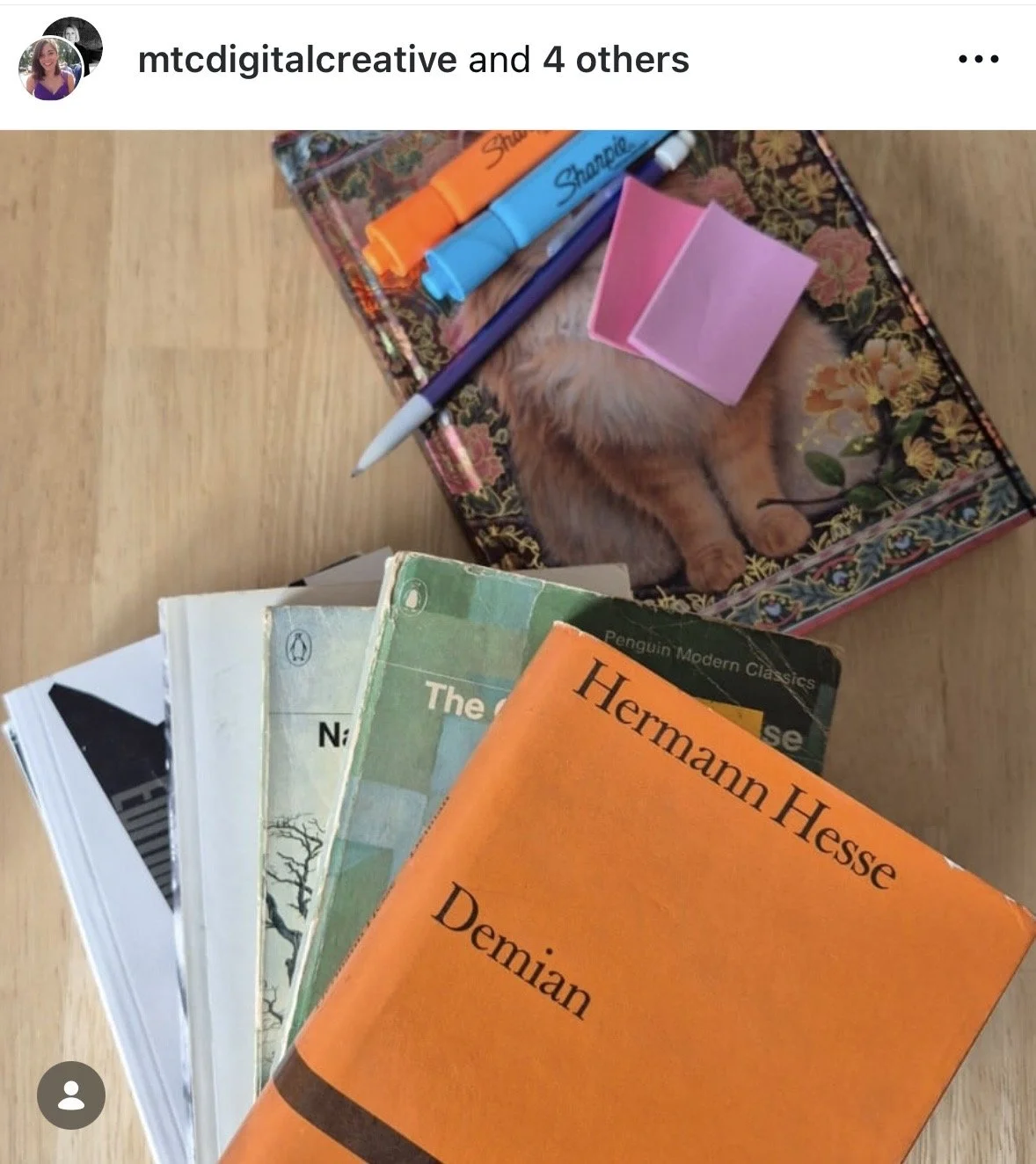
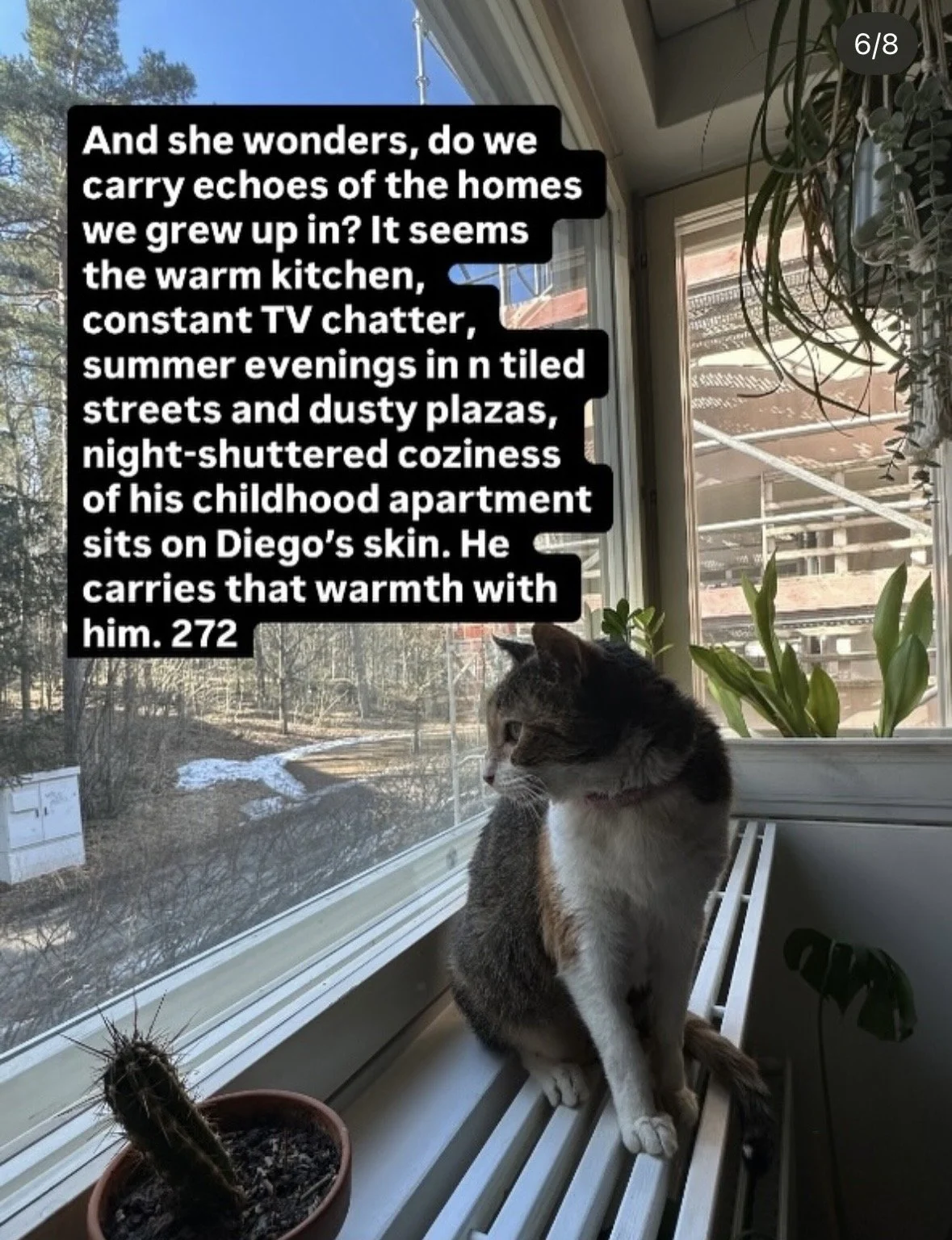
Radical Friendship
The Radical Friendship Listening and Reading Group is an ongoing online gathering that forms part of this wider constellation.
Meeting monthly, the group brings together artists, researchers, writers, and practitioners from across different countries and disciplines. Each session is hosted by a member of the group and shaped around a text, artwork, film, fragment, image, sound work, or other resonant material.
The group emerged from academic, artistic, and everyday encounters that felt fleeting but generative: conversations after workshops, exchanges across residencies, friendships formed through study, and collaborations sustained across distance.
Drawing on transnational feminist practices and Stefano Harney and Fred Moten’s thinking on study, the group approaches friendship not as sameness or agreement, but as something made and remade through attention, care, listening, and return.
Radical friendship, in this context, is a practice of staying alongside one another while allowing space for opacity, silence, difference, and partiality. It is a listening that does not extract. It is a way of gathering that does not aim to consolidate a fixed “we,” but to remain in relation across uncertainty, discomfort, and uneven histories.
The group is also developing a living archive of shared texts, references, visual maps, screenshots, notes, and fragments. This archive does not aim to document everything. Instead, it preserves traces: the threads, textures, hesitations, and recurring questions that arise through collective study.
At its centre is a simple question:
How might we remain in relation across difference, carefully?
Current Listening and Reading Groups
Shared Air: Maternal Breath (2025–)
Shared Air: Maternal Breath is a developing series of listening and reading groups shaped by breath, place, maternal memory, and relational listening.
The series builds on my practice-based research into Irish Catholic maternal shame, migration, transgenerational trauma, and embodied memory. It asks how maternal histories can be approached not through linear testimony or resolution, but through breath, silence, fragments, shared reading, and embodied attention.
These sessions unfold across different sites and contexts, including online spaces, community settings, residencies, and institutional environments. They often form the first stage of a wider process, leading into embodied workshops, filmic breath, sound work, or archival installation.
The series is concerned with how breath moves from the intimate relation of two — mother and daughter — toward wider communal forms of co-presence. Through shared air, participants are invited to attend to memory as something held in bodies, atmospheres, gestures, and relation.
Upcoming Workshops
Breath, Memory & Materiality
Across Ireland | In development
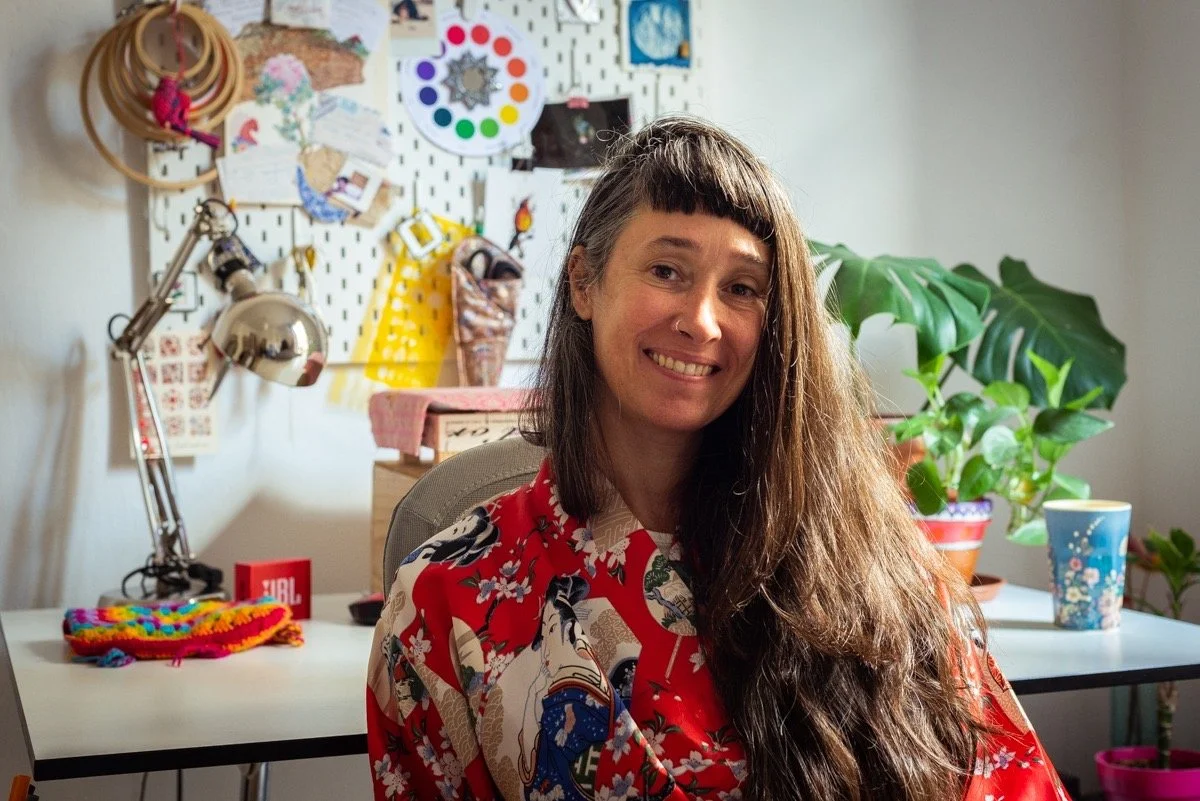
This developing strand will bring together listening, reading, material practice, and intergenerational dialogue across Ireland.
In collaboration with Argentine anthropologist, documentary photographer, transdisciplinary art therapist, and textile artist Melina Flaviana Di Fabrizio, these sessions will engage with transgenerational memory, migration, and maternal inheritance through text, breath, image, and material practices.
Drawing from Melina’s work with therapeutic photography, embroidery, and anthropology, the sessions will explore:
How maternal memory is inscribed onto the body, textile, and land
Breath and materiality as vessels for intergenerational transmission
Photo-embroidery and text as archives of care, absence, and inheritance
Silence within maternal histories
Listening, breath, and shared reading as collective ways of staying with inherited narratives
These methodologies extend my research on the maternal as a site of transformation, bridging transnational feminist philosophy, embodied practice, oral storytelling, and visual-material research.
Melina Flaviana Di Fabrizio Bio
***
Past Sessions
‘Travelling’ Listening and Reading Groups - ‘Poetics of Textual and Bodily Breath’


The travelling listening and reading groups developed across different sites, including Bulgaria, Dublin, and Warsaw. Each gathering was shaped by place, weather, language, local collaborators, and the materials brought into the space.
Collaborators were invited to bring a text, quote, memory, song, poem, story, image, or fragment that responded to maternal relations, breath, migration, and transgenerational memory. The “text” could take many forms: an archival document, a literary excerpt, a memory, an object, a voice, or a gesture.
Across these sessions, we explored the poetics of breath: how we breathe, how texts breathe, and how words move through bodies when read aloud. Fragments from Chantal Akerman’s My Mother Laughs and Edna O’Brien’s A Pagan Place often acted as anchors, opening questions around maternal address, shame, repetition, and embodied inheritance.
These gatherings were collective spaces where participants could come and go as needed, engage in any language, and respond through silence, speech, movement, or listening.
***
Mind the Step, Dublin | March 2025
Listening & Reading Group – Dublin

The Dublin session brought together voices in a shared exploration of breath, memory, and maternal relation.
Moving through fragments from Chantal Akerman’s My Mother Laughs, Edna O’Brien’s reflections on her mother, and participant contributions, we traced how stories, silence, and inherited emotions reside within the body.
I presented these materials as maternal scenes: moments where we could attend to individual breath, collective breath, and how the texts themselves breathe.
We introduced ourselves through bodies of water, reflecting on how water holds memory, migration, and breath across generations. Through collective reading, we attuned to the rhythm of the texts and our own bodies, listening to how language and breath interweave.
The session invited an open, processual engagement with text, where reading became embodied, words moved through us, and breath carried meaning beyond the page.
A note on the photos: in keeping with feminist and queer ethical practices, only those who consented to photography are shown in the images. Participation remained a space of care and agency.

***
Tsarino, Bulgaria | September 2024
Reading and Listening Groups in the outdoor kitchen and woods


In Tsarino, Bulgaria, the listening and reading groups took place in outdoor kitchens, woodland paths, and around firelight under the stars.
We disorientate through repetitive performances.
We reorientate through textual breath.
This is our shared “poetics of breathing”:
Reading aloud in the air,
Listening with our bodies.

Collaborators who arrive at these listening and reading groups, are invited to introduce themselves
through
quotes,
poems,
stories,
songs,
collections of words,
lists,
memories,
bodily rememberings
and images.
We speak into our shared air.
We share air.
Traces are left in the spaces of these ‘performances’.


‘Soon, we will weave the space as we speak.
Together, we breathe these words,
inhaling and holding them,
if only for a second,
before we have to exhale again.
We do not determined the space that surrounds us,
between us,
that passes as shared air.
If only for a moment,
We breathe,
We move,
We feel.’
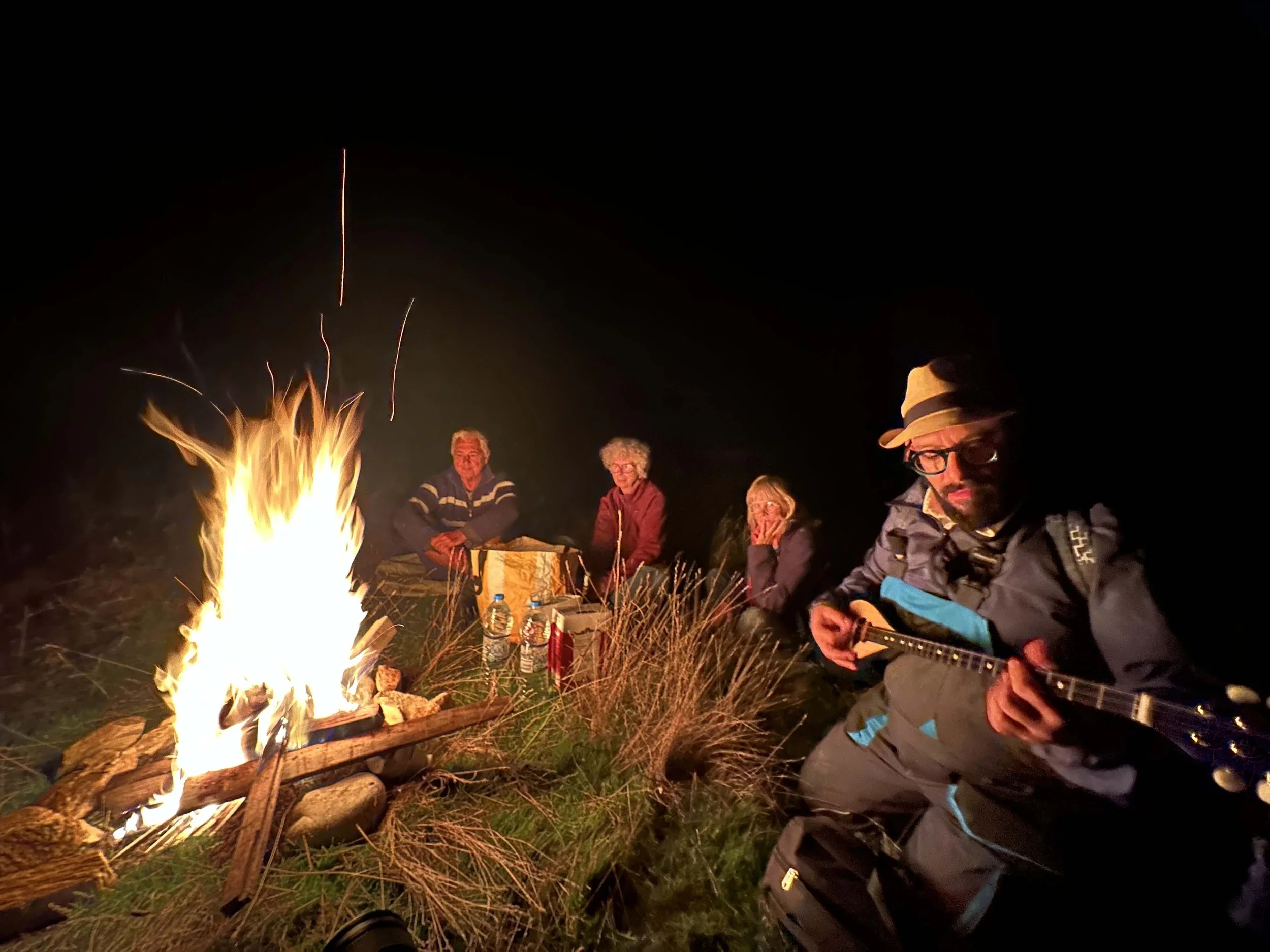
“Participant Reflection – Hetty, Tsarino Residency
”We went into the dark, to a beautiful place between the trees. There was a mysterious, square, deserted tower. Next to it, we made a fire and sat around it as a group.
What I liked most was the atmosphere created by the fire and the darkness—everyone was deeply focused, and for a short time, it felt as if nothing else existed.
We read our texts and told our stories in different languages. Everyone participated in their own way.
It was a wonderful experience!””
The listening and reading groups in Tsarino culminated in a communal exhibition at the Razklon Gallery, located on site in Tsarino, Bulgaria. Local collaborators and visiting international artists and volunteers contributed handwritten fragments—each chosen for its resonance and lasting impact beyond the sessions. These texts were encased in a glass box and suspended in the mountain air, leaving lasting traces of our words amid the mountains, with cows, wildlife, and the rugged terrain standing as silent witnesses.
“During her stay, Marie Theresa organized two events within nature—both held in the dark. Everyone was invited to share memories, thoughts, or personal stories in response to the setting she created.
It was surprising and fun to hear what came up and to have this experience together.”
Tsarino Textual Breath | 23 September - November 2024

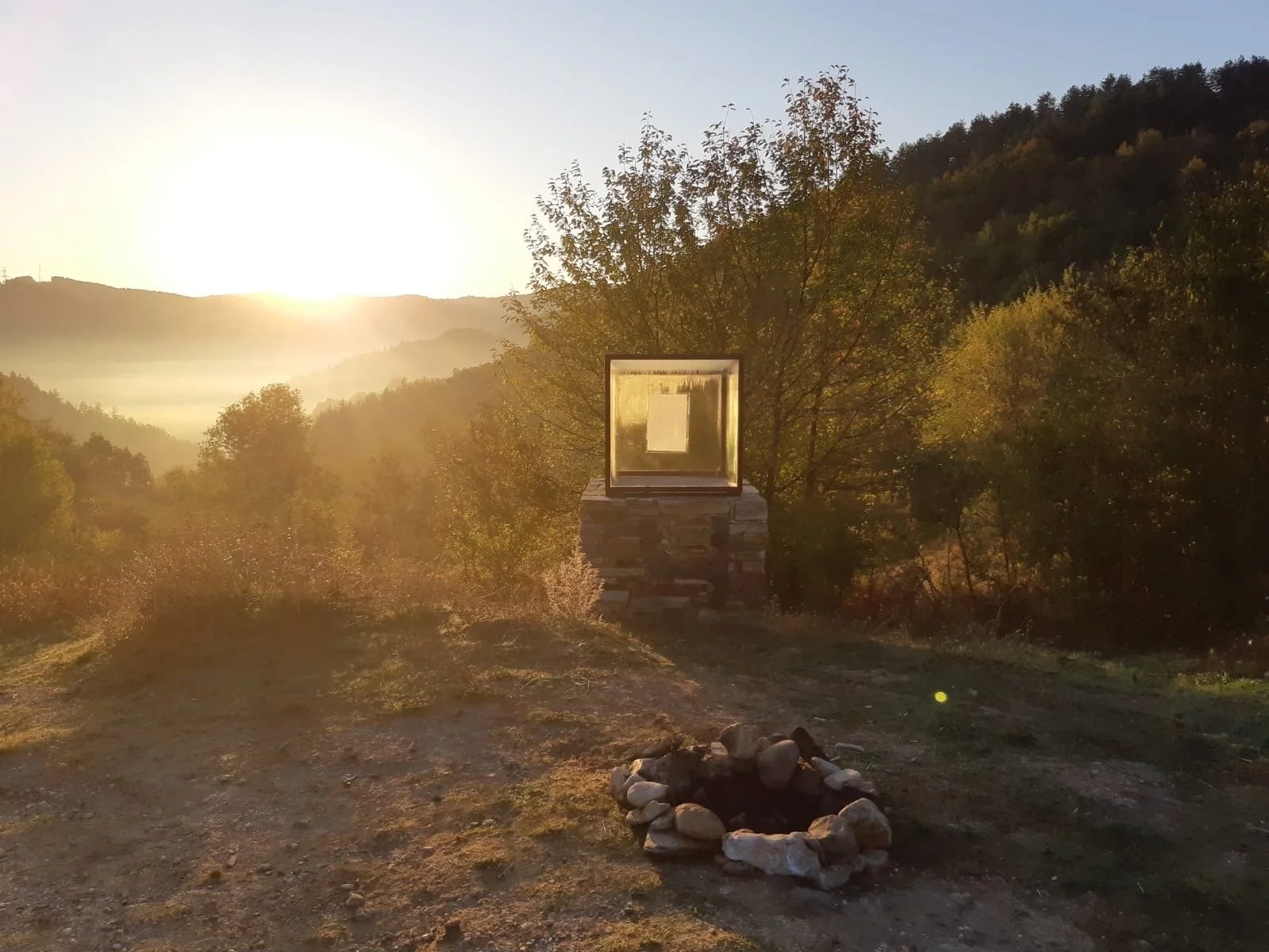
“I listened to special, personal stories and thoughts from all who were sitting together around the fire. This memory has stayed with me.”
***
Mushrooms as Our Guide: A Listening and Reading Group in Warsaw
Warsaw | October 2024


In Warsaw, the listening and reading group was shaped by the site and by the seasonal practice of mushroom picking.
I had been planning the gathering for weeks, but through conversations with local friends and community members, it organically merged with a walk through the woods. Guided by mushrooms, the session became a hybrid of outdoor exploration, shared reading, and embodied literary practice.
We read aloud from Edna O’Brien’s A Pagan Place, reimagining it alongside the shopping list scene in Chantal Akerman’s My Mother Laughs. This pairing invited us to think through modes of address in literature that confront transgenerational trauma, shame, and maternal relation.
Later, we prepared and shared mushroom soup made from what we had gathered. Living, eating, reading, and walking became intertwined, revealing how memory can be held through land, food, breath, and collective attention.


***
Poetics of Breathing: Textual Breath and Bodies of Water
Lake Ohrid, North Macedonia
November 2024


Solo listening and reading sessions are also part of this practice.
At Lake Ohrid in North Macedonia, I read aloud by the water, attending to how the text breathed in relation to landscape, wind, and sound. Two dogs joined me and sat quietly as the words hung in the air.
These solitary readings often take place in spaces connected to my performances and film practice. They shape the scripts of my embodied workshops and inform my experimental research.
Being near water is especially important. Water echoes my filmic bodies, my work with maternal relation, and the crossings between Ireland, England, and diasporic memory. These solitary yet connective moments bridge personal reflection, site-responsive practice, and collective engagement.
***
Ethical Practice & Participant Privacy
In all workshops, listening and reading groups, and embodied sessions, participant consent is central.
Photos are only taken when explicit permission is given. Participants are never required to be photographed, recorded, or identified. To maintain an open and supportive environment for engaging with difficult material, I do not record participants without clear consent.
This approach supports a space where people can share, reflect, listen, or remain silent without concern for documentation. It also acknowledges that not all forms of participation should become visible.
Before each embodied workshop, participants receive an address and consent form outlining the purpose, structure, and possible emotional impacts of the session. This ensures transparency and supports informed participation.
Participants are encouraged to engage at their own pace, pause when needed, and step out at any time.
***
Regular Online Meeting Spaces - We Share Air.

Breathing Bodies – Mindful Writing Practice
Breathing Bodies is an online listening and reading group dedicated to embodied writing and shared reflection.
In these gatherings, participants share texts, memories, and writing fragments, exploring the interplay of breath, voice, and the written word. The online format creates an accessible space for those unable to attend in-person sessions, including those affected by chronic illness, care responsibilities, distance, or mobility needs.
This accessibility is important to my practice and is informed by my own lived experience of endometriosis. Online spaces can hold different forms of presence: quieter, slower, partial, intermittent, but still deeply relational.
Breathing Bodies explores writing as an unfolding process, shaped by lived experience, emotional landscapes, and bodily attention.
Through listening, reading, and mindful writing, the group transforms words into shared breath.
Stay connected and keep up to date with my latest research, exhibitions, and creative projects.
LinkedIn | Instagram