Marie Theresa Crick is an interdisciplinary artist, researcher, facilitator, Visiting Lecturer, and PhD candidate in Visual Cultures at Goldsmiths, University of London. Based between Dublin and London, her practice works across film, sound, performance, writing, archival research, embodied workshops, listening and reading groups, and socially engaged artistic practice.
Rooted in Irish diasporic experience and the Irish Catholic maternal, her work traces histories of shame, silence, migration, institutional control, and transgenerational memory. Through breath, shared reading, correspondence, filmic fragments, sound, and collective listening, she asks how difficult inheritances might be held, listened to, and transformed without being resolved, exposed, or made spectacle.
Her current work unfolds through two interconnected constellations:
Shared Air and Radical Friendship.
Shared Air explores breath as method, memory, and relation. Drawing on Luce Irigaray’s concept of ‘shared air’, Marie Theresa develops breath-led practices that attend to what slips beyond language: grief, hesitation, shame, silence, and the affective residues of Sara Ahmed’s “histories that hurt.” Beginning from the relation of two — mother and daughter — this work opens toward wider forms of co-presence, asking how breath might become a method of co-witnessing, embodied knowledge, and ethical relation.


Radical Friendship extends this inquiry into collective and socially engaged forms. Through online and in-person listening and reading groups, workshops, correspondence, annotation, and shared study, Radical Friendship approaches friendship not as sameness, comfort, or agreement, but as a practice of remaining in relation across difference, uncertainty, discomfort, and distance. It asks how we might connect in a polarised world without collapsing complexity or demanding resolution.

Across these projects, Marie Theresa thinks with and beyond the archive as a living and relational structure. Letters, citations, marginalia, film fragments, handwritten notes, sound, breath scores, and workshop traces become part of evolving archival environments. Her practice asks what can be held through a voice, between bodies, or across digital space. The archive becomes a site of encounter: partial, fragile, unfinished, and shared.
Her embodied and social practice includes:
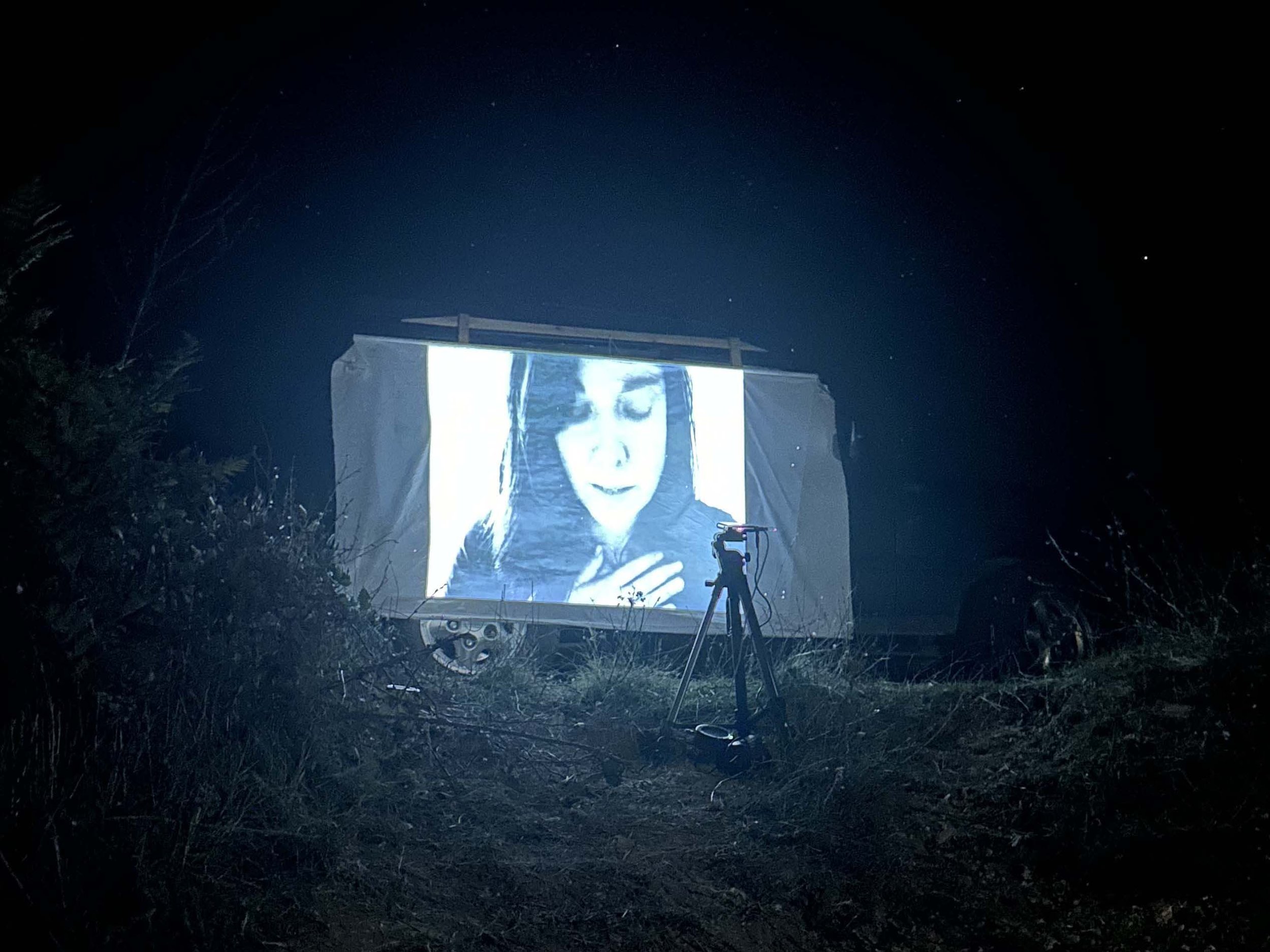
Filmic Breath
Film works edited through the rhythm of breath from her site-specific performances, where inhale, exhale, pause, and hesitation shape cuts, duration, and pacing.
Sonic Breath
Sound works that translate embodied workshops, maternal memory, and migration into echo, vibration, delay, and listening across distance.
Embodied Workshops
Participatory spaces where breath, movement, reading, silence, and collective reflection support engagement with difficult affects and inherited histories.
Listening and Reading Groups
Text-based gatherings that approach theory, fiction, artworks, and archival fragments through slow reading, shared attention, and embodied listening.
Living Archives and Installations
Spatial arrangements of sound, film, correspondence, notes, citations, and participant traces that remain open, process-led, and responsive.
Live and Site-Responsive Performance
Public and intimate performances shaped by pilgrimage sites, institutional spaces, domestic memory, and collective breath.
Marie Theresa’s research engages feminist philosophy, transnational feminism, affect theory, memory studies, trauma studies, and socially engaged art practice. She works with archives in Ireland and England, including the National Library of Ireland, the Radharc Film Archive, the Irish Film Institute, and the Irish Archive at London Metropolitan University, attending to silences, omissions, and what remains difficult to document.
Facilitation is central to her practice. With over 20 years’ experience across community, school, undergraduate, postgraduate, and adult learning contexts, she creates spaces where art, theory, lived experience, and philosophy can move together. Her workshops and performances are shaped as brave spaces grounded in feminist ethics of care, consent, opacity, and co-presence. Participants are invited to engage without judgment, through breath, movement, reading, silence, and reflection, fostering collective vulnerability, co-regulation, and shared responsibility.
She teaches as a Visiting Lecturer in Visual Cultures at Goldsmiths, University of London, across modules which have included Feminist and Queer Technoscience, Ocean as Archive, Histories of Art LAB, and Situated Knowledges. She also works in close dialogue with transnational collaborators whose practices entangle somatic, ecofeminist, sonic, textile, and relational concerns. These include textile artist Melina Flaviana Di Fabrizio, musician-artist Angelos Streklas, artist, ecologist, and somatic practitioner Rhona Eve Clews, and researcher, film critic, and scholar Sara Simić, whose work engages oral history, feminist film, and intergenerational trauma through Jewish Croatian women’s narratives.
Marie Theresa is a member of research and practice collectives including Counterfield, Feminist Breath Collective, Radical Reliance Collective, and the Radical Friendship Listening and Reading Group. Her work has been presented through workshops, exhibitions, sound works, performances, conferences, and reading groups across Ireland, the UK, Europe, Canada, South America and online transnational spaces.
Stay connected and keep up to date with Marie Theresa’s latest research, exhibitions, and creative projects.
LinkedIn | Instagram